












If you have ever seen the phrase “sleep terpenes” on a wellness product, it is easy to assume there is a recognised group of terpenes that scientists have classified as sleep-inducing. There is not. It is a convenient industry phrase for aromatic compounds — often linalool and myrcene — that appear in plants associated with evening rituals or have been investigated in laboratory and early clinical research.
L-theanine is different again. It is an amino acid naturally found in tea, not a terpene. It has a more substantial body of human sleep research than individual “sleep terpenes”, but the evidence still needs to be read with some care.
This guide separates the chemistry from the marketing: what terpenes actually are, what researchers have studied about linalool and myrcene, what the latest evidence says about L-theanine, and how these ingredients can fit into a bedtime routine without turning a wellness product into a promise to fix insomnia.
What Are “Sleep Terpenes”?
Terpenes are naturally occurring compounds that contribute to the aroma of many plants. They are found far beyond hemp and cannabis — in citrus peel, herbs, flowers, conifers, hops and countless other botanicals. For the chemistry, terminology and wider evidence, start with our complete guide to terpenes.
The important point here is that “sleep terpene” is not a scientific classification. It is generally used to describe aromatic compounds that are commonly associated with relaxing scents, evening formulations or sleep-related research.

MYTH BUSTER
Linalool and Myrcene: Why Are They Linked With Sleep?
Linalool
Linalool is an aromatic compound found in plants including lavender and coriander. It contributes a soft, floral character and is one reason lavender is so recognisable by smell.
There is research into aromatherapy and sleep, including trials using lavender preparations, but that evidence should not be reduced to the claim that isolated linalool “makes you sleep”. Aromatherapy studies use different essential oils, concentrations, methods and populations, and the experience of a whole aroma is not the same as testing one isolated terpene.
UK advertising guidance reflects that distinction. The ASA says claims that aromas promote a sense of relaxation or wellbeing are more likely to be acceptable, while stronger health or medicinal claims require appropriate evidence and regulatory status. It has previously treated claims about improving the quality and duration of sleep as medicinal in context. 1
Myrcene
Myrcene is found in hops, thyme, lemongrass and cannabis, among other plants. It has an earthy, herbal aroma and is frequently described online as “sedating”. That description runs ahead of the human evidence. A scientific review of myrcene noted promising findings across animal studies but also highlighted the lack of human studies. 2
So, if you enjoy a myrcene-rich aroma as part of an evening routine, that is perfectly reasonable. It is simply a different statement from saying myrcene has been proven to treat insomnia.

DID YOU KNOW?
What Is L-Theanine?
L-theanine is a non-protein amino acid found naturally in tea leaves. Unlike linalool or myrcene, it is not a terpene and it does not work by adding an aroma to a product.
It is commonly included in supplements aimed at evening routines, stress management or focus. What matters for this article is that L-theanine has been studied directly in human randomised controlled trials, including trials measuring sleep outcomes.
What Does the Latest Research Say About L-Theanine and Sleep?
A 2025 systematic review and meta-analysis brought together 19 randomised controlled trial articles involving 897 participants; 18 studies were included in the meta-analysis. The researchers reported statistically significant improvements in several subjective sleep measures, including sleep-onset latency, daytime dysfunction and overall subjective sleep-quality scores. 3
That sounds encouraging, but the limitations are just as important. The review authors specifically highlighted the shortage of studies testing “pure” L-theanine and said further research is needed to establish appropriate dose and duration in both healthy and clinical populations. In other words: there is a meaningful research signal, but not a licence to treat every L-theanine product as a proven sleep treatment.
A further systematic review published in 2026 focused on L-theanine as a standalone dietary intervention. It identified 13 eligible trials involving 550 participants and reported beneficial findings across several participant-reported and objective sleep measures, particularly in studies using 200–450mg per day. The authors still called for better-quality trials using objective measures and more research in people with clinical insomnia. 4
That review also has an industry connection in its author affiliations, which is worth knowing when weighing the evidence. It does not invalidate the findings, but it is another reason to look at the wider body of research rather than treating one review as the final word.
| Ingredient | What It Is | What We Can Sensibly Say |
|---|---|---|
| Linalool | A terpene-family aroma compound found in lavender and other plants | Contributes to floral aroma; isolated sleep effects are not established as a treatment claim |
| Myrcene | A terpene found in hops, cannabis, thyme and other plants | Has substantial preclinical research, but human evidence is limited |
| L-theanine | An amino acid naturally present in tea | Human trials and meta-analysis show a research signal for subjective sleep outcomes, with important limitations |
Do Terpenes and L-Theanine Work in the Same Way?
No. They are chemically different and should not be bundled together as though they are interchangeable.
- Terpenes are primarily relevant here because of plant aroma and the research interest surrounding individual compounds.
- L-theanine is an amino acid consumed orally and studied as a dietary ingredient.
- CBD is a cannabinoid — another separate class of compound again.
They can appear in the same formulation, but simply combining ingredients does not prove “synergy” or guarantee a stronger sleep effect. That is one of the problems with the old language around the so-called entourage effect: a plausible mechanism or interesting combination is not the same thing as clinical proof for the finished product.
What About CBD, Terpenes and L-Theanine Together?
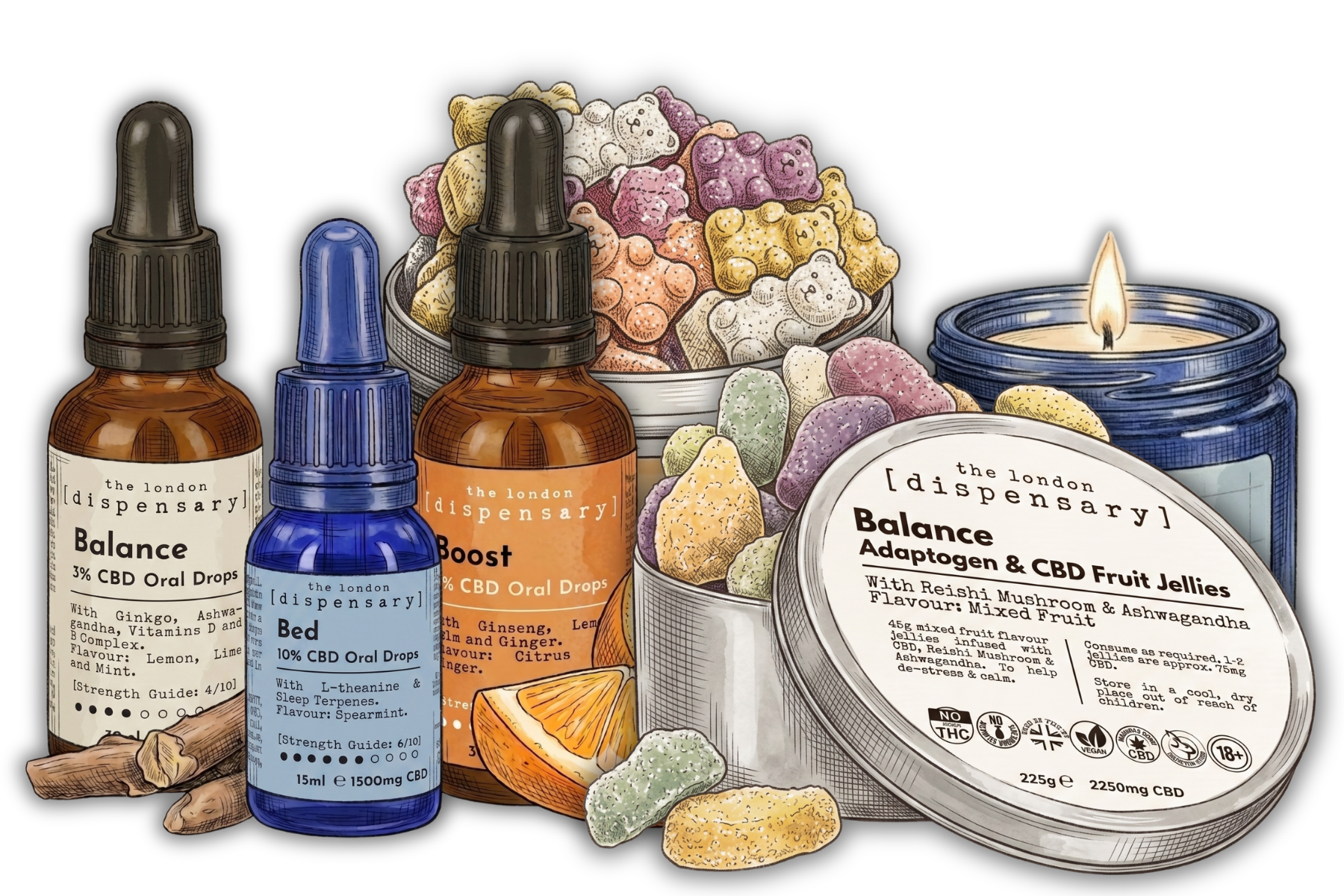
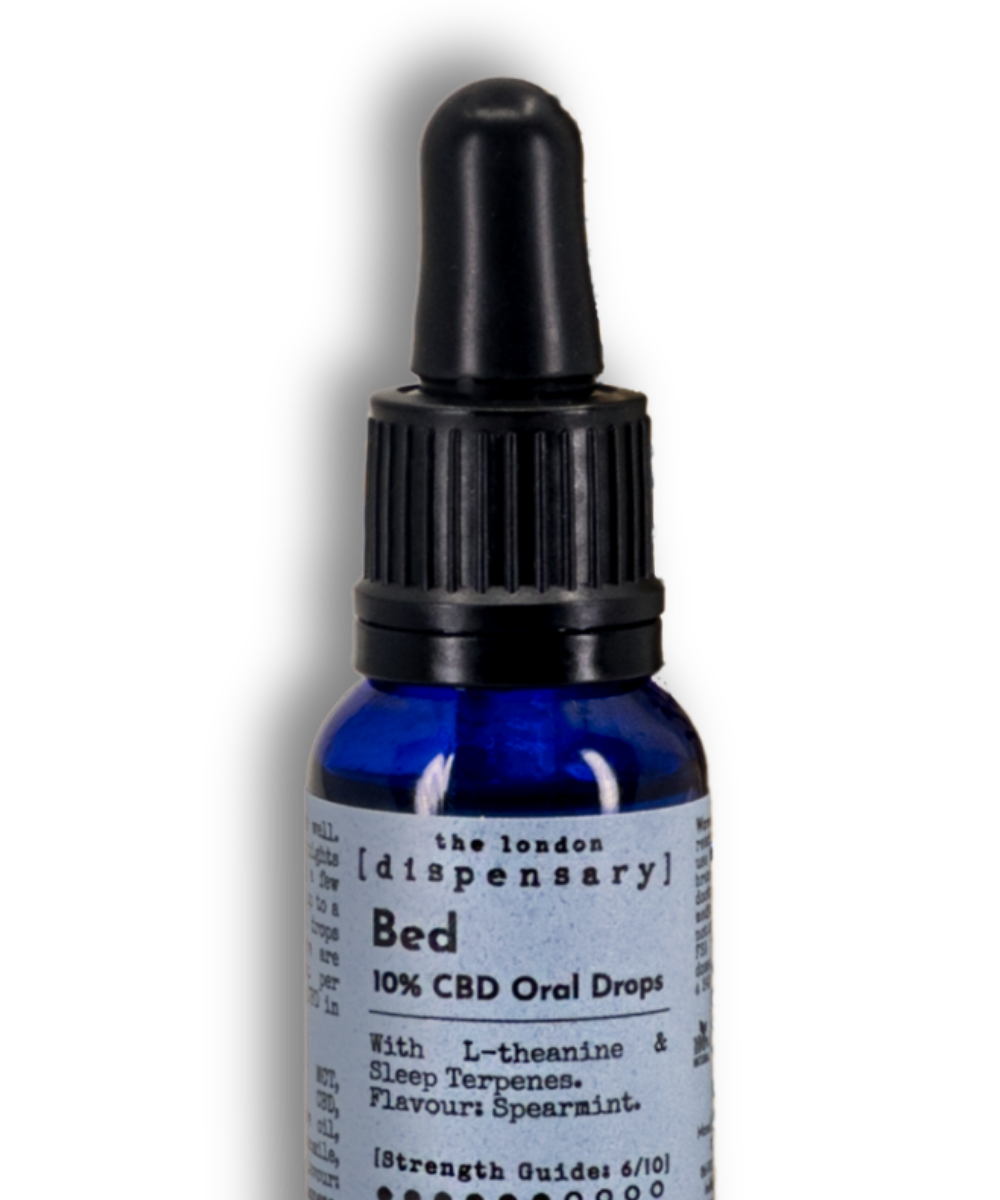
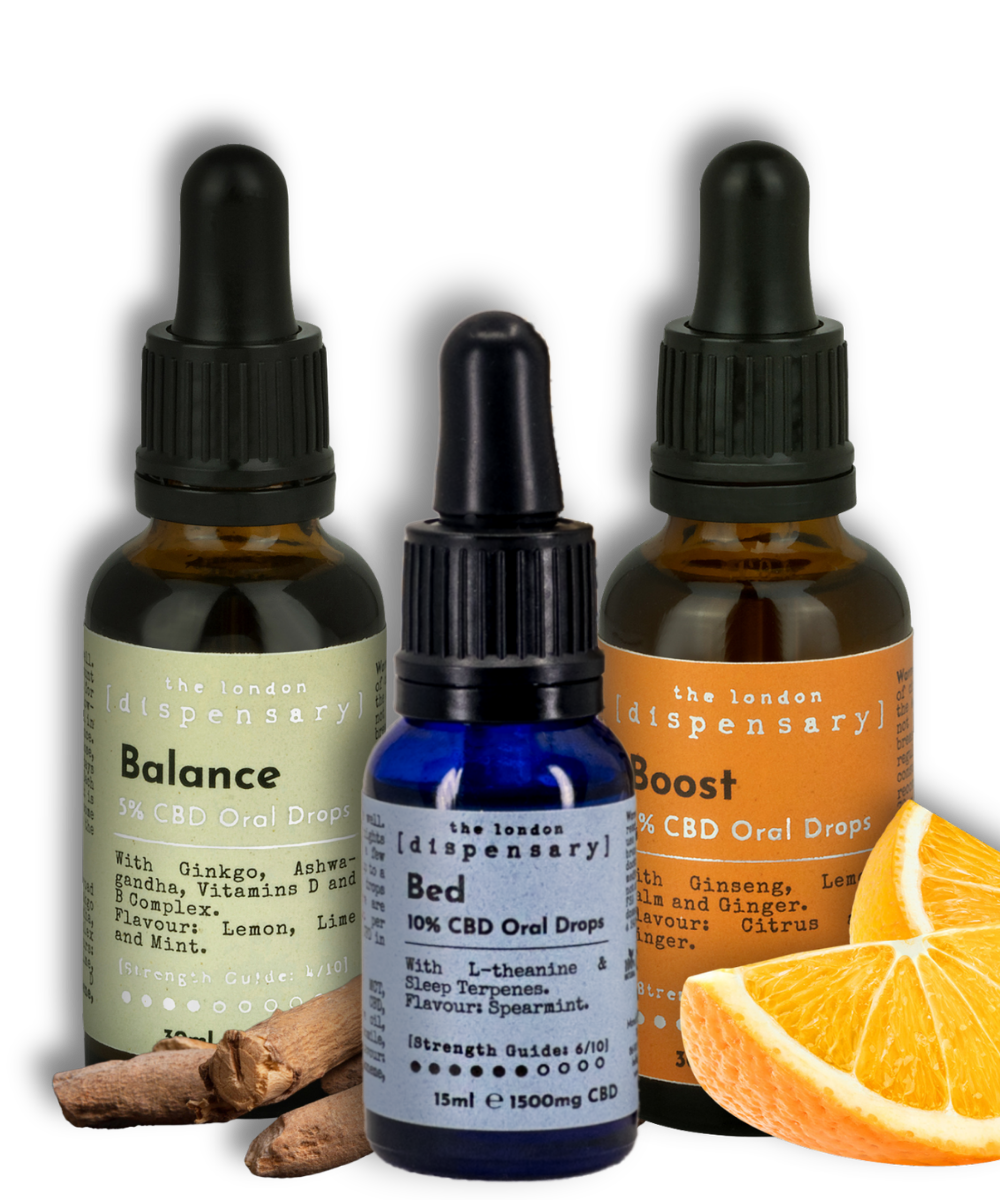
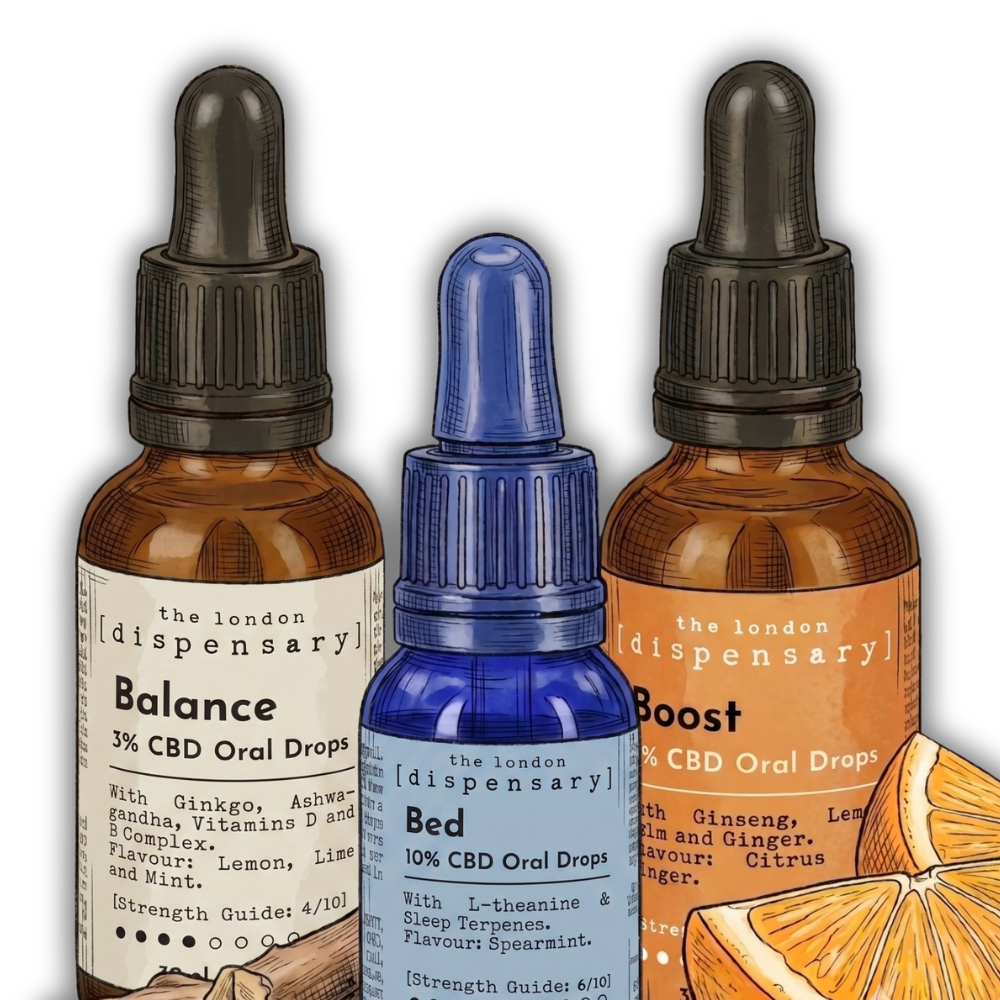
You will see CBD, terpenes and L-theanine combined in some bedtime-focused products, including within our own Bed sleep range. If you are comparing ingestible formats, our CBD sleep oils include products with different formulations and strengths, including CBD Sleep Drops with L-Theanine. The useful way to read the label is as a description of what the formulation contains — not as a promise that the mixture treats insomnia.
Clinical research into cannabinoids and sleep is still developing. A 2025 systematic review of randomised studies found that CBD-only interventions did not show a statistically significant sleep-quality effect in the subgroup analysis, reinforcing why CBD should not simply be presented as a proven sleep aid. 5
There are also separate food-safety rules around ingestible CBD in the UK. Current Food Standards Agency guidance for England and Wales strongly encourages CBD food products to be formulated so consumers do not exceed the provisional acceptable daily intake of 10mg CBD per day and a safe upper limit of 70 micrograms of delta-9-THC per day. The FSA also advises against CBD for people under 18, people taking medication, those trying to conceive, and those who are pregnant or breastfeeding unless under medical direction. 6
How Can Aroma Fit Into a Bedtime Routine?
This is where aromatherapy can be useful without asking it to do something it has not been proven to do. Smell is strongly tied to memory and routine. Using the same aroma as you begin winding down can become part of the environmental cue that says: laptop closed, lights lower, day finished.
You might use a pillow mist, aromatherapy candle or wax melts because you enjoy the scent and the ritual around them. That is a much more defensible reason than choosing a fragrance because someone has declared one molecule a “natural sedative”.

TOP TIP
Can Sleep Terpenes or L-Theanine Treat Insomnia?
They should not be treated as substitutes for appropriate healthcare. Insomnia is more than having the occasional bad night, and persistent sleep problems can have many causes.
The research around L-theanine is worth following. Research around individual terpenes is also interesting. Neither justifies turning an ordinary wellness product into a treatment for insomnia, depression, anxiety or another medical condition.
In Great Britain, commercial health claims for foods and supplements are regulated and must meet the applicable nutrition and health-claims rules. 7
The Bottom Line
“Sleep terpenes” is a useful shorthand, not a scientific category. Linalool and myrcene are interesting aromatic compounds, but the human evidence does not support treating either as a guaranteed sleep-inducing ingredient. L-theanine has a stronger body of human research, including a 2025 meta-analysis reporting improvements in some subjective sleep outcomes, but important questions about pure L-theanine, dose and duration remain.
For most people, the sensible distinction is simple: enjoy terpenes for the aroma and ritual they can bring to an evening routine; read L-theanine research as emerging evidence rather than a guarantee; and be wary of any wellness product that jumps from “contains these ingredients” to “will fix your sleep”.
How This Fits Into a Bedtime Routine
If you are reading this because you are deciding between ingredients rather than studying terpene chemistry for fun, the most useful way to think about them is as parts of a wider routine. Terpenes contribute aroma; L-theanine is a separate dietary ingredient with its own human research; CBD is a cannabinoid with a different evidence base again.
For a deeper look specifically at CBD and sleep research, read our CBD oil for sleep guide. If you are interested in the finished Bed formulation, both of our sleep-drop sizes combine broad-spectrum CBD with L-theanine, botanicals and a terpene profile rather than relying on one ingredient alone.
From Our Bed Range: Two Sleep-Drop Sizes
- Bed 10% CBD Sleep Drops with L-Theanine — 1500mg / 15ml — the smaller format for around 30 nights.
- Bed 10% CBD Oil for Sleep with L-Theanine — 3000mg / 30ml — the larger format for around 60 nights.
Both sit within our wider Bed range. They are linked here because their ingredient design is directly relevant to this guide — not as a claim that either product treats insomnia or guarantees better sleep.
TOP TIP
Frequently Asked Questions
Frequently Asked Questions
What are sleep terpenes?
“Sleep terpenes” is an informal term for aromatic compounds, often including linalool and myrcene, that are associated with evening products or sleep-related research. It is not a recognised medical or scientific terpene category.
Is linalool scientifically proven to help you sleep?
Linalool is part of the aroma chemistry of plants such as lavender, but evidence from lavender or aromatherapy studies cannot simply be converted into a claim that isolated linalool is a proven treatment for sleep problems.
What is L-theanine?
L-theanine is an amino acid naturally found in tea. Human trials have investigated its effects on sleep and other outcomes, but it is chemically different from terpenes and cannabinoids.
Does L-theanine make you drowsy?
L-theanine is not simply a sedative. Research has examined sleep-related outcomes, but responses vary and the evidence does not mean every L-theanine product will make a person drowsy.
Can terpenes or L-theanine treat insomnia?
They should not be presented as substitutes for appropriate assessment or treatment of persistent insomnia. If sleep problems are ongoing or significantly affecting daily life, seek advice from an appropriate healthcare professional.
- Advertising Standards Authority & Committee of Advertising Practice. (2024). Health: Aromatherapy. https://www.asa.org.uk/advice-online/health-aromatherapy.html
- Surendran, S., Qassadi, F., Surendran, G., Lilley, D., & Heinrich, M. (2021). Myrcene—What are the potential health benefits of this flavouring and aroma agent? Frontiers in Nutrition, 8, 699666. https://pubmed.ncbi.nlm.nih.gov/34350208/
- Bulman, A., D’Cunha, N. M., Marx, W., Turner, M., McKune, A., & Naumovski, N. (2025). The effects of L-theanine consumption on sleep outcomes: A systematic review and meta-analysis. Sleep Medicine Reviews, 81, 102076. https://pubmed.ncbi.nlm.nih.gov/40056718/
- Cotter, J., Caddick, C. E., Harper, J. L., & Ebajemito, J. K. (2026). Examining the effect of L-theanine on sleep: a systematic review of dietary supplementation trials. Nutritional Neuroscience, 29(2), 224–238. https://pubmed.ncbi.nlm.nih.gov/41176609/
- Ranum, R. M., et al. (2025). Effectiveness of cannabinoids on subjective sleep quality in people with and without insomnia or poor sleep: A systematic review and meta-analysis of randomised studies. Sleep Medicine Reviews. https://pubmed.ncbi.nlm.nih.gov/40929927/
- Food Standards Agency. (2026). Cannabidiol (CBD) guidance. Updated 28 August 2026. https://www.gov.uk/government/publications/cannabidiol-cbd-guidance/cannabidiol-cbd-guidance
- Department of Health and Social Care. (2026). Great Britain nutrition and health claims (NHC) register. https://www.gov.uk/government/publications/great-britain-nutrition-and-health-claims-nhc-register