











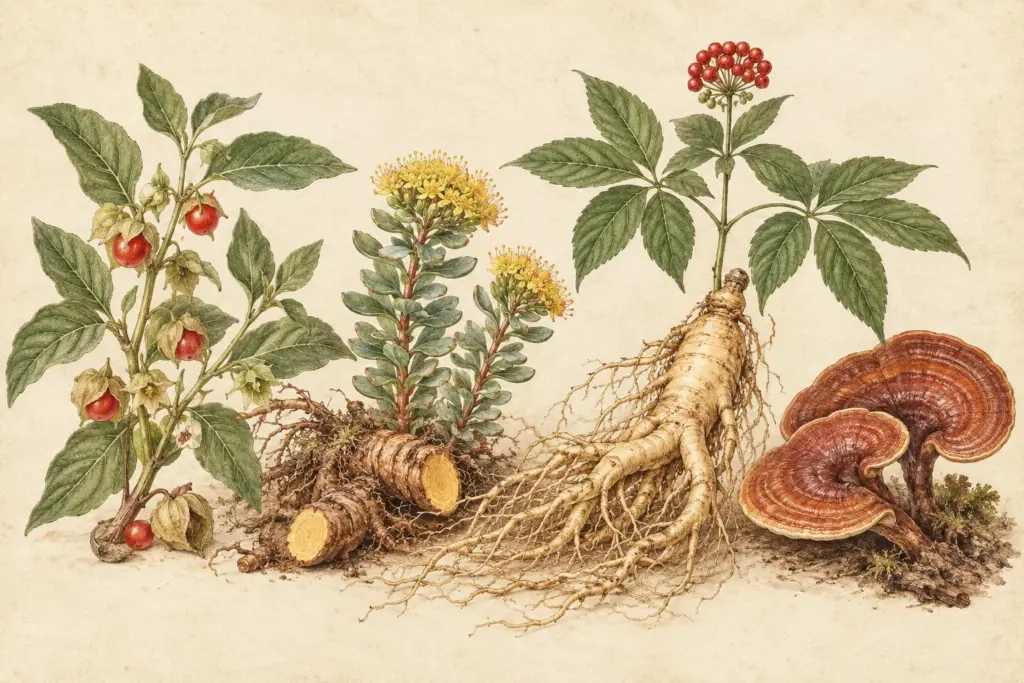
What are adaptogens? The simplest answer is that adaptogen is a term used for certain plants, fungi and extracts discussed in relation to the way the body responds to physical or psychological stress. It is a useful concept, but it is not a promise that every “adaptogenic” supplement works in the same way — and it is not a shortcut for saying that a product treats stress, anxiety or another medical condition.
That distinction is important because adaptogens now appear everywhere: capsules, gummies, powders, coffee, tea, mushroom blends and increasingly complicated wellness formulas. Ingredients such as Ashwagandha, Rhodiola and Panax ginseng sit firmly in modern adaptogen research, while other ingredients are sometimes pulled into the category more loosely.
This guide explains where the idea came from, what researchers mean by it, which ingredients are commonly called adaptogens, what human evidence actually shows, how adaptogens differ from nootropics and what to check before buying an adaptogen supplement in the UK. If you already know the basics and want to compare products, our Nootropics & Adaptogens collection is the commercial hub for the current range.
What Does “Adaptogen” Actually Mean?
The word sounds more precise than it really is. In scientific literature, adaptogens have generally been described as substances associated with increasing non-specific resistance or resilience to stressors and supporting adaptation. The concept developed through twentieth-century pharmacology but drew heavily on much older traditional use of herbs in systems including Ayurveda and traditional East Asian medicine.1
Modern reviews still use the term, but human research is much smaller and more varied than the size of the wellness market might suggest. A review of plant adaptogens noted a long history of traditional and experimental use while also highlighting the limited number of human clinical trials.2

DID YOU KNOW?
Is “Adaptogen” an Official UK Supplement Category?
No. In UK food law, a product sold as a food supplement is regulated as a food supplement; “adaptogen” is not a separate legal class that gives a product special health-claim permissions.
The Food Standards Agency’s 2026 guidance defines food supplements as foods intended to supplement the normal diet and sold in dose form, including capsules, gummies, powders and liquids. The same guidance is clear that food supplements are not medicines and should not be sold with claims that they prevent, treat or cure medical conditions or symptoms.3
In Great Britain, commercial health claims for foods must also fit the authorised Nutrition and Health Claims Register. Calling something an adaptogen does not create an exemption from those rules.4

MYTH BUSTER
When Did Adaptogens Become a Thing?
The original version of this article asked this question, and it is still one of the more interesting parts of the subject.
The modern scientific adaptogen concept emerged in Soviet-era research in the middle of the twentieth century. Researchers were interested in substances that might help organisms maintain performance or stability when exposed to different types of stress. Over time, the concept expanded and was applied to a number of botanical extracts, including Rhodiola, Eleuthero, Schisandra and ginseng.
That modern research history sits alongside much older traditional use. Ashwagandha has a long history in Ayurveda, while ginseng has centuries of use in East Asian traditions. The modern term therefore arrived much later than the ingredients themselves.5
How Are Adaptogens Supposed to Work?
This is where older wellness explanations often become too neat. There is no single “adaptogen pathway” shared by every ingredient.
Researchers have proposed effects involving stress-response signalling, the hypothalamic-pituitary-adrenal (HPA) axis, neurotransmission, immune signalling and other regulatory systems. But the evidence includes cell studies, animal work, mechanistic research and relatively short human trials, and the exact picture differs between ingredients and extracts.
A 2026 systematic review of randomised trials involving Ashwagandha and Rhodiola included 24 studies — 19 on Ashwagandha and five on Rhodiola. The authors reported positive findings across several outcomes, but also highlighted methodological heterogeneity, short intervention periods and small samples as important limitations.6
So the better answer to “how do adaptogens work?” is: different ingredients may influence different biological systems, and the label itself does not prove a common mechanism or outcome.
Common Adaptogens: What Does the Evidence Look Like?
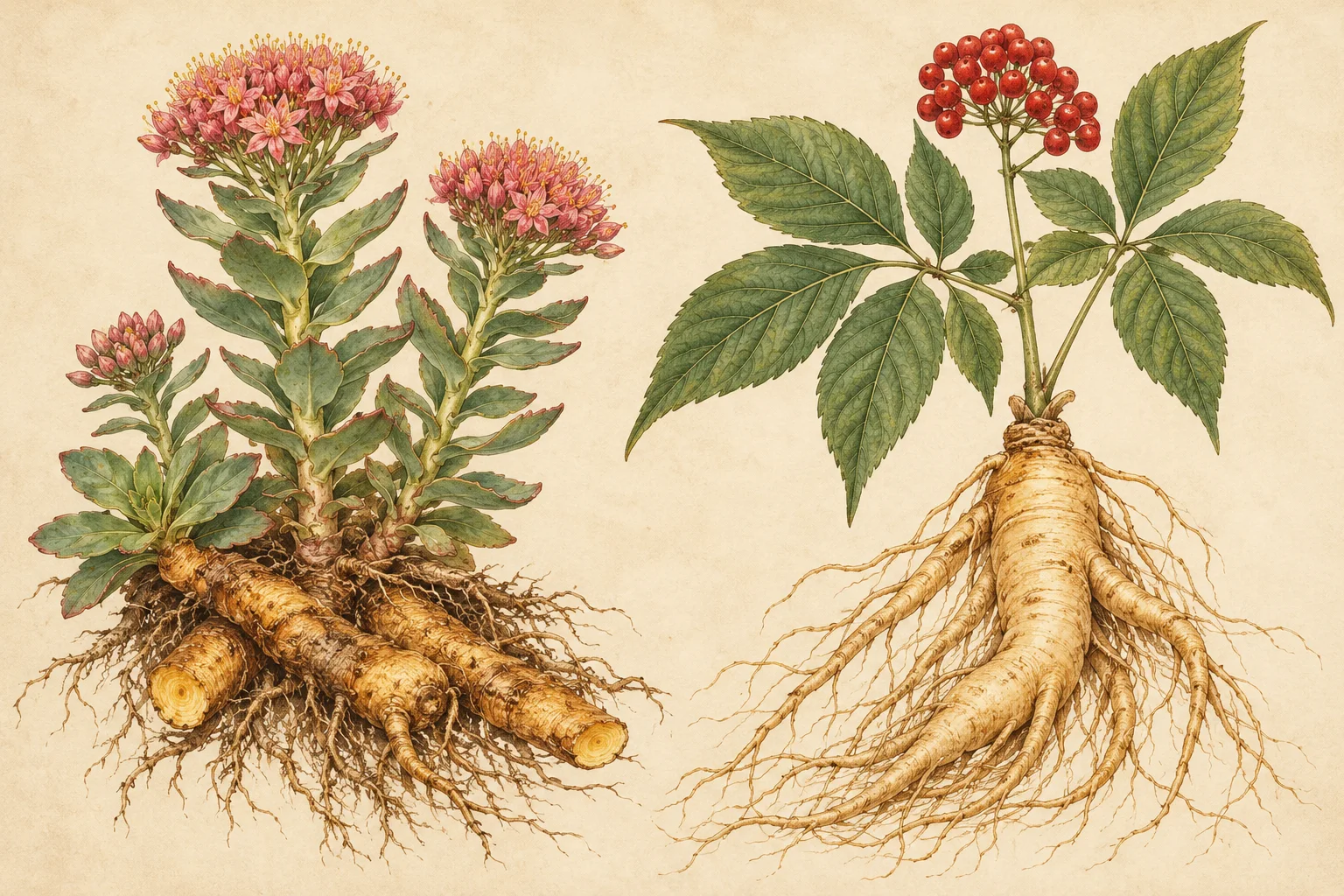
| Ingredient | How it fits the adaptogen conversation | Evidence snapshot |
|---|---|---|
| Ashwagandha Withania somnifera |
One of the best-known modern adaptogens; long Ayurvedic history. | Multiple human RCTs and meta-analyses exist, but extracts, doses, populations and outcomes vary. |
| Rhodiola Rhodiola rosea |
A classic plant in adaptogen research. | Human studies exist but the evidence base is smaller than Ashwagandha and remains heterogeneous. |
| Panax ginseng | Long traditional use and commonly included in adaptogen discussions. | Research spans cognition, fatigue and other outcomes; results are not uniformly positive. |
| Reishi Ganoderma spp. |
Often grouped with adaptogens in modern mushroom/wellness marketing, but it also has its own functional-mushroom evidence base. | Human trials exist, but a 2025 meta-analysis rated certainty very low across assessed outcomes. |
| Eleuthero / Schisandra | Historically important in the development of the modern adaptogen concept. | Research exists, but these are not currently central ingredients in our range. |
Ashwagandha: the adaptogen with the largest current TLD relevance
Ashwagandha is the clearest bridge between this guide and our current Balance formulations. It is also one of the most researched adaptogens in recent human trials.
A 2024 systematic review and meta-analysis included nine randomised controlled trials with 558 participants and reported improvements in perceived-stress and anxiety scales and cortisol compared with placebo. However, the included studies used different Ashwagandha preparations and four trials reported mild-to-moderate adverse events; the authors also said more information is needed on long-term safety.7
Importantly, not every meta-analysis lands in exactly the same place. A 2025 review found a significant reduction in cortisol but did not find a significant effect on perceived stress, which is a useful reminder that “the evidence says” is rarely one perfectly tidy sentence.8
For a deeper ingredient-specific review, see our Ashwagandha evidence guide.
Rhodiola: a classic adaptogen with a smaller evidence base
Rhodiola rosea appears repeatedly in the scientific history of adaptogens. It has been studied in people for stress-related and performance outcomes, but fewer randomised studies were included in the 2026 review than for Ashwagandha, and the authors again highlighted short studies and methodological variation.9
We do not currently need to force Rhodiola into a product page just because it is a strong editorial example. This guide should explain the category accurately, not pretend every notable adaptogen is in our range.
Panax ginseng: traditional tonic, adaptogen and overlapping nootropic interest
Ginseng is a useful example of why adaptogen and nootropic conversations overlap. Panax ginseng is commonly discussed as an adaptogen, but it is also researched for cognition and appears frequently in focus-oriented formulations.
A 2024 systematic review and meta-analysis of 15 randomised trials involving 671 participants found a small improvement in memory measures, but no significant overall effect on cognition, attention or executive function. The authors called for more high-quality research.10
Our Ginseng evidence guide owns the ingredient-specific questions. In our range, Ginseng also appears in the Boost 10% CBD Oil with Ginseng, where it is one part of a wider Ginseng, Lemon Balm and Ginger formulation.
Reishi: functional mushroom first, adaptogen label second
Reishi is regularly called an adaptogenic mushroom in wellness content. We think it is more useful to be precise: Reishi is a functional mushroom with its own taxonomy, extract questions and human research, and it is sometimes discussed within the broader adaptogen concept.
A 2025 systematic review and meta-analysis included 17 randomised trials with 971 participants. Some pooled outcomes showed modest changes, many outcomes showed no significant effect, and the GRADE certainty was rated very low across all outcomes.11
Our Reishi Mushroom UK Guide is therefore the better destination for Reishi-specific evidence.
Are All Functional Mushrooms Adaptogens?
No. This is one of the muddier bits of modern wellness language.
Functional mushroom, nootropic and adaptogen are overlapping marketing/research categories, but they are not synonyms. Reishi is often discussed in adaptogen literature and marketing. Lion’s Mane is much more commonly discussed for cognition and nootropic-style research. Chaga has its own traditional-use and mushroom research context.
Calling every mushroom an adaptogen simply because it appears in a wellness blend makes the category less useful, not more.

TOP TIP
Adaptogens vs Nootropics: What Is the Difference?
The old version of this article had this backwards, so it is worth getting right.
Nootropic is a broad term used for substances discussed in relation to cognition, attention, memory or mental performance. Adaptogen is a different concept centred on adaptation or resilience to stressors. An ingredient can appear in both conversations, but the words do not describe the same mechanism or prove the same effect.
| Adaptogens | Nootropics |
|---|---|
| Concept centres on adaptation/resilience to stressors. | Concept centres on cognition or mental performance. |
| Examples often include Ashwagandha, Rhodiola, Panax ginseng, Schisandra and Eleuthero. | Modern supplement use can include ingredients such as Lion’s Mane, Bacopa, Ginkgo and Ginseng. |
| Does not mean “sedative” or “anti-anxiety medicine”. | Does not mean “clinically proven cognitive enhancer”. |
| Evidence has to be checked ingredient by ingredient. | Evidence has to be checked ingredient by ingredient. |
If you want the cognitive side of that distinction, read our Natural Nootropics guide.
Do Adaptogens Work?
Some adaptogen ingredients have genuine human clinical research behind them. That does not make the whole category proven.
The strongest modern evidence depends on the specific ingredient, extract, amount, study population and outcome. Ashwagandha, for example, has multiple randomised trials and meta-analyses. Rhodiola has human trials but a smaller evidence base. Ginseng has a wide research literature with mixed results depending on the outcome. Reishi has clinical trials, but recent evidence grading remains very low.
That is why this guide avoids lines such as “adaptogens reduce cortisol”, “adaptogens boost immunity” or “adaptogens improve sleep” as universal statements. One study of one extract cannot be automatically transferred to every herb, mushroom, gummy or drink that carries the word adaptogen.
What About Adaptogenic Coffee and Adaptogen Tea?
The original article spent quite a bit of time on adaptogenic coffee and tea, and those formats are still worth explaining — just without pretending the format itself makes the ingredient more effective.
Adaptogenic coffee is simply coffee formulated with one or more ingredients marketed as adaptogens. It can still contain caffeine, so the effect of the drink cannot automatically be attributed to the added botanical.
Adaptogen tea may use whole herbs, powders or extracts depending on the product. Again, “tea” does not tell you the delivered amount or whether it resembles a preparation used in a clinical trial.
The same logic applies to gummies, capsules, powders and liquid drops. Format affects convenience and user preference; it does not prove faster absorption or better efficacy.
Gummies, Capsules, Powders or Drops: Which Adaptogen Format Is Best?
| Format | Practical advantage | What to check |
|---|---|---|
| Gummies / jellies | Convenient and easy to portion. | Ingredient amount per piece/serving, sugar/sweeteners, allergens and other actives. |
| Capsules | Simple dose-form with little flavour. | Species, extract ratio/standardisation where relevant and amount per capsule. |
| Powders | Flexible for drinks or food. | Raw powder vs extract, serving size and measurement accuracy. |
| Liquid drops | Portable and easy to integrate into a liquid-format routine. | Actual ingredient amounts, carrier/base, directions and other actives such as CBD. |
| Coffee / tea | Familiar daily ritual. | How much adaptogen is actually present, caffeine content and preparation instructions. |
Are Adaptogens Safe?
There is no single adaptogen safety profile because there is no single adaptogen ingredient.
Safety depends on the herb or fungus, preparation, amount, duration, other ingredients, medicines and individual health circumstances. “Natural” should never be translated into “safe for everyone”.
Ashwagandha is a good example. The US National Center for Complementary and Integrative Health says some preparations may be safe in the short term, but long-term safety is not well established. Reported concerns include gastrointestinal effects and drowsiness, with rare cases of liver injury; it also lists cautions around pregnancy, breastfeeding, thyroid/autoimmune disorders, surgery and several medication groups.12
That does not mean every adaptogen has the same warnings. It means the sensible approach is to check the exact ingredient rather than relying on a generic “adaptogens are safe” statement.
If you take medicines, are pregnant or breastfeeding, have a diagnosed condition or are planning surgery, ask an appropriate healthcare professional or pharmacist before adding a concentrated herbal supplement.
What Should You Look for in Adaptogen Supplements in the UK?
Once you stop shopping by the front-of-pack buzzword, adaptogen products become much easier to compare.
- Exact ingredient identity: look for the species where possible, not just “adaptogen blend”.
- Plant or fungal material: root, fruiting body, mycelium, whole-herb powder and extracts are not automatically equivalent.
- Amount per serving: a long ingredient list can hide very small quantities.
- Extract information: check what the manufacturer actually tells you about the preparation rather than assuming all extracts are interchangeable.
- Complete formulation: vitamins, CBD, caffeine, sweeteners and other botanicals can matter as much as the headline ingredient.
- Warnings and allergens: especially if you use medication or have dietary restrictions.
- Realistic claims: avoid products promising to treat anxiety, depression, insomnia, chronic fatigue or other conditions as if they were medicines.
- Testing and traceability: choose brands that explain sourcing and make relevant testing information available.
UK guidance makes the claims boundary particularly clear: food supplements should not be sold as preventing, treating or curing medical conditions, while only authorised food health claims may be used in Great Britain.3
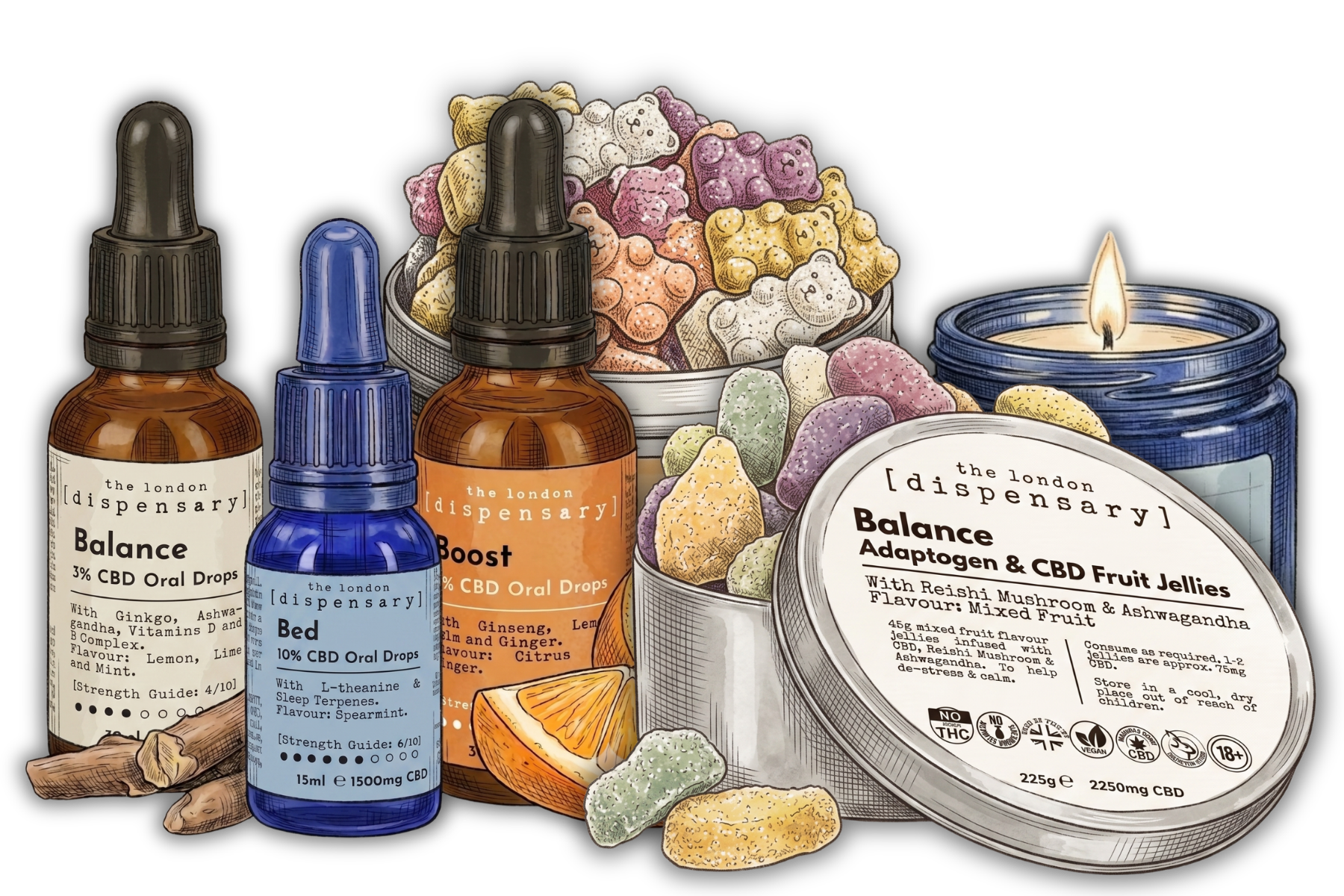
Adaptogens in The London Dispensary Range
Our range deliberately mixes ingredient families in some formulations, so the cleanest way to shop is by the actual formula rather than pretending every ingredient belongs to the same category.
Three Ways Adaptogens Appear in Our Range
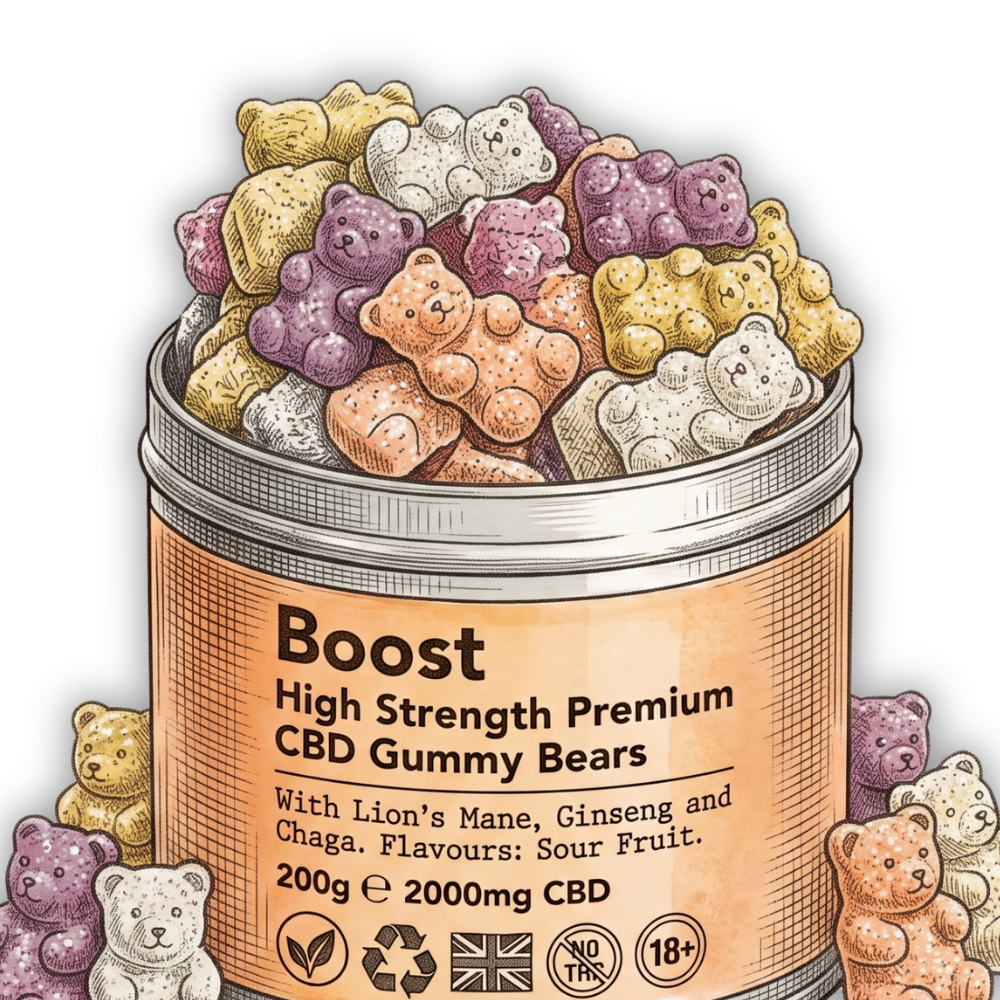
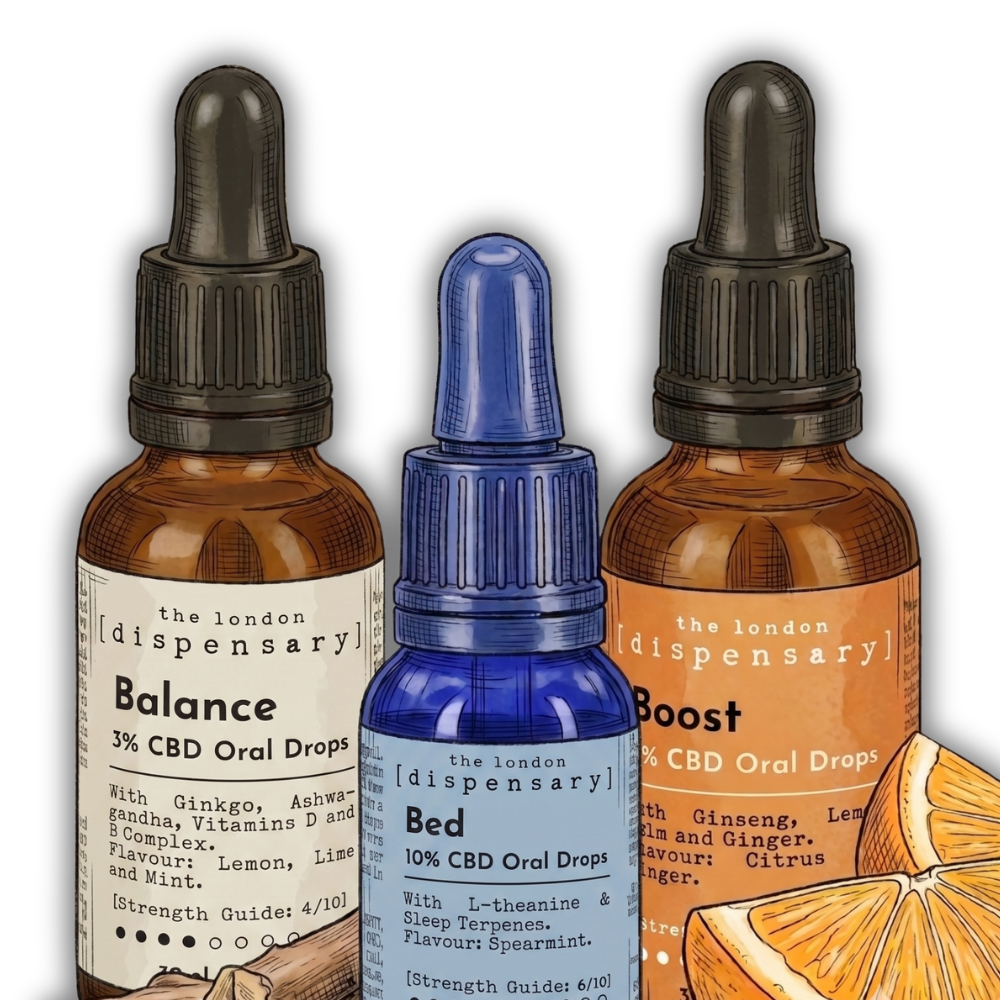
Reishi & Ashwagandha Fruit Jellies: our CBD Fruit Jellies with Reishi & Ashwagandha combine Ashwagandha with Reishi and CBD. Ashwagandha is the clearest classical adaptogen in the formulation; Reishi also belongs to our functional-mushroom cluster.
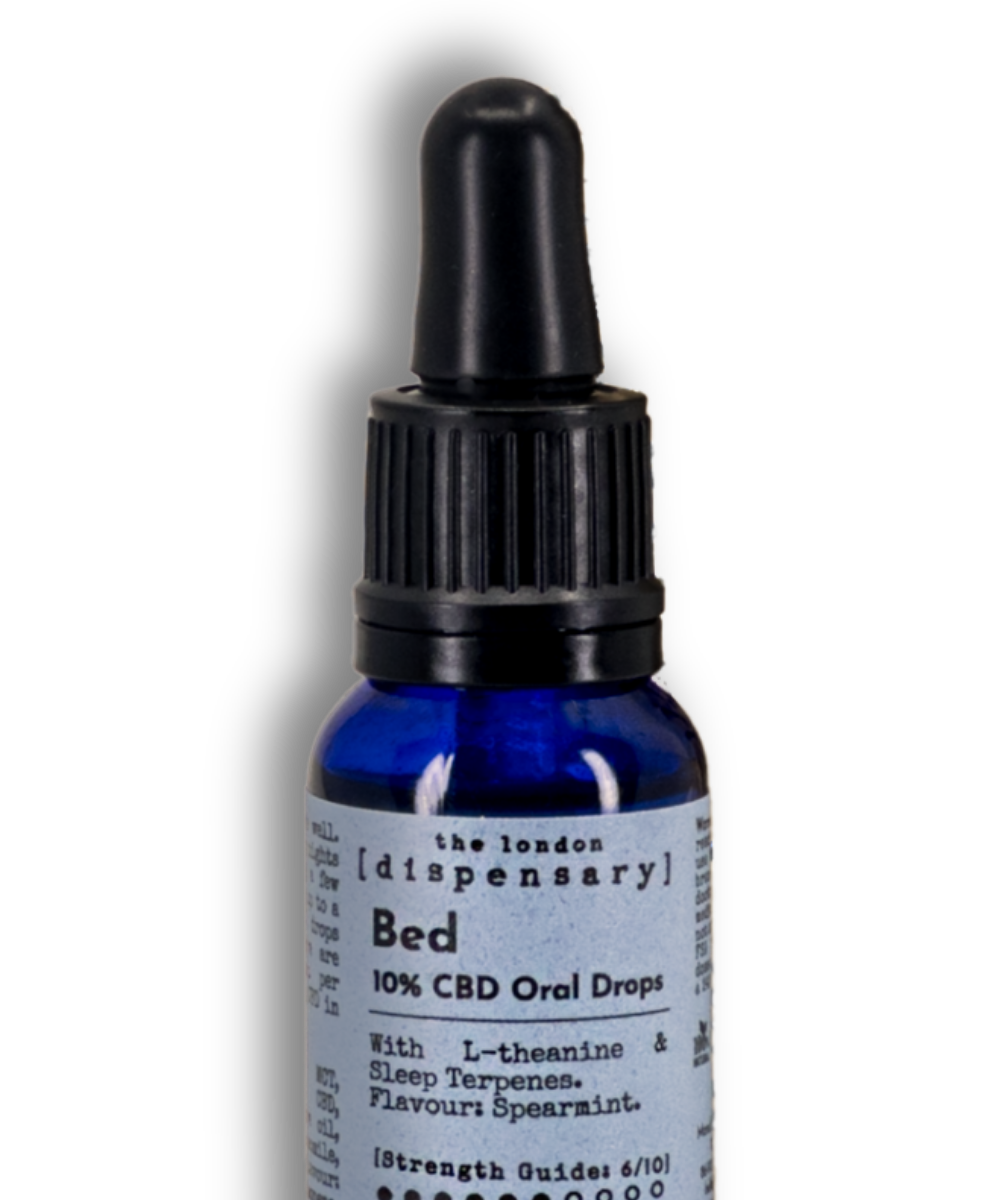
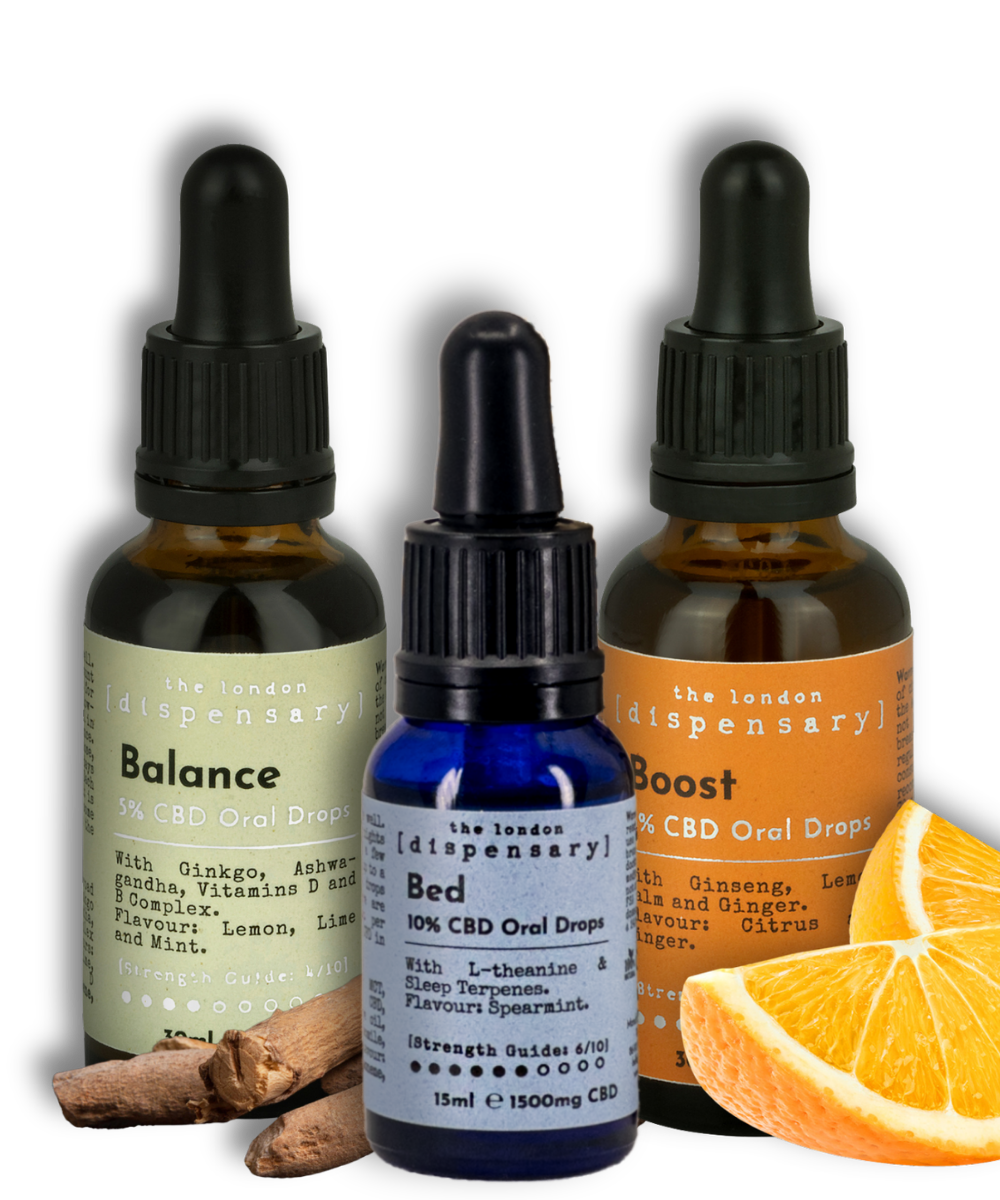
Balance CBD Drops: our Balance 10% CBD Oil with Ashwagandha & Ginkgo combines Ashwagandha with Ginkgo. Ginkgo is a separate botanical commonly discussed in cognition/nootropic contexts — it does not need to be relabelled as an adaptogen to justify its presence in the blend.
Boost Ginseng Drops: our Boost 10% CBD Oil with Ginseng uses Ginseng alongside Lemon Balm and Ginger. Ginseng can sit legitimately in the adaptogen conversation while the finished Boost formulation also belongs to our daytime/nootropic commercial architecture.
To compare the wider range, browse Nootropics & Adaptogens.
How Long Do Adaptogens Take to Work?
There is no evidence-based universal answer.
Published studies use different ingredients, extracts, amounts and intervention periods. The 2026 Ashwagandha/Rhodiola review included studies lasting roughly three to sixteen weeks, but that should not be turned into a promise that every adaptogen “kicks in” after a set number of days.9
If a product promises an instant or precisely timed effect, ask what evidence supports that exact formulation and dose.
Can Adaptogens Treat Stress or Anxiety?
Ashwagandha and other ingredients have been studied in stress- and anxiety-related research, but a food supplement sold in the UK cannot simply be marketed as a treatment for stress disorders, anxiety or depression.
This is not just cautious wording. Food supplements are regulated differently from medicines. The MHRA can treat products as borderline medicinal products depending on their presentation, claims and intended use.13
So we can discuss clinical research accurately in an educational article, but that is different from claiming that a TLD gummy or CBD oil treats anxiety.
What About CBD and Adaptogens?
CBD is not an adaptogen simply because it appears in a formula beside Ashwagandha or Ginseng. The original version of this article blurred those categories, and there is no reason to keep doing that.
Some of our products combine CBD with adaptogenic or nootropic ingredients because they are multi-ingredient formulations. Each ingredient still needs to be understood on its own terms. Evidence for Ashwagandha cannot be used as evidence for CBD, and evidence about CBD cannot be transferred to Ginseng or Reishi.
That is also why the product pages should describe the complete formula without inventing a “synergy” claim that has not been demonstrated for the finished product.
Are Adaptogens Right for Everyone?
No supplement category is right for everyone, and adaptogens are too diverse for a blanket recommendation.
A better decision starts with the exact ingredient and your reason for considering it. Look at what human research has actually tested, the form and amount used, the known safety information, whether you take medicines and whether the finished product contains other active ingredients.
If your question is simply “should I take an adaptogen?”, that is probably too broad. “What do we know about this Ashwagandha extract?” or “what exactly is in this Ginseng formula?” is a much more useful question.
What Are Adaptogens? The Bottom Line
Wow, we have covered a lot — the original article did promise a complete guide, after all.
The useful takeaway is simpler than much of the wellness marketing: adaptogen is an umbrella concept, not a magic mechanism. Ashwagandha, Rhodiola and Panax ginseng have meaningful places in the modern adaptogen literature, while ingredients such as Reishi can overlap with the category but also deserve their own evidence framework.
Human research is growing, particularly for Ashwagandha, but results vary by ingredient, preparation and outcome. Safety also differs from one botanical to another. The strongest buying habit is therefore to ignore the size of the word “ADAPTOGEN” on the front of the pack and look carefully at what is actually inside it.
For products that combine adaptogens with functional mushrooms, nootropic ingredients or CBD, explore our Nootropics & Adaptogens collection.
This article is for general educational information and does not diagnose, treat or prevent a medical condition.
Frequently Asked Questions
Frequently Asked Questions
What are adaptogens?
Adaptogen is a term used for certain plants, fungi and extracts discussed in relation to adaptation or resilience to physical and psychological stressors. It is an umbrella concept, so evidence and safety need to be assessed for each ingredient rather than assumed from the label.
Do adaptogens actually work?
Some ingredients described as adaptogens have human randomised trials and systematic reviews behind them, particularly Ashwagandha and Rhodiola. The evidence varies substantially by ingredient, extract, dose and outcome, so the whole adaptogen category cannot be treated as uniformly proven.
Is Ashwagandha an adaptogen?
Yes. Ashwagandha is one of the most widely recognised modern adaptogens and has a long history in Ayurveda as well as a growing human clinical-research base. Different extracts and doses are not automatically equivalent.
Are all functional mushrooms adaptogens?
No. Reishi is often discussed in the adaptogen space, while Lion’s Mane is more commonly discussed in cognition and nootropic research. Functional mushroom, adaptogen and nootropic are overlapping terms but they are not synonyms.
What is the difference between adaptogens and nootropics?
Adaptogen is a concept centred on adaptation or resilience to stressors. Nootropic is a broad term centred on cognition, attention, memory or mental performance. Some ingredients appear in both conversations, but the terms are not interchangeable.
Are adaptogens safe?
There is no universal adaptogen safety profile. Safety depends on the exact ingredient, extract, amount, duration, medicines and individual circumstances. Check ingredient-specific warnings and seek appropriate professional advice if you take medicines, are pregnant or breastfeeding, or have a health condition.
What should I look for in an adaptogen supplement?
Check the exact species or ingredient, plant or fungal part, amount per serving, extract information, complete formulation, allergens, warnings, claims and available testing. Do not rely on adaptogen blend as proof of quality or effectiveness.
- Panossian A, Seo EJ, Efferth T. Evolution of the adaptogenic concept from traditional use to medical systems: Pharmacology of stress- and aging-related diseases. Med Res Rev. 2021;41(1):630-703. https://pubmed.ncbi.nlm.nih.gov/33103257/
- Todorova V, Ivanov K, Delattre C, Nalbantova V, Karcheva-Bahchevanska D, Ivanova S. Plant Adaptogens—History and Future Perspectives. Nutrients. 2021;13(8):2861. https://pubmed.ncbi.nlm.nih.gov/34445021/
- Food Standards Agency. Food supplements guidance. Published 25 June 2026. https://www.gov.uk/government/publications/food-supplements-guidance/food-supplements-guidance
- Department of Health and Social Care. Great Britain nutrition and health claims register. Updated 19 May 2026. https://www.gov.uk/government/publications/great-britain-nutrition-and-health-claims-nhc-register
- Panossian A, Seo EJ, Efferth T. Evolution of the adaptogenic concept from traditional use to medical systems. Med Res Rev. 2021;41(1):630-703. https://pubmed.ncbi.nlm.nih.gov/33103257/
- Łuszczak J, Kocki J. Clinical evidence for the adaptogenic effects of Withania somnifera and Rhodiola rosea – A systematic review with molecular interpretation of psychometric outcomes. Ann Agric Environ Med. 2026;33(1):3-11. https://pubmed.ncbi.nlm.nih.gov/41906501/
- Akhgarjand C, et al. Effects of Ashwagandha (Withania somnifera) on stress and anxiety: A systematic review and meta-analysis. Explore. 2024. https://pubmed.ncbi.nlm.nih.gov/39348746/
- Dual impact of Ashwagandha: Significant cortisol reduction but no effects on perceived stress – A systematic review and meta-analysis. https://pubmed.ncbi.nlm.nih.gov/40746175/
- Łuszczak J, Kocki J. Clinical evidence for the adaptogenic effects of Withania somnifera and Rhodiola rosea. Ann Agric Environ Med. 2026;33(1):3-11. https://pubmed.ncbi.nlm.nih.gov/41906501/
- Zeng M, et al. Effects of Ginseng on Cognitive Function: A Systematic Review and Meta-Analysis. Phytother Res. 2024;38(12):6023-6034. https://pubmed.ncbi.nlm.nih.gov/39474788/
- The Nutritional Significance of Ganoderma lucidum on Human Health: A GRADE-Assessed Systematic Review and Meta-Analysis of Clinical Trials. 2025. https://pubmed.ncbi.nlm.nih.gov/40510787/
- National Center for Complementary and Integrative Health. Ashwagandha: Usefulness and Safety. https://www.nccih.nih.gov/health/ashwagandha
- Medicines and Healthcare products Regulatory Agency. Borderline products: how to tell if your product is a medicine. Updated 2 July 2026. https://www.gov.uk/guidance/borderline-products-how-to-tell-if-your-product-is-a-medicine