









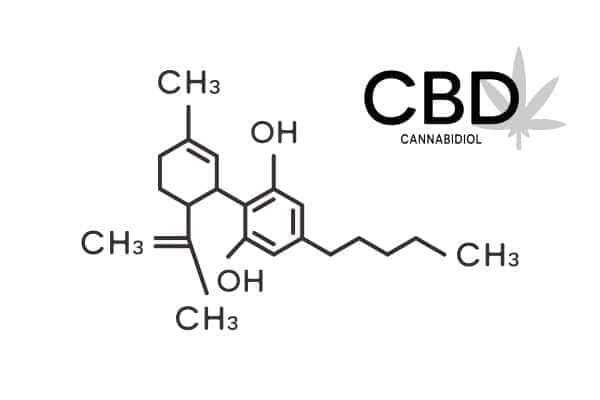
Short answer: what is CBD?
CBD, short for cannabidiol, is a naturally occurring cannabinoid found in cannabis and hemp. It is not the same compound as THC and does not produce the characteristic intoxicating “high” associated with THC. In the UK, however, the rules that apply to a CBD product depend heavily on what the product actually is: an ingestible CBD food, a cosmetic topical, a medicine or another product format can sit under different regulatory frameworks. That distinction has been part of this guide from the beginning and is worth preserving. “What is CBD?” is not only a chemistry question. For a customer, it also means: what is in the product, how is it intended to be used, what does the evidence actually show, and what claims is a seller legally entitled to make?
What is cannabidiol?
Cannabidiol is one of many naturally occurring compounds associated with Cannabis sativa. These compounds are usually described as cannabinoids. CBD and THC are both cannabinoids, but they are not interchangeable. THC is strongly associated with the intoxicating effects of cannabis. CBD does not produce that same high. That does not mean that every product carrying “CBD” on the label is automatically identical, risk-free or legally equivalent. The final formulation, other cannabinoids present, intended use, route of administration and marketing claims all matter. Commercial CBD can appear as purified CBD isolate or as part of a wider hemp-derived extract. Terms such as broad spectrum and full spectrum are widely used in the market, but shoppers should still look at the actual cannabinoid specification and available laboratory information rather than relying on a front-label phrase alone.
CBD in the UK: how the story developed
CBD moved quickly from a niche ingredient into oils, capsules, gummies, drinks, cosmetics and other consumer products. Regulation has had to distinguish between several very different uses.
CBD foods and novel-food rules
The Food Standards Agency treats CBD extracts used in food as novel foods. Businesses selling ingestible CBD products in England and Wales need to understand the novel-food framework and the status of the specific product or ingredient they place on the market. The current official guidance is maintained on the GOV.UK Cannabidiol guidance page 1.
Medical claims are a separate issue
The Medicines and Healthcare products Regulatory Agency states that a CBD product used or marketed for a medical purpose is a medicine. A product making medicinal claims can therefore fall within medicines regulation and generally requires the applicable marketing authorisation unless an exemption applies. That matters for ordinary retail copy. A food supplement or cosmetic should not be turned into an unlicensed treatment for anxiety, pain, arthritis, insomnia or another medical condition simply because CBD research exists.
A cosmetic CBD product is not a CBD food
A cream or balm intended for external cosmetic use sits in a different regulatory category from an oil or gummy intended to be eaten. That is one reason this guide keeps product formats separate rather than talking about “CBD” as though every route of use were the same.
Why do people use CBD?
The original version of this article presented a list of health “benefits”. That reflected how CBD was often marketed at the time, but it is too easy for a general information page to turn consumer interest into a treatment claim. A better way to preserve the useful part of that section is to separate why people search for CBD from what has actually been proven. People commonly investigate CBD in connection with:
- general wellness routines;
- sleep-related searches;
- stress and relaxation searches;
- pain and arthritis searches;
- sports, massage and body-care routines;
- curiosity about cannabis-derived ingredients without THC intoxication;
- different supplement and cosmetic formats.
Those are genuine areas of consumer interest and research. They are not a list of authorised medical outcomes for an ordinary retail CBD product. For medical conditions, the right question is not “which CBD product should I buy to treat this?” but “what evidence exists, what product and dose were actually studied, and what does appropriate clinical guidance say?”
How does the body respond to CBD?
CBD research often discusses the endocannabinoid system, a signalling network involving cannabinoid receptors, endogenous cannabinoids made by the body and enzymes involved in producing or breaking them down. CBD’s pharmacology is complex. It does not simply “switch on” one cannabinoid receptor in the way a simplified diagram might suggest. Researchers have investigated CBD across several molecular targets and signalling systems. That biology is scientifically interesting, but a mechanism is not the same thing as a proven consumer benefit. Demonstrating that a compound interacts with a biological pathway does not prove that a particular gummy, oil or cream will deliver a specific health outcome.
Is CBD a “wonder drug”?
No general retail CBD product should be described that way. There are authorised cannabinoid-based medicines for particular medical uses, but that does not turn every consumer CBD product into a medicine. Pharmaceutical evidence for a licensed medicinal product cannot simply be transferred to a food supplement, cosmetic cream or home-fragrance product. The original article asked whether CBD was the “new wonder drug”. Keeping the question is useful because it exposes one of the biggest sources of confusion in the market: the existence of serious medical research does not validate every commercial CBD claim.
CBD vs THC: can you use CBD without getting high?
CBD itself does not produce the same intoxicating high as THC. Product composition still matters, because cannabis-derived materials can contain other cannabinoids. For shoppers, useful checks include:
- the stated CBD type;
- the cannabinoid analysis where available;
- whether the brand explains its THC/control-cannabinoid position;
- whether the laboratory report can be connected to the product;
- the legal and product-category requirements relevant to that format.
A “THC-free” or “broad-spectrum” label should be supported by the product specification and testing rather than treated as a magic phrase.
CBD products: what formats are available?
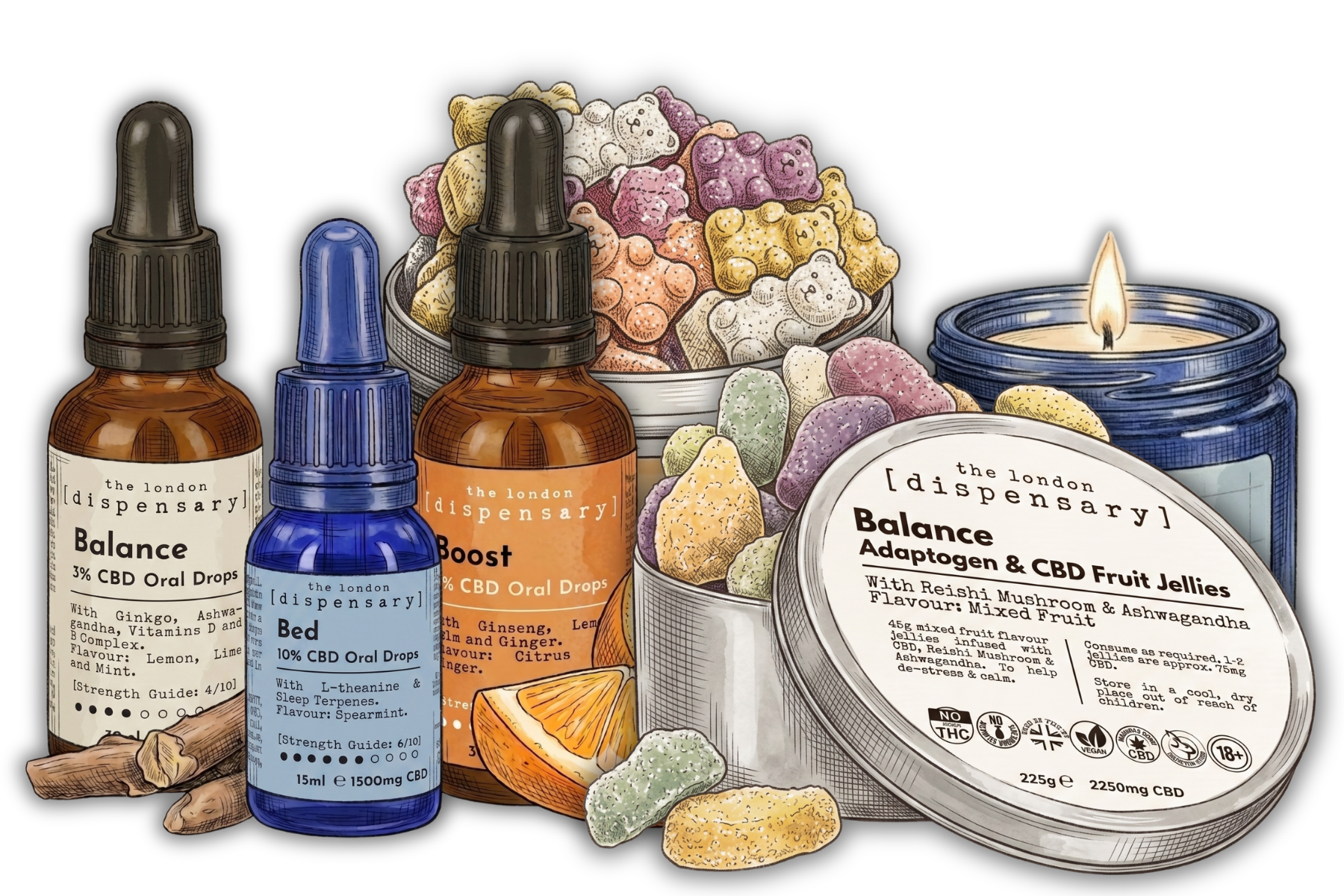
CBD is used across several product formats, and the way a product is used matters. Oils and gummies are ingestible CBD foods, while creams and balms are external-use topical products. Home-fragrance products such as candles are different again and should not be presented as a way to deliver a CBD dose.
CBD oils and drops
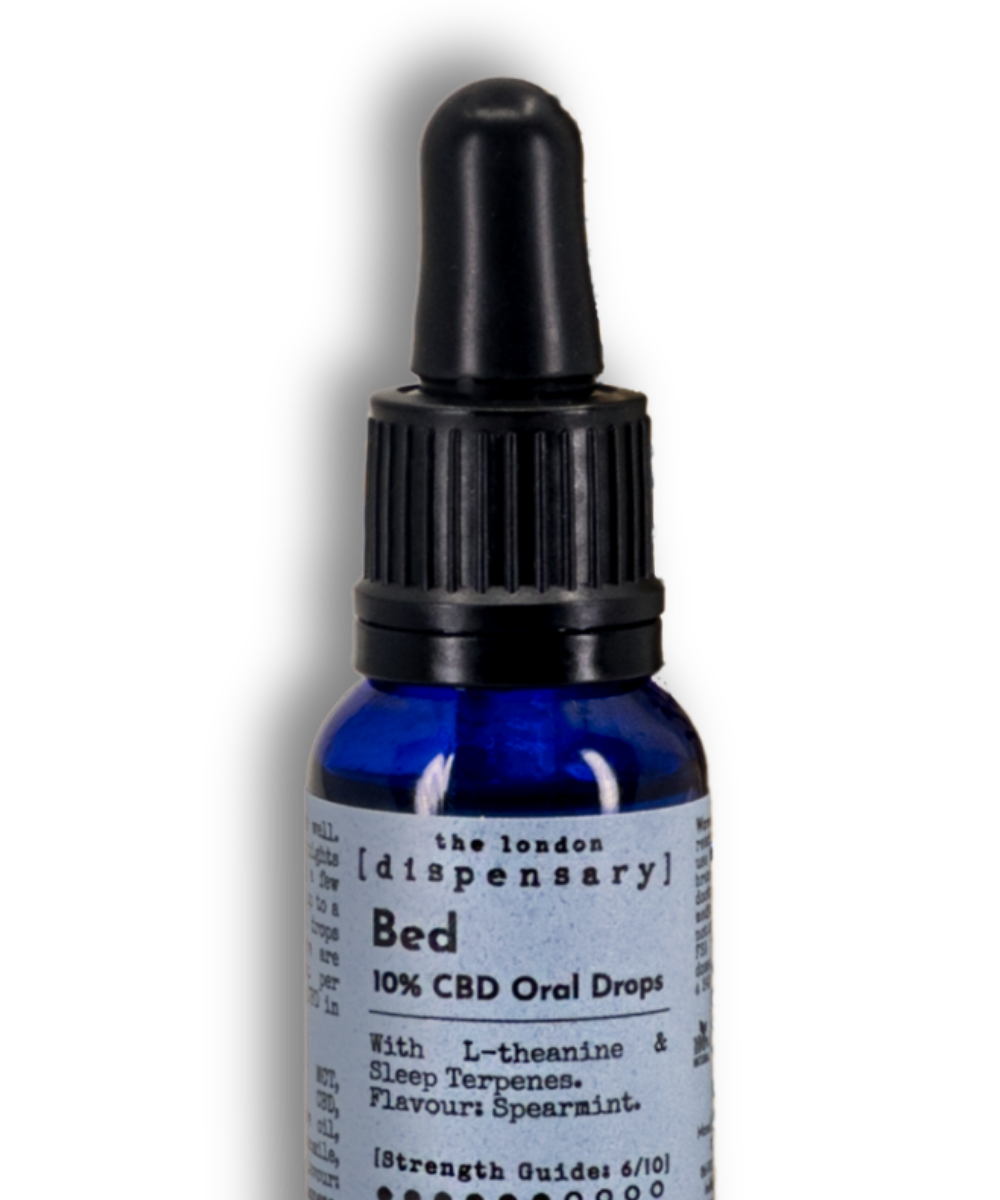
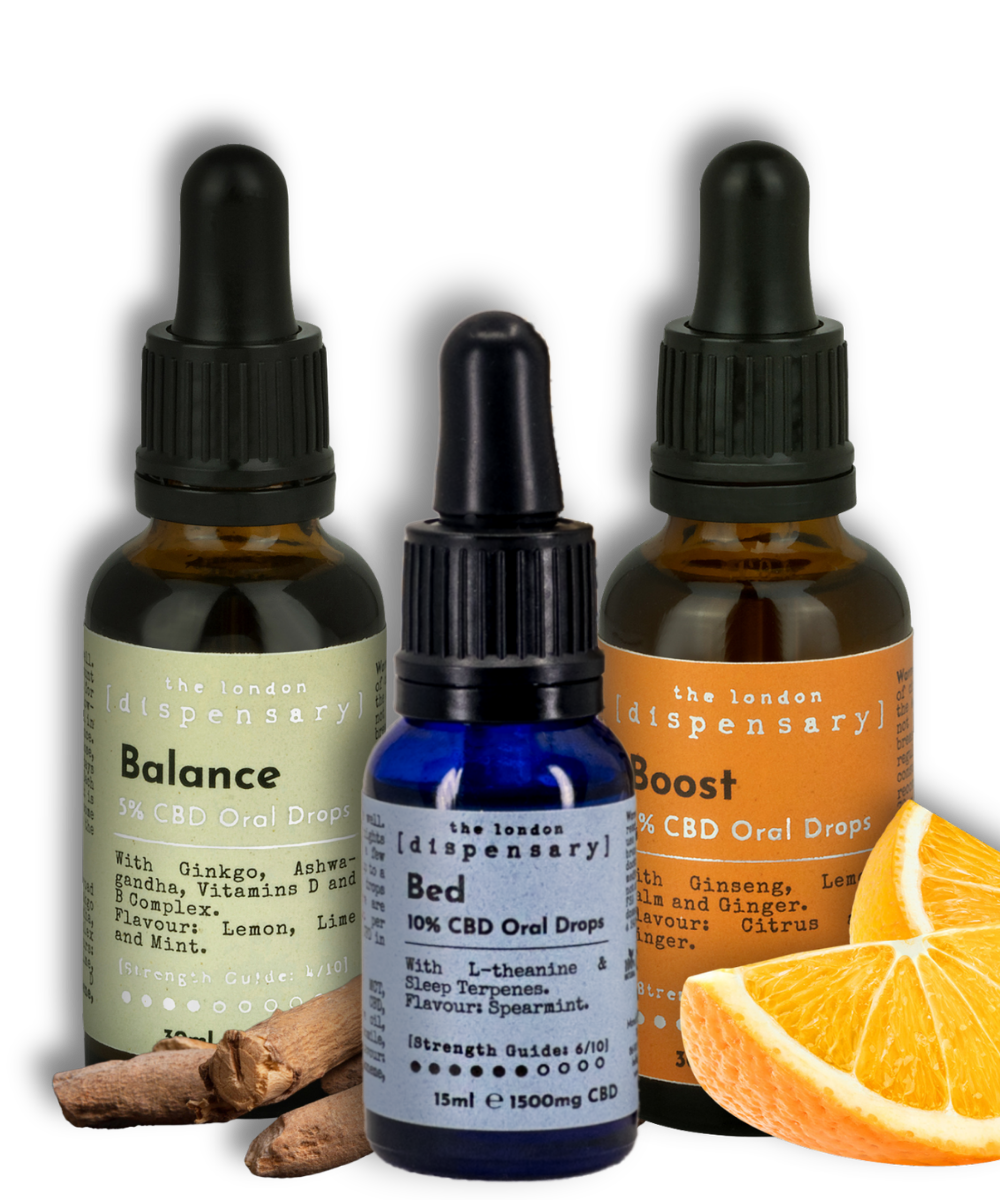
CBD oils and drops are ingestible products supplied with product-specific directions. Compare the amount of CBD per serving, the total CBD in the bottle, additional ingredients and current Food Standards Agency CBD guidance 2 rather than assuming every bottle is used in the same way.
CBD gummies
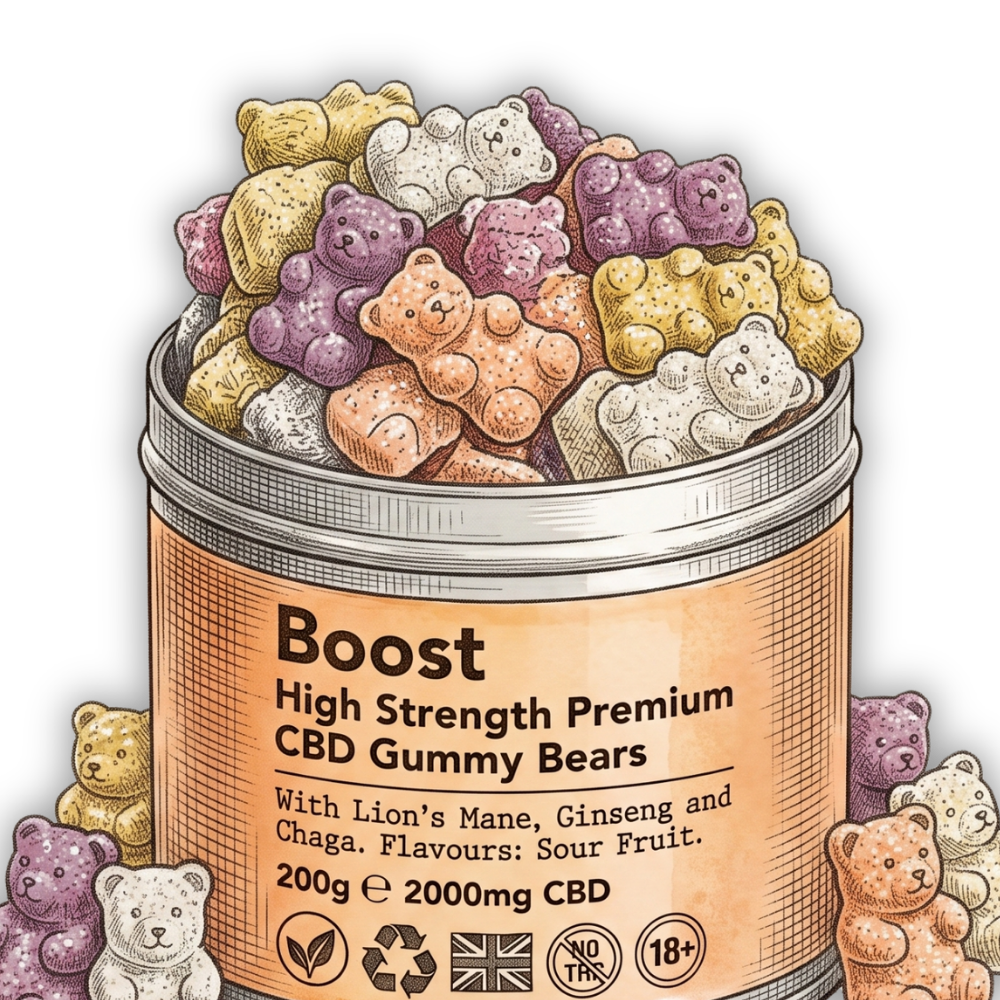
CBD gummies provide CBD in a pre-portioned edible format. As with other CBD foods, customers should consider the amount of CBD per serving and their total daily intake from all ingestible CBD products.
CBD cream
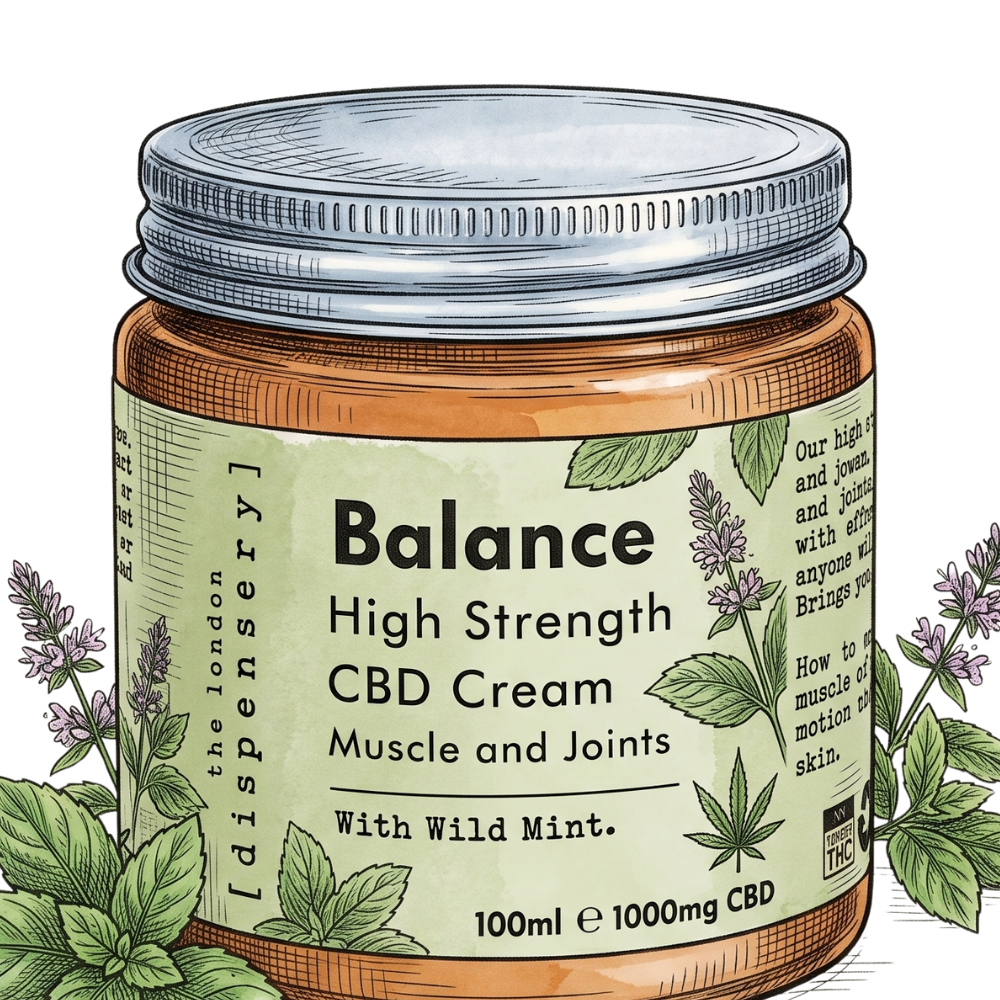
A CBD cream is applied externally to the skin. Creams normally contain a water phase, giving them a lighter, more spreadable texture than a balm. The London Dispensary’s current High-Strength CBD Cream contains 1000mg CBD isolate in a 100ml cream alongside Arnica, Camphor, Wild Mint, Glycerine, Shea Butter and plant oils. For customers comparing a cream in more detail, the dedicated product page contains the full 1000mg specification, ingredients, directions and testing information.
CBD topicals and balms
The broader CBD topicals collection includes creams, richer balms and body-care formats. A balm is usually built around oils, butters and waxes and therefore has a denser, more occlusive texture than a cream. For a detailed format comparison, read What Are CBD Topicals? CBD Creams & Balms Explained.
CBD home fragrance
Some candles, wax melts and other home-fragrance products may contain CBD as an ingredient. They should still be understood primarily through the way the finished home-fragrance product is designed and tested. Burning a CBD candle should not be marketed as an inhaled CBD-delivery method.
Other CBD formats
CBD can also appear in other product types. Always check what the product actually is, how it is intended to be used and which regulatory category it falls within. A CBD food, cosmetic topical and home-fragrance product should not be described as though they deliver CBD in the same way.
How much CBD should you take?
For CBD in food, the Food Standards Agency’s current precautionary advice is that healthy adults should limit consumption to 10mg CBD per day. The FSA explains that this is a lifetime-exposure precautionary level and advises consumers to check labels and consider their total intake across CBD food products. That 10mg advice is not a treatment dose and it is not an application limit for a cosmetic cream. The FSA also identifies groups for whom CBD food products may not be appropriate without medical direction. Anyone taking medication or managing a health condition should take particular care rather than assuming a supplement cannot interact with medicines.
CBD safety: what should you check?
The original article had a dedicated safety section, and it should remain part of a foundation guide.
For ingestible CBD
Check:
- CBD per serving and suggested daily use;
- your total CBD intake from all CBD foods used that day;
- other active ingredients;
- warnings and suitability information;
- whether you take medicines that could interact;
- the product’s novel-food/regulatory position where relevant.
For CBD cosmetics
Check:
- the complete cosmetic ingredient list;
- directions and warnings;
- fragrance allergens and known sensitivities;
- whether the product is intended only for intact external skin;
- patch-test advice;
- whether medicinal claims are being made for what is sold as a cosmetic.
For any CBD product
Do not assume that a high milligram number means “better”. Total CBD, concentration, serving size, container size and route of use all change what that number means.
What should you look for when buying CBD in the UK?
A useful CBD retailer should make the product easier to understand, not harder.
1. Clear specification
You should be able to identify the amount of CBD, container size or number of servings, product type and important formulation details.
2. Accessible laboratory information
Where cannabinoid testing is relevant, laboratory reports should be available and understandable. A test result is more useful when it can be connected to the actual product or batch.
3. Complete ingredients
CBD is rarely the only ingredient. Look at sweeteners, oils, botanicals, essential oils, allergens and other functional ingredients.
4. Responsible claims
Be cautious when a shop promises to cure disease, replace prescribed medicines or guarantees a health outcome. The MHRA’s position on medicinal claims is clear: products containing CBD marketed for medical purposes can fall within medicines regulation.
5. Useful customer information
Delivery, returns, contact details, reviews, usage instructions and transparent product pages all help distinguish a real retail operation from a landing page built around exaggerated claims. You can browse our wider CBD products hub by format or review laboratory reports separately from the marketing copy.
The bottom line
CBD is better understood as an ingredient used across several very different product categories than as one single “wellness product”. It is non-intoxicating in the way THC is, but that does not make every CBD formulation equivalent. Research into cannabidiol is real, and so are important limits in what that research allows an ordinary retailer to claim. The most useful approach is therefore to separate four questions:
- What is the product? Food, cosmetic, medicine or another format?
- What does it contain? CBD amount, other cannabinoids and complete formulation.
- How is it used? Swallowed, applied to skin or used as home fragrance?
- What evidence and claims actually apply to that use?
That gives you a much more reliable basis for comparing CBD products than either dismissing CBD entirely or treating it as a cure-all.
Frequently Asked Questions
What is CBD?
CBD, or cannabidiol, is a cannabinoid found in cannabis and hemp. It is used in products including oils, gummies, capsules and external-use topicals.
Does CBD get you high?
CBD is not intoxicating in the same way as THC and does not produce the characteristic cannabis high. Finished products still need appropriate cannabinoid controls and testing.
Is CBD legal in the UK?
CBD itself is not generally a controlled drug, but a finished product must comply with the rules for its format, composition and marketing. Food, cosmetic and medicines rules can apply differently.
What forms of CBD are available?
Common formats include oils and drops, gummies and other foods, capsules, creams, balms and other external-use products. Their directions and regulatory position are not interchangeable.
How much CBD should you use?
Follow the label for the exact product. For ingestible CBD foods, current Food Standards Agency precautionary guidance advises healthy adults to limit CBD to 10mg per day from all food sources.
- GOV.UK Cannabidiol guidance page. https://www.gov.uk/government/publications/cannabidiol-cbd-guidance
- Food Standards Agency CBD guidance. https://www.gov.uk/government/publications/cannabidiol-cbd-guidance/cannabidiol-cbd-guidance