











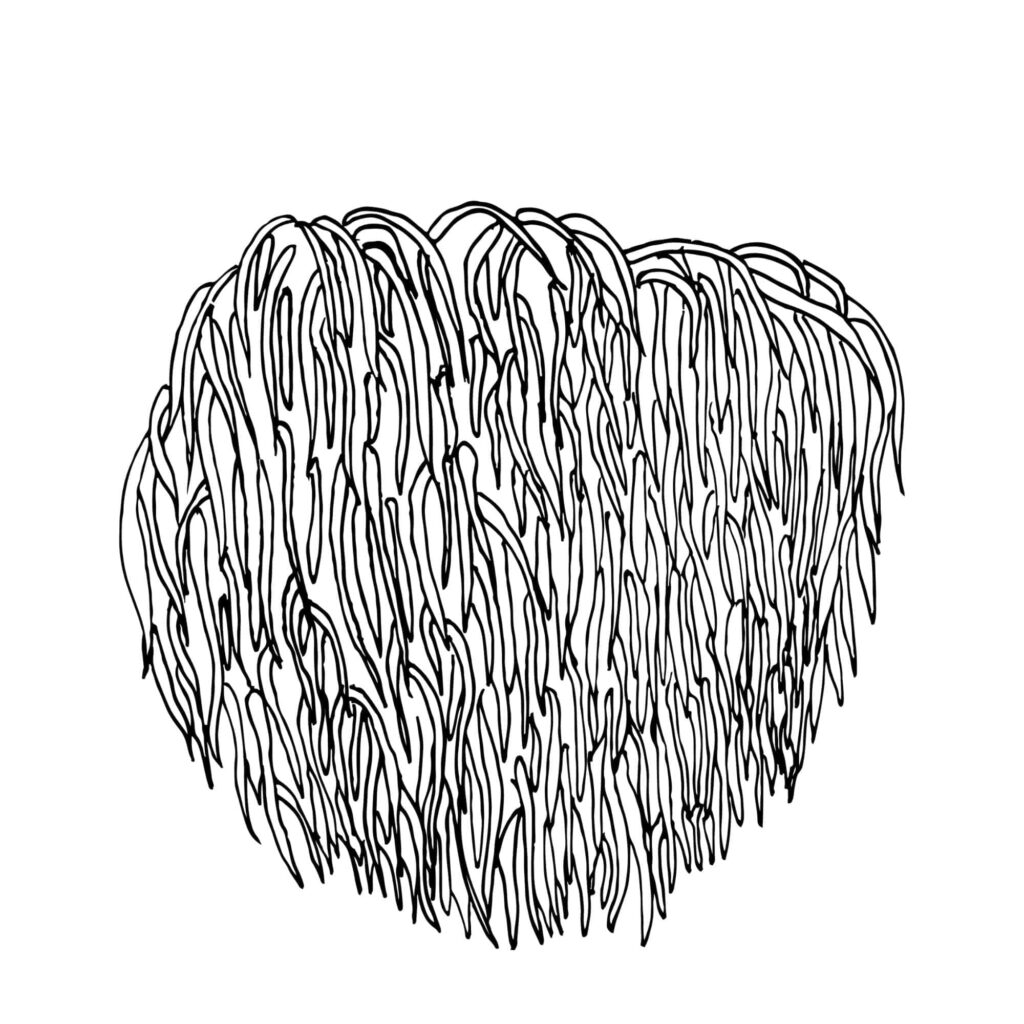
Search for Lion’s Mane benefits and you will quickly meet a mushroom that apparently does everything: memory, focus, mood, immunity, digestion, inflammation and possibly half the rest of the human body.
That is not how the evidence looks when you read it properly.
Hericium erinaceus is genuinely interesting. Human trials have investigated cognition, mood and other outcomes, while laboratory and animal research explores a much wider range of mechanisms. The problem is that those evidence levels are often flattened into one enormous “benefits” list.
So this guide takes a different approach. We are looking at the five main areas behind the Lion’s Mane benefits conversation, separating human evidence from early-stage research and being clear about what the studies do — and do not — show.
A 2025 systematic review illustrates the issue well: it identified five randomised controlled trials, three pilot clinical trials and numerous laboratory studies, but the studies used different preparations, populations and outcomes, making simple conclusions difficult.1
If you need the species, ecology and UK background first, start with our Lion’s Mane mushroom UK guide. This page stays focused on the evidence rather than repeating the basics.
Lion’s Mane Benefits: Evidence at a Glance
| Research area | What we have | Our evidence read |
|---|---|---|
| Cognition & memory | Several small human trials in different populations | Promising but preliminary |
| Focus, attention & processing | Small healthy-adult trials with mixed results | Limited and mixed |
| Mood & stress | Small older trial plus a recent pilot signal | Early evidence only |
| Nerve-growth / neurotrophic mechanisms | Substantial laboratory and animal interest | Mainly preclinical |
| Gut, immune, antioxidant & wider effects | Mostly laboratory/animal work, with small exploratory human studies | Too early for consumer benefit claims |

MYTH BUSTER
1. Lion’s Mane, Cognition and Memory
This is the area with the strongest human interest — but “strongest” is relative. We are still talking about a fairly small number of trials.
The 2009 mild cognitive impairment trial
One of the most cited studies enrolled 30 Japanese adults aged 50–80 with mild cognitive impairment. In this double-blind placebo-controlled trial, participants in the Lion’s Mane group took dried mushroom powder for 16 weeks. Scores on the study’s cognitive scale were higher than placebo at weeks 8, 12 and 16, then declined after supplementation ended.2
That is a worthwhile signal. It is also a 30-person trial in older adults with mild cognitive impairment, using a specific preparation. It does not establish that every Lion’s Mane product improves memory in healthy adults.
A later 12-week study
A 2019 randomised double-blind placebo-controlled study tested a Lion’s Mane fruiting-body supplement for 12 weeks. The researchers reported improvement on the Mini-Mental State Examination, but not an equally clear effect across all cognitive tests.3
Again, that is more interesting than a null result — but it is not a licence to turn “Lion’s Mane benefits memory” into a blanket marketing promise.
2. Lion’s Mane for Focus, Attention and Mental Performance
Focus is one of the biggest commercial associations around Lion’s Mane, and it is also an area where marketing gets ahead of the evidence.
A 2023 double-blind pilot study in 41 healthy adults aged 18–45 tested 1.8g of Lion’s Mane. After a single dose, the Lion’s Mane group was faster on one Stroop task. After 28 days, researchers found a trend towards reduced subjective stress, but the study did not show a broad, consistent improvement across all cognitive and mood outcomes.4
Then in 2025, a separate double-blind crossover study gave a standardised Lion’s Mane extract to 18 healthy adults. It found no significant overall effect on the study’s global cognitive or mood measures after a single dose, although one fine-motor task improved.5
That combination is exactly why our answer to “does Lion’s Mane help focus?” is possibly interesting, not proven. One small study finding on one task is not the same as establishing a reliable everyday focus effect.
We cover that narrower search intent separately in our guide to Lion’s Mane for focus, concentration and attention.

DID YOU KNOW?
3. Lion’s Mane, Mood and Stress: What Has Been Studied?
There is some human research here, but it is much thinner than many supplement pages imply.
A small 2010 randomised trial involved 30 women who consumed Lion’s Mane-containing cookies or placebo cookies for four weeks. The study reported differences in some questionnaire measures, including depression-related and “indefinite complaint” scores, with some concentration, irritability and anxiety items trending lower.7
The 2023 healthy-adult pilot also reported a trend towards lower subjective stress after 28 days, but the authors themselves framed the work as preliminary.4
We would therefore not describe Lion’s Mane as a treatment for anxiety, depression or stress. Those are medical or health claims that go far beyond what these small studies establish.
4. Nerve Growth Factor, Hericenones and Erinacines
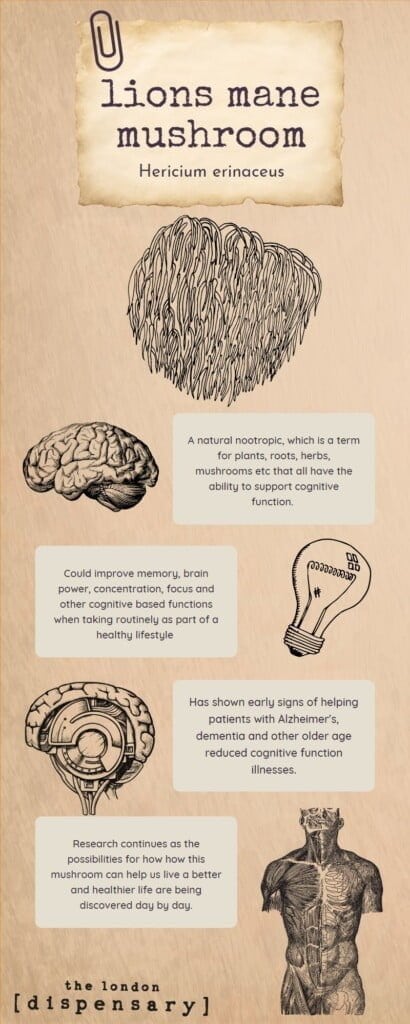
This is the “science bit” that makes Lion’s Mane especially interesting — and especially easy to oversell.
Researchers have investigated compounds including hericenones and erinacines because of their effects on neurotrophic pathways in experimental models. A 2025 systematic review of erinacines brought together preclinical cellular and animal evidence relating to neuroprotective mechanisms.8
The key word there is preclinical. It is reasonable to say researchers are studying these mechanisms. It is not reasonable to jump from a cell or rodent model to “Lion’s Mane regrows brain cells in people”.
That distinction also helps explain why the simple internet rule “mycelium is useless” does not hold up. Erinacines are strongly associated with mycelial research, and a 2020 pilot clinical study used erinacine A-enriched Lion’s Mane mycelia in people with mild Alzheimer’s disease.9
We are not recommending Lion’s Mane for Alzheimer’s disease; that is a medical condition and this evidence is not a basis for self-treatment. The study is useful here because it shows why the chemistry is more nuanced than a marketing slogan about fruiting body versus mycelium.
5. Gut, Immune and Antioxidant Claims: Where the Evidence Gets Much Earlier
This is where “Lion’s Mane benefits” lists often become least reliable. Laboratory and animal studies investigate inflammation, oxidative stress, immune pathways, microbiota and many other endpoints. Those findings are useful for generating hypotheses; they are not the same as showing a meaningful health benefit from a UK food supplement.
There is some exploratory human work. For example, a small uncontrolled pilot study asked 13 healthy adults to consume Lion’s Mane powder and reported changes in gut-microbiota composition.10
With 13 people and no placebo control, that is nowhere near enough to conclude that Lion’s Mane “improves gut health”. It is an example of early human research, not an established benefit.
How Strong Is the Evidence Overall?
The 2025 systematic review is useful because it prevents cherry-picking. It included five randomised controlled trials, three pilot clinical trials and a much larger body of laboratory work. The human studies do not all use the same preparation, population, dose or cognitive outcome, which limits how confidently one result can be carried across to another product.11
The 2026 hericenones scoping review adds depth to the chemistry, cataloguing numerous hericenone compounds and their biological research, but much of that evidence remains mechanistic or preclinical rather than a direct demonstration of a consumer benefit.12
For SEO and for accuracy, that is the useful distinction this page should own: human cognition evidence is promising but small; broader mechanistic evidence is much larger; neither justifies turning a retail Lion’s Mane supplement into a treatment claim.
So, Does Lion’s Mane Work?
The fairest answer is: there are human signals, particularly around cognition, but we do not yet have the quantity, consistency or scale of evidence needed for sweeping conclusions.
That is not a disappointing answer. In fact, it is what makes the research interesting. The evidence is no longer limited to test tubes, but it is also nowhere near the point where every claim on a supplement label should be accepted.
It is also why two people can read the same study and come away with very different headlines. “Small trial found a difference on one cognitive measure” is accurate. “Scientifically proven brain booster” is not.

TOP TIP
How Long Does Lion’s Mane Take to Work?
There is no evidence-based universal timeline. Human studies have tested very different questions: one 2023 trial measured an acute cognitive task 60 minutes after a dose and again after 28 days, while the 2009 mild-cognitive-impairment trial measured changes across 16 weeks.42
That means internet timelines such as “you will feel it in two weeks” are more certain than the evidence. A supplement is also not a useful substitute for investigating persistent changes in memory, concentration, mood or other symptoms with an appropriate healthcare professional.
Are There Side Effects?
The 2025 systematic review found that adverse events reported in human studies were generally limited, including gastrointestinal symptoms and headache, while the wider literature includes a possible hypersensitivity case.1
In a 49-week pilot study of erinacine A-enriched mycelia, four participants discontinued because of abdominal discomfort, nausea or skin rash.9
Small trials cannot detect every uncommon adverse effect or interaction. Read the finished-product label, and seek appropriate professional advice if you have an allergy, take medication, have a medical condition, are pregnant or breastfeeding, or are uncertain whether a supplement is suitable for you.
If the evidence has brought you to the buying stage, our comparison of Lion’s Mane supplement formats explains gummies, capsules, powders, liquid extracts and drinks without turning the article into a competitor round-up.
From Research to a Real-World Supplement
If you decide to use Lion’s Mane, the next question is not “which study sounds most exciting?” but what finished product actually fits your routine and gives you clear information about what is inside it.
Lion’s Mane in Our Mushroom Gummies
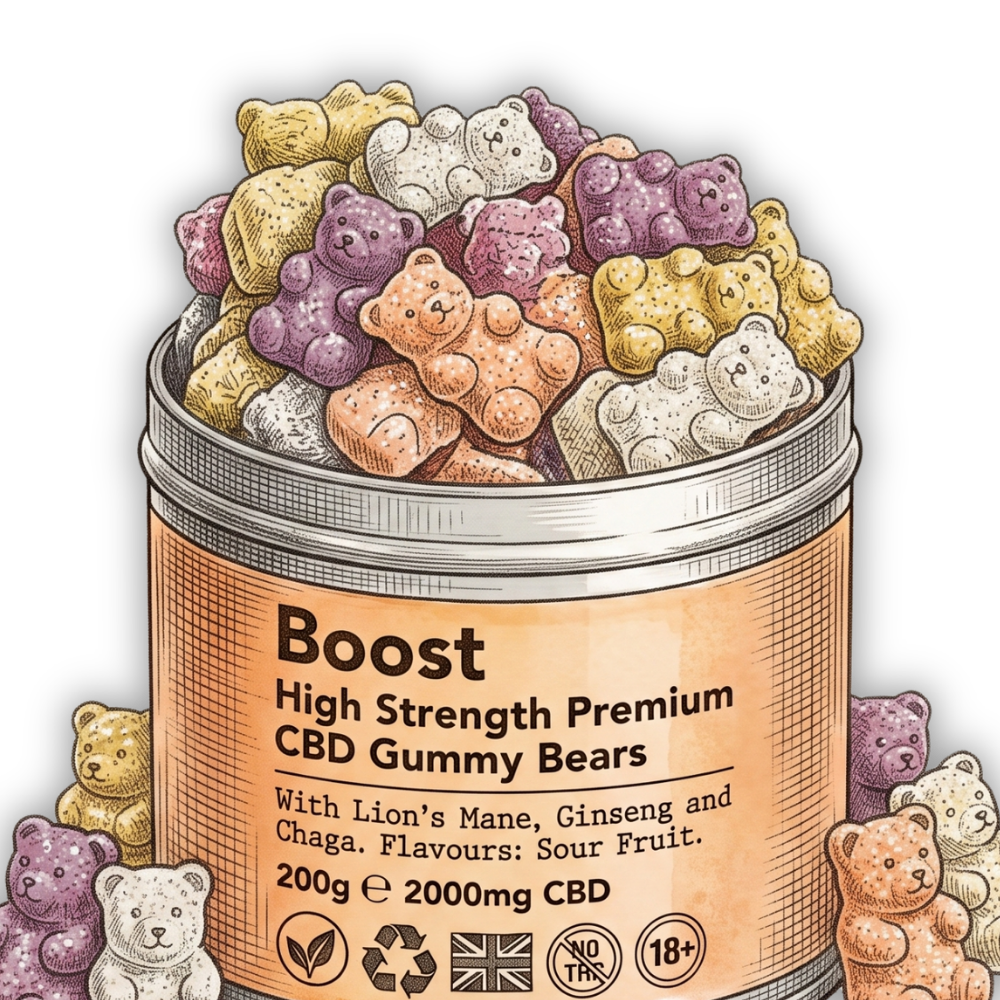
Our CBD mushroom gummies with Lion’s Mane use UK-grown Lion’s Mane fruiting-body extract with Chaga, Ginseng and broad-spectrum CBD. We include that here as a relevant format option — not as a claim that the finished gummy reproduces the outcomes of the studies discussed above.
You can also compare our wider mushroom gummies range.
The Bottom Line on Lion’s Mane Benefits
Lion’s Mane has earned scientific attention. The human cognition evidence is interesting enough to take seriously, but still too small and inconsistent to justify the enormous list of guaranteed benefits you will find online.
Our view is simple: the strongest content should show you both the promising findings and the inconvenient null results. That is the only way to tell the difference between a genuinely interesting functional mushroom and a marketing story built from selective studies.
Research will continue to move. For now, the sensible position is curiosity without certainty.
Frequently Asked Questions
What are the main claimed benefits of Lion’s Mane?
Most interest centres on cognition, memory, focus, mood and neurotrophic mechanisms. Human evidence is strongest around cognition but remains limited; many wider claims come mainly from laboratory or animal research.
Does Lion’s Mane really work?
Some small human trials report cognitive or mood-related signals, while other outcomes are null or mixed. The evidence justifies further research but does not support guaranteed effects for every person or supplement.
Does Lion’s Mane improve memory?
Small trials in older adults have reported improvements on some cognitive measures, but those findings should not be generalised into a universal memory claim for healthy people or all Lion’s Mane products.
How long does Lion’s Mane take to work?
There is no established universal timeline. Human studies have measured outcomes from around an hour after a dose to several weeks or months, using different preparations and populations.
What are the downsides or side effects of Lion’s Mane?
Reported effects in small human studies have included gastrointestinal symptoms, headache, nausea and skin reactions. The evidence base is still too small to rule out less common adverse effects or interactions.
- Menon A, Jalal A, Arshad Z, Nawaz FA, Kashyap R. Benefits, side effects, and uses of Hericium erinaceus as a supplement: a systematic review. Front Nutr. 2025;12:1641246. https://pubmed.ncbi.nlm.nih.gov/40959699/
- Mori K, Inatomi S, Ouchi K, Azumi Y, Tuchida T. Improving effects of the mushroom Yamabushitake (Hericium erinaceus) on mild cognitive impairment: a double-blind placebo-controlled clinical trial. Phytother Res. 2009;23(3):367-372. https://pubmed.ncbi.nlm.nih.gov/18844328/
- Saitsu Y, Nishide A, Kikushima K, et al. Improvement of cognitive functions by oral intake of Hericium erinaceus. Biomed Res. 2019;40(4):125-131. https://pubmed.ncbi.nlm.nih.gov/31413233/
- Docherty S, Doughty FL, Smith EF. The Acute and Chronic Effects of Lion’s Mane Mushroom Supplementation on Cognitive Function, Stress and Mood in Young Adults: A Double-Blind, Parallel Groups, Pilot Study. Nutrients. 2023;15(22):4842. https://pubmed.ncbi.nlm.nih.gov/38004235/
- Surendran G, Saye J, Mohd Jalil SB, et al. Acute effects of a standardised extract of Hericium erinaceus (Lion’s Mane mushroom) on cognition and mood in healthy younger adults: a double-blind randomised placebo-controlled study. Front Nutr. 2025;12:1405796. https://pubmed.ncbi.nlm.nih.gov/40276537/
- Advertising Standards Authority. ASA Ruling on Well Gummies. 24 July 2024. https://www.asa.org.uk/rulings/well-gummies-a24-1239904-well-gummies.html
- Nagano M, Shimizu K, Kondo R, et al. Reduction of depression and anxiety by 4 weeks Hericium erinaceus intake. Biomed Res. 2010;31(4):231-237. https://pubmed.ncbi.nlm.nih.gov/20834180/
- Spangenberg ET, Moneypenny A, Bozzo GG, Perreault ML. Unveiling the role of erinacines in the neuroprotective effects of Hericium erinaceus: a systematic review in preclinical models. Front Pharmacol. 2025;16:1582081. https://pubmed.ncbi.nlm.nih.gov/40626304/
- Li IC, Chang HH, Lin CH, et al. Prevention of Early Alzheimer’s Disease by Erinacine A-Enriched Hericium erinaceus Mycelia Pilot Double-Blind Placebo-Controlled Study. Front Aging Neurosci. 2020;12:155. https://pubmed.ncbi.nlm.nih.gov/32581767/
- Xie X, He Z, Liu H, et al. Influence of Short-Term Consumption of Hericium erinaceus on Serum Biochemical Markers and the Changes of the Gut Microbiota: A Pilot Study. Nutrients. 2021;13(3):1008. https://pubmed.ncbi.nlm.nih.gov/33800983/
- Menon A, Jalal A, Arshad Z, Nawaz FA, Kashyap R. Benefits, side effects, and uses of Hericium erinaceus as a supplement: a systematic review. Front Nutr. 2025;12:1641246. PubMed.
- Othman A, Amen Y, Shimizu K. Hericenones From Hericium erinaceus: A Scoping Review of Structural Diversity and Health Benefits. Chem Biodivers. 2026;23(1):e02560. PubMed.