













If you have already decided you want to try Lion’s Mane, the next problem is surprisingly practical: what sort of Lion’s Mane supplement should you actually buy? Search in the UK and you will find gummies, capsules, powders, liquid extracts, coffee blends and teas — often with completely different labels, extract ratios and serving sizes.
That makes “best Lion’s Mane supplement UK” a more useful question when it is treated as a format comparison, rather than another list of ten brands we have never used. So that is what we are doing here.
We have compared the main Lion’s Mane supplement formats by convenience, taste, label transparency, flexibility, ease of keeping a routine and how easy they are to compare properly. We are not scoring them by promised health effect: current human research on Hericium erinaceus is interesting, but still limited and heterogeneous, and it does not establish one delivery format as clinically superior.1
If you are still at the “what is this mushroom?” stage, start with our Lion’s Mane mushroom UK guide. If you want the science rather than the format comparison, see our current Lion’s Mane benefits research and our focused review of Lion’s Mane and focus research.

TOP TIP
Best Lion’s Mane Supplements UK: Our Format Comparison

| Lion’s Mane format | TLD format score | Best for | Main trade-off |
|---|---|---|---|
| 1. Gummies | 9/10 | Convenience, portability and people who dislike powders or capsules | More formulation ingredients; check sugars, allergens and the actual Lion’s Mane amount |
| 2. Capsules or tablets | 8/10 | A simple, pre-measured, flavour-free routine | Not ideal if you dislike swallowing tablets; capsule shell and fillers vary |
| 3. Powder | 7.5/10 | Flexible use in food and drinks, and people happy to measure their own serving | Earthy flavour, measuring and more effort when travelling |
| 4. Liquid extracts / tinctures | 7/10 | People who prefer a liquid and want an alternative to pills or scoops | Taste, dropper measurement and extraction details can be difficult to compare |
| 5. Coffee and drink blends | 6.5/10 | Building Lion’s Mane into an existing coffee or drink routine | Lion’s Mane may be one of many ingredients, so the amount can be less obvious |
| 6. Tea / food-style preparations | 6/10 | People who enjoy the ritual and culinary side of functional mushrooms | Less convenient and harder to compare serving-to-serving than a finished supplement |
How we scored them: these are editorial format scores, not clinical-effect scores. We weighted convenience, portability, taste, ease of understanding the serving, flexibility, formulation transparency and how realistic the format is to use consistently.
1. Lion’s Mane Gummies — TLD Choice for Everyday Convenience

Gummies take our top spot for one fairly unscientific reason that matters enormously in real life: they are easy to live with. There is no scoop, no earthy powder floating on top of a drink and no capsule to swallow. A finished gummy is portable and pre-portioned, which makes it a particularly straightforward format for someone who wants a supplement to fit around work, travel or an already busy routine.
The compromise is that a gummy is a formulation, not just mushroom material. Read the ingredient list. Check the amount of Lion’s Mane, sugars or sweeteners, allergens and any other active ingredients rather than assuming every Lion’s Mane gummy is interchangeable.
TLD Choice: Lion’s Mane in a Gummy Format
When we developed our own daytime mushroom gummy, we chose a format that was easy to carry and easy to understand rather than asking people to mix another powder every morning.
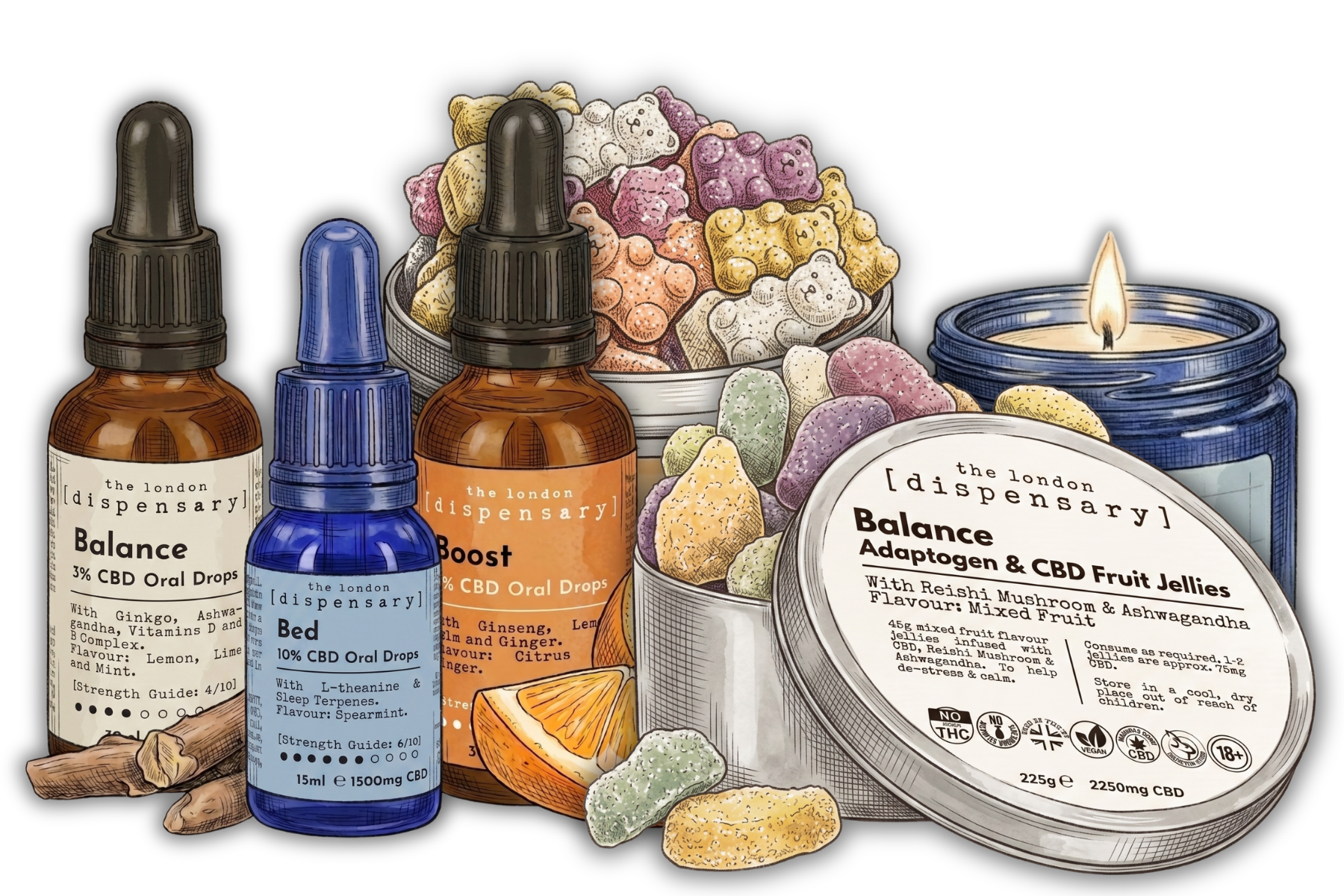
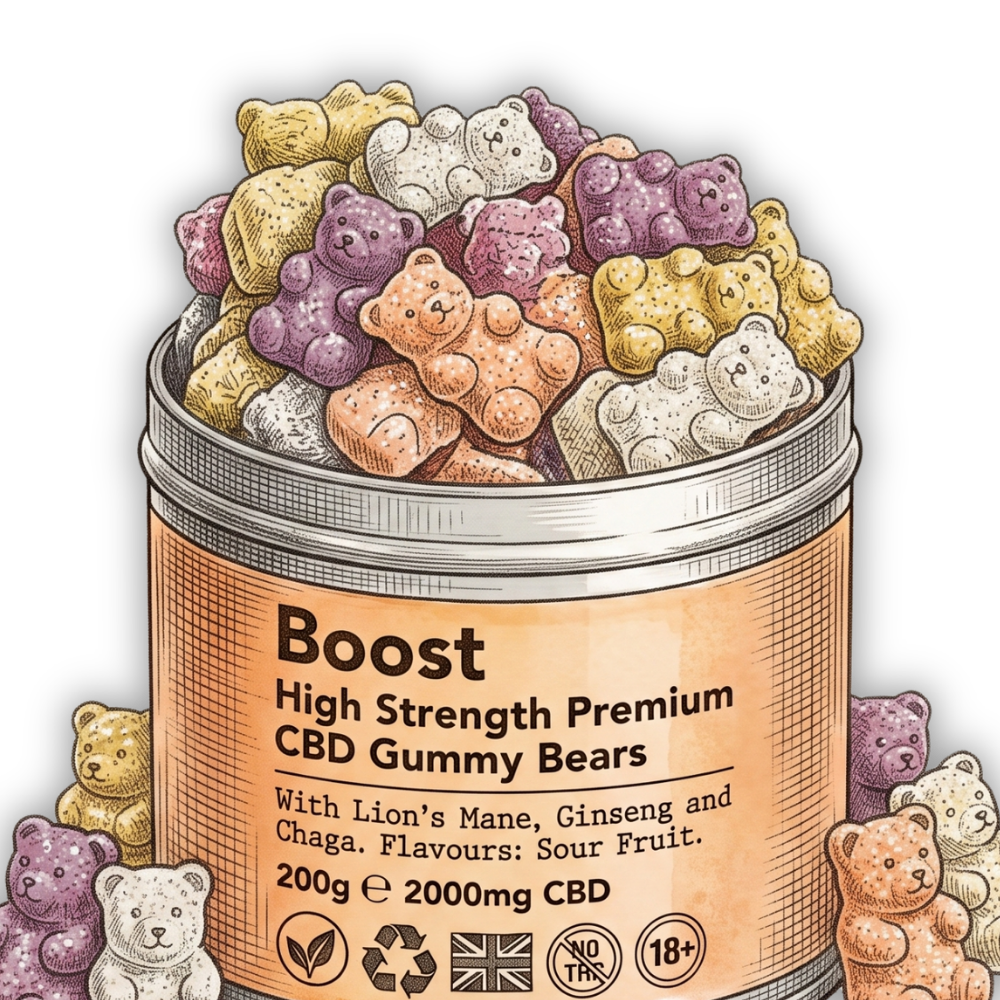
Our Lion’s Mane CBD gummies combine UK-grown Lion’s Mane fruiting-body extract with Chaga, Ginseng and broad-spectrum CBD in a vegan sour-fruit gummy. It is a multi-ingredient formulation rather than a single-ingredient Lion’s Mane supplement, so compare it on that basis and read the full ingredient, allergen and CBD information on the product page.
If you want to compare the wider format rather than one product, browse our mushroom gummies collection.
2. Lion’s Mane Capsules and Tablets — Best for a Familiar Supplement Routine

Capsules are probably the least complicated Lion’s Mane format. They are portable, generally flavour-free and the manufacturer can state a defined amount per capsule or serving. That makes them easier to compare than an unmeasured scoop or a drink blend.
But “capsule” tells you almost nothing about the Lion’s Mane itself. One can contain raw powder; another can contain an extract; another can combine mushroom material with vitamins or botanicals. Check the ingredient panel, capsule shell and serving information rather than treating the delivery format as a quality mark.
3. Lion’s Mane Powder — Best for Flexibility

Powder works well if you already make smoothies, porridge, yoghurt or hot drinks and do not mind measuring it. It also gives manufacturers less need to build a sweet or flavoured delivery system around the mushroom.
The important question is what kind of powder. “Lion’s Mane powder” can describe dried mushroom material, while an extract powder has been produced using an extraction process. Those are not automatically equivalent gram-for-gram, and a large headline milligram figure does not by itself prove that one will perform better in people.
4. Lion’s Mane Liquid Extracts and Tinctures — Best if You Prefer a Liquid

Liquid formats solve a different practical problem: some people simply do not want a pill, gummy or scoop of powder. They can also make it easy to add a measured liquid serving to an established routine.
What we would not do is call tinctures “better absorbed” or automatically more potent without product-specific evidence. Check the extraction solvent, concentration, serving size and whether the label tells you what the stated ratio actually refers to.
5. Lion’s Mane Coffee and Drink Blends — Best for Habit Stacking
There is an obvious appeal here. If coffee already happens every morning, adding Lion’s Mane to that existing behaviour removes one more thing to remember. Current UK search results show a substantial market for Lion’s Mane coffee and functional drink blends, which is why we think the format deserves its own place in the comparison.
The downside is label dilution. A “functional coffee” may contain Lion’s Mane alongside coffee, cacao, other mushrooms and botanicals. Look for the actual Lion’s Mane quantity and form rather than assuming the ingredient is present at a meaningful amount just because it appears prominently on the front.
6. Lion’s Mane Tea and Food-Style Preparations — Best for the Ritual

Lion’s Mane is an edible fungus, so not everybody needs to encounter it as a modern supplement. Tea, broths and culinary preparations can make sense if the ritual is part of the attraction.
We rank this lower as a supplement method because it is harder to standardise and compare. That does not make it a bad way to enjoy the mushroom; it simply makes it less useful for somebody searching for a clearly labelled, repeatable supplement format.
Fresh Lion’s Mane Mushroom vs a Finished Supplement

The original guide also compared finished supplements with the mushroom itself. That distinction is worth keeping. Fresh Hericium erinaceus is a culinary mushroom; a capsule, gummy, powder or liquid extract is a manufactured supplement. They should not be treated as interchangeable merely because the same species name appears on the label.
Fresh mushroom is useful as food and can be cooked much like other edible mushrooms. Supplement products, by contrast, may use dried mushroom powder, concentrated extracts, mycelium, fruiting body or combinations of these. If you are buying a supplement rather than cooking the mushroom, the useful questions are therefore about what material has been used, how much is present per serving, how it was processed and how clearly the manufacturer explains it.
What Should You Look for in a Lion’s Mane Supplement?
Whichever format you prefer, these checks matter more than whether it comes in a jar, pouch, dropper or sweet-shaped gummy.
- Species: look for Hericium erinaceus, not just a vague “mushroom complex”.
- Powder or extract: make sure the label tells you what kind of mushroom material is actually used.
- Amount per serving: compare the stated serving, not only the largest number printed on the pack.
- Fruiting body and/or mycelium: useful information, but not a simple good-versus-bad rule.
- Extraction information: an extract ratio can describe processing, but it is not a clinical potency score.
- Other ingredients: particularly important for gummies, blends and drinks.
- Testing and traceability: look for clear manufacturer information and relevant testing or quality documentation.
- Allergens and dietary requirements: check these on the finished product, not assumptions about the mushroom itself.
UK government guidance similarly advises consumers to buy supplements from reputable businesses, read labels and instructions, and be cautious about unauthorised health claims.2

MYTH BUSTER
How to Compare Lion’s Mane Labels in 2026
Current UK search results increasingly foreground extract type, fruiting-body or mycelium disclosure, laboratory testing and value per serving. Those are useful comparison dimensions, but several ranking pages turn them into rigid quality rules that the science does not fully support. A better checklist is:
| Label signal | Why it helps | What it does not prove |
|---|---|---|
| Species + fungal material | Confirms Hericium erinaceus and whether fruiting body, mycelium or both are used | That one tissue is clinically superior in every formulation |
| Extract ratio / process | Shows how the ingredient was prepared | A direct clinical potency ranking across brands |
| Beta-glucan or compound data | Can add analytical transparency if measured on the actual ingredient | That a particular percentage guarantees a cognitive effect |
| Batch / third-party testing | Helps verify identity, contaminants or stated analytical specifications | Clinical efficacy |
| Cost per serving | Makes gummies, capsules, powders and liquids easier to compare | Value if the serving specification itself is vague |
The latest 2025 systematic review found a heterogeneous evidence base spanning different Lion’s Mane preparations and study populations, while a 2026 scoping review catalogued 24 naturally occurring hericenones and their mostly mechanistic/preclinical research. Together they reinforce the same point: analytical detail is useful, but a label feature is not a shortcut to a proven human outcome.45
What About Extraction Ratios and “High Strength” Lion’s Mane?
A 10:1 or 8:1 label sounds satisfyingly mathematical, but do not mistake an extraction ratio for evidence that the finished product is ten or eight times more effective. Different starting materials, processes and analytical measures make simplistic comparisons unreliable.
The same applies to a giant “3000mg equivalent” claim on the front of a pack. Ask what that number represents and what is actually present in the recommended serving.
Are Lion’s Mane Gummies Better Than Capsules?
For convenience and palatability, we prefer gummies. For somebody who wants a minimal ingredient list and does not mind swallowing capsules, capsules may be the more sensible choice. Neither format has been established by clinical trials as universally more effective simply because of its delivery form.
That is why our ranking is deliberately about which format fits which person, rather than pretending there is one scientifically proven winner.
Side Effects, Allergies and Who Should Be Cautious
The earlier version of this guide included a dedicated side-effects section, and that information should not disappear from a buyer’s guide. Human studies generally describe Lion’s Mane as reasonably well tolerated, but the evidence base is still comparatively small and individual products differ.
Possible issues reported in supplement literature include digestive discomfort and hypersensitivity or allergic reactions. Lion’s Mane is a fungus, so anyone with a known mushroom allergy should be particularly cautious. Pregnancy, breastfeeding, prescription medicines and existing health conditions are also sensible reasons to discuss a new supplement with an appropriate healthcare professional rather than assuming that a food supplement is risk-free.
Most importantly, follow the directions and warnings on the finished product you actually buy. A quantity used in a research study is not automatically an appropriate serving for a different extract, powder, gummy or blend.
How Much Lion’s Mane Should You Take?
There is no single universally established evidence-based dose that applies across every Lion’s Mane supplement. Human studies have used different preparations, amounts, populations and durations; a 2025 systematic review found enough heterogeneity that the authors did not perform a conventional meta-analysis across the included evidence.1
That makes following the finished product’s label more useful than copying a dose from a study using a different preparation. If you take medication, have a medical condition, are pregnant or breastfeeding, or have concerns about mushroom allergy, discuss supplement use with an appropriate healthcare professional.
When Is the Best Time to Take Lion’s Mane?
There is no established “best hour” supported across clinical research. Studies have investigated Lion’s Mane over very different timeframes, including a single-dose experiment, 28 days and longer multi-week interventions.6
Practically, choose the time that fits the label directions and your routine. “Morning is best because Lion’s Mane is stimulating” is much more confident than the evidence allows.
Is a Lion’s Mane Supplement Worth the Money?
The original article asked whether Lion’s Mane was worth the investment. That is still a useful buying question, but it is better answered by looking at the product than by treating the mushroom as inherently “worth it”. Compare the amount and type of Lion’s Mane, number of servings, other active ingredients, testing information and how likely you are to use the format consistently.
A lower-priced powder can offer good value if you enjoy measuring and mixing it. A capsule may justify a higher cost for convenience. Gummies can be more expensive per serving because they are a complete food formulation, but some people find the pre-portioned format easier to maintain. Price per jar therefore tells you less than price per clearly specified serving plus the quality of the product information.
Our Verdict: What Is the Best Lion’s Mane Supplement UK Format?
If we are judging purely on ease, taste, portability and routine fit, gummies are our TLD Choice. That is also why we chose a gummy for our own Lion’s Mane formulation.
But if you hate sweet supplements, a capsule may beat a gummy for you. If your morning smoothie is sacred, powder may be easier. If you will only remember a supplement when it is beside the coffee machine, a drink blend might win.
The genuinely useful answer is therefore less exciting than a “best product” headline: choose the format you will realistically use, then judge the actual Lion’s Mane material and finished-product information on its own merits.
Frequently Asked Questions
What is the best Lion’s Mane supplement form?
There is no clinically proven best format. We rate gummies highest for convenience and palatability, while capsules suit people who want a simple flavour-free format and powders suit people who prefer flexibility.
Are Lion’s Mane gummies better than capsules?
Not automatically. Gummies can be easier and more enjoyable to take, while capsules may have fewer formulation ingredients. Compare the actual Lion’s Mane material, serving information and finished-product label rather than the format alone.
Is Lion’s Mane fruiting body better than mycelium?
It is not a simple good-versus-bad distinction. Fruiting-body information is useful, but Lion’s Mane mycelium is also studied because compounds such as erinacines can occur there. Product quality depends on more than the tissue name.
Is Lion’s Mane extract better than powder?
An extract and a whole-mushroom powder are different preparations, but an extract ratio alone does not prove that a product will be more effective. Check the starting material, serving amount, extraction information and testing.
When is the best time to take Lion’s Mane?
Clinical research does not establish one best time of day. Follow the finished product’s directions and choose a time that fits your routine rather than assuming Lion’s Mane has to be taken in the morning.
- Menon A, Jalal A, Arshad Z, Nawaz FA, Kashyap R. Benefits, side effects, and uses of Hericium erinaceus as a supplement: a systematic review. Front Nutr. 2025;12:1641246. https://pubmed.ncbi.nlm.nih.gov/40959699/
- Department of Health and Social Care. Food supplements guidance. GOV.UK. 2026. https://www.gov.uk/government/publications/food-supplements-guidance/food-supplements-guidance
- Spangenberg ET, Moneypenny A, Bozzo GG, Perreault ML. Unveiling the role of erinacines in the neuroprotective effects of Hericium erinaceus: a systematic review in preclinical models. Front Pharmacol. 2025;16:1582081. https://pubmed.ncbi.nlm.nih.gov/40626304/
- Menon A, Jalal A, Arshad Z, Nawaz FA, Kashyap R. Benefits, side effects, and uses of Hericium erinaceus as a supplement: a systematic review. Front Nutr. 2025;12:1641246. PubMed.
- Othman A, Amen Y, Shimizu K. Hericenones From Hericium erinaceus: A Scoping Review of Structural Diversity and Health Benefits. Chem Biodivers. 2026;23(1):e02560. PubMed.
- Docherty S, Doughty FL, Smith EF. The Acute and Chronic Effects of Lion’s Mane Mushroom Supplementation on Cognitive Function, Stress and Mood in Young Adults: A Double-Blind, Parallel Groups, Pilot Study. Nutrients. 2023;15(22):4842. https://pubmed.ncbi.nlm.nih.gov/38004235/