







Reishi has one of those reputations that arrives before the evidence does. Search for it online and you will quickly find claims about immunity, stress, sleep, heart health, inflammation and even cancer. Some of those claims begin with genuine laboratory or clinical research. The problem is what often happens next: an interesting finding becomes a sweeping promise about what any Reishi supplement will do.
There is a more useful way to look at it. Reishi is a fascinating group of fungi with a long history of traditional use, a complicated naming problem, several biologically interesting compounds and a growing — but still limited — body of human research.
This UK guide looks at what Reishi actually is, whether Ganoderma lucidum and Ganoderma lingzhi are the same thing, what human studies have found, where the evidence is still weak, and what to check before buying a Reishi supplement.
What Is Reishi Mushroom?
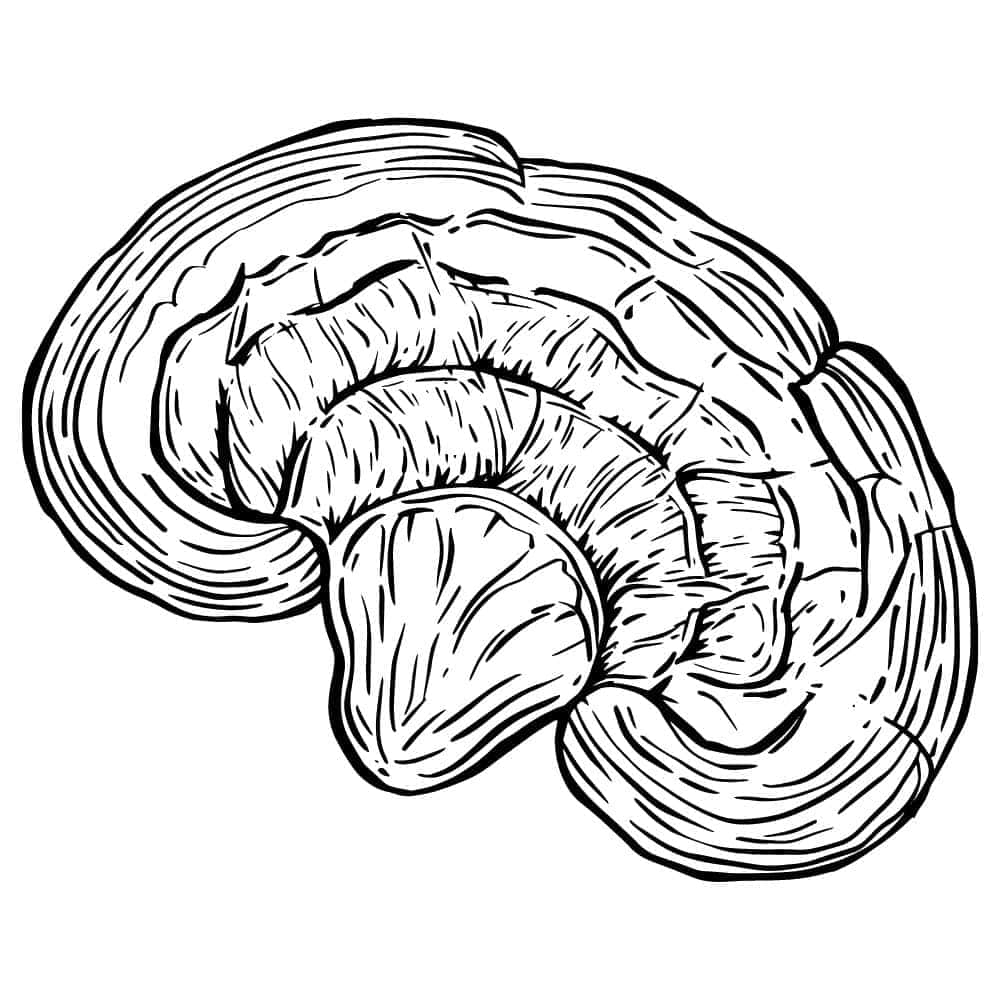
“Reishi” is the Japanese name commonly used for lacquered, shelf-like fungi in the Ganoderma group. In Chinese herbal traditions, related mushrooms are generally known as Lingzhi.
The name Ganoderma lucidum is frequently printed on supplement labels and research papers. But there is a taxonomy wrinkle that is genuinely worth knowing: European G. lucidum and the East Asian fungus widely cultivated as Reishi or Lingzhi are not necessarily the same species.
A molecular and chemical comparison of commercially grown strains found that European Ganoderma lucidum sensu stricto and East Asian Ganoderma lingzhi clustered separately and had different triterpenic-acid profiles. The authors concluded that accurate taxonomy matters for the commercial use of these fungi. 1

DID YOU KNOW?
Does Reishi Grow in the UK?
Yes. Ganoderma lucidum sensu stricto is a European fungus and related Ganoderma species occur in Britain. You may hear these bracket fungi described as “lacquered brackets” because the fruiting body can have a shiny, varnished appearance.
That does not mean a wild bracket fungus should be treated as the same thing as a standardised commercial Reishi extract. Identification within the genus can be difficult, species chemistry varies, and wild-foraged material can differ substantially from cultivated supplement ingredients.
What Is Actually in Reishi?
Researchers have identified a range of compounds in Reishi and Lingzhi preparations, including polysaccharides such as beta-glucans, triterpenoids, sterols, proteins and other constituents. Which compounds end up in a finished supplement depends on the species, the part of the fungus used, growing conditions and the extraction process.
That is one reason two jars both labelled “Reishi” can be quite different products. A plain ground mushroom powder is not chemically identical to a concentrated hot-water or dual extract, and a label that gives only the word “Reishi” tells you very little about the material inside.
Reishi Benefits: What Do Human Studies Actually Show?
This is the section where it is worth slowing down. Cell studies and animal research can help scientists understand mechanisms, but they do not prove that a supplement produces the same outcome in people. For a consumer guide, human trials and systematic reviews deserve more weight.

MYTH BUSTER
Immune Markers
A 2023 randomised, double-blind, placebo-controlled trial tested a Reishi-derived beta-glucan in healthy adults aged 18 to 55 for 84 days. Researchers reported changes in several immune-cell populations, immunoglobulin A and natural-killer-cell activity compared with placebo. The intervention was also reported as well tolerated in that study. 2
That is interesting evidence of changes in measured immune markers. It is not the same as proving that ordinary Reishi supplements prevent colds, infections or disease. The trial tested a specific beta-glucan preparation and specific biological outcomes.
Heart and Metabolic Health
The evidence is much less convincing than some product pages imply. A Cochrane review assessing Ganoderma lucidum for cardiovascular risk factors included five trials with 398 participants. The review found no evidence supporting use of Reishi for reducing common cardiovascular risk factors in people with type 2 diabetes, and the authors highlighted limitations in the available trials. 3
Cancer Research
Reishi is also frequently discussed in cancer research, which is exactly where careful language matters most. A Cochrane review of randomised trials concluded that there was insufficient evidence to justify using Ganoderma lucidum as a first-line cancer treatment. The review found some signals in immune-response measures when Reishi was used alongside conventional treatment, but long-term survival effects remained uncertain. 4
For consumers, the practical conclusion is straightforward: Reishi should not be presented as a cancer treatment or as an alternative to oncology care.
Stress, Fatigue and Sleep
You will also see Reishi described as an “adaptogenic” mushroom and promoted for stress, fatigue and sleep. There are small studies and traditional-use claims in this area, but the evidence is heterogeneous and nowhere near strong enough to promise a predictable effect from any Reishi supplement.
It is reasonable to be interested in the research. It is not reasonable to translate that research into claims that a Reishi gummy will reliably reduce anxiety, correct insomnia or fix fatigue.
Reishi Powder vs Extract: What Is the Difference?
| Format | What It Usually Means | What to Check |
|---|---|---|
| Whole mushroom powder | Dried mushroom material milled into powder | Species, part used, amount per serving and testing |
| Hot-water extract | Extraction designed to concentrate water-soluble constituents such as polysaccharides | Extract ratio or specification rather than assuming “extract” means stronger |
| Dual extract | Typically combines water and alcohol extraction to capture different chemical fractions | Actual composition, extraction details and serving size |
| Gummy or blend | Reishi is one ingredient within a finished food or supplement | Amount of Reishi, form used, other active ingredients and total serving guidance |
Fruiting Body vs Mycelium: Is One Always Better?
No single label term guarantees quality. Fruiting body and mycelium are different fungal tissues and can have different chemical profiles, but “fruiting body” is not a magic quality stamp on its own.
A better question is: what exactly is in this product, how much is present, and how has it been characterised? If a company gives the species, fungal material used, extraction method, amount per serving and meaningful testing information, you know far more than you do from a large “10:1” number on the front of a pouch.

TOP TIP
How to Choose a Reishi Supplement in the UK
If you are shopping for Reishi in the UK, these are the details worth looking for:
- Species identification: Does the label state Ganoderma lucidum, Ganoderma lingzhi or something more specific than simply “mushroom blend”?
- Amount per serving: A long ingredient list is less useful if you cannot tell how much Reishi is actually included.
- Powder or extract: These are not interchangeable, so the label should make the format clear.
- Fungal material: Check whether the product states fruiting body, mycelium or a combination.
- Testing: Look for sensible quality and contaminant testing, particularly for concentrated botanical and mushroom ingredients.
- Claims: Treat disease-treatment promises as a warning sign rather than evidence that a product is stronger.
You can browse our wider mushroom gummies collection if you want to compare the available functional mushroom formats.
Is Reishi Safe?
Reishi has generally been described as well tolerated in small, short-term clinical studies, but “natural” does not mean risk-free. The US National Library of Medicine’s LiverTox resource describes rare reports of clinically apparent liver injury associated with Lingzhi/Reishi preparations and rates it as a possible rare cause. It also notes that attribution in a number of reports was weak and that such injury appears extremely uncommon given widespread use. 5
If you take regular medication, have a health condition, are pregnant or breastfeeding, or are considering a concentrated mushroom supplement alongside medical treatment, it is sensible to discuss it with an appropriate healthcare professional.
Where Reishi Fits in a Modern Wellness Product
Reishi is increasingly used as one part of multi-ingredient formulations rather than as a stand-alone powder. The useful way to assess those products is ingredient by ingredient: identify what is present, in what amount, and whether the claims being made actually match the evidence.
From Our Balance Range: Reishi in a Gummy Format
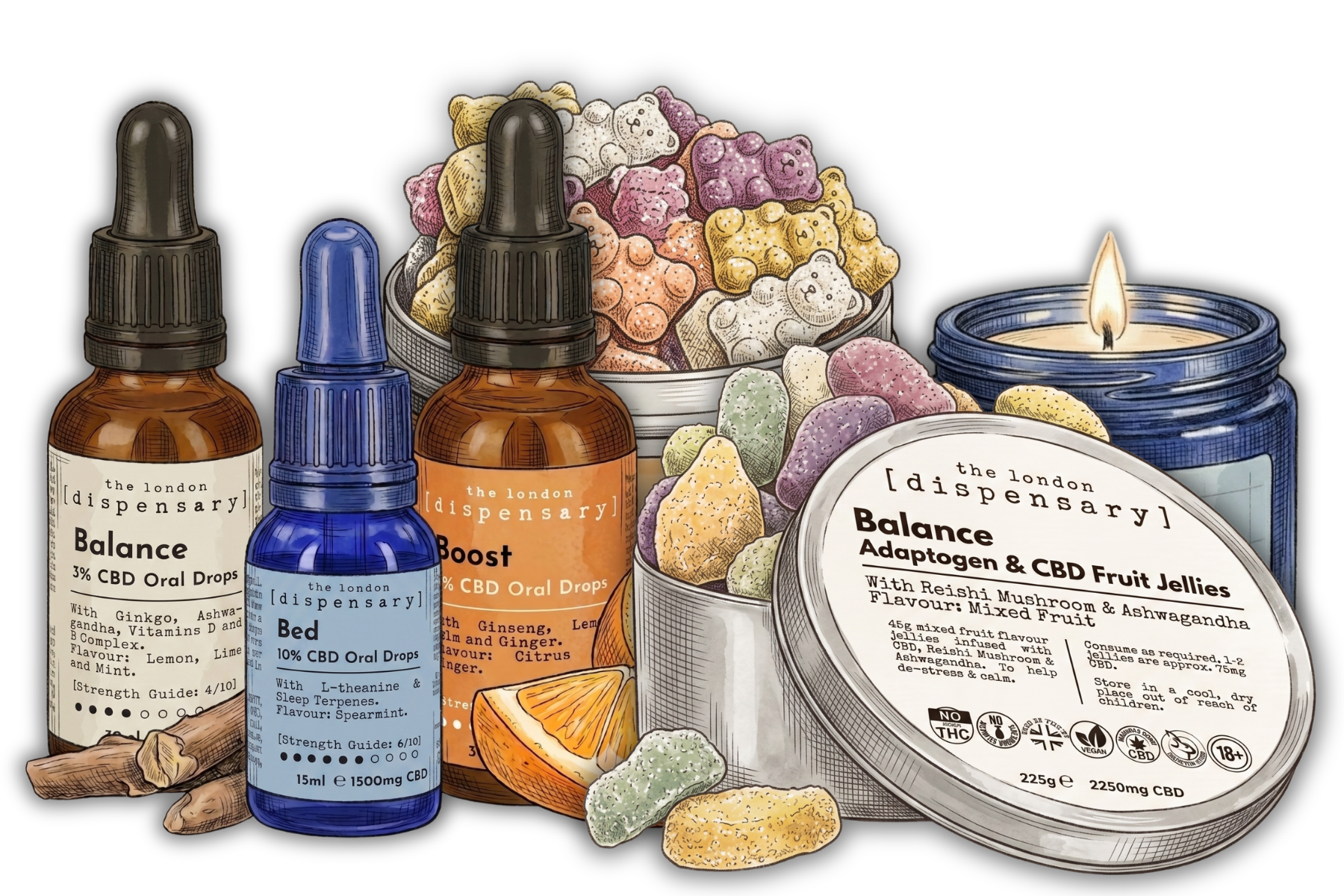
Our Reishi and Ashwagandha CBD fruit jellies combine Reishi with Ashwagandha and broad-spectrum CBD in a vegan fruit-jelly format. The product page sets out the formulation and serving information; this guide is deliberately separate from any suggestion that Reishi itself treats stress, sleep problems or disease.
What Is the Best Way to Take Reishi?
There is no single “best” Reishi format for everyone. The useful question is what you will actually take consistently, what information the manufacturer gives you about the ingredient, and whether the format suits the rest of your routine.
- Powder is simple and flexible if you are happy adding it to drinks or food.
- Extracts can provide a more concentrated preparation, but extraction method and declared amount matter.
- Capsules are straightforward if you want a measured serving without flavour.
- Gummies are convenient and easy to build into a daily routine, especially when Reishi is intentionally paired with other complementary ingredients.
Reishi is also commonly grouped with adaptogens. One ingredient you will often see alongside it is Ashwagandha. They are different botanicals with different evidence bases, so combining them should not be presented as proof of a stronger therapeutic effect. It can, however, make sense from a formulation and routine point of view when somebody wants several botanical ingredients in one format.
TLD Choice: Reishi in an Easy Gummy Format
If powders and capsules are not your thing, our Balance Reishi & Ashwagandha CBD Fruit Jellies combine Reishi and Ashwagandha in a vegan gummy format alongside broad-spectrum CBD.
The reason we feature them here is practical rather than medicinal: they are an easy, measured format for people who would rather take a gummy than mix mushroom powder into a drink. You can also browse the wider mushroom gummies range if format is your main consideration.
The Bottom Line on Reishi Mushroom
Reishi is worth taking seriously, but not because every historical or online health claim has been proven. Its chemistry is interesting. Its taxonomy is more complicated than most labels suggest. Human research has produced some noteworthy findings, particularly around selected immune biomarkers, while stronger claims about cardiovascular disease, cancer, sleep and other conditions are not supported to the level implied by much wellness marketing.
If you are buying a Reishi supplement in the UK, focus less on dramatic benefit lists and more on identification, formulation, amount per serving, extraction and testing. That gives you something much more useful than hype: enough information to understand what you are actually buying.
Frequently Asked Questions
Frequently Asked Questions
What is Reishi mushroom?
Reishi is a common name for fungi in the Ganoderma group. Commercial products are often labelled Ganoderma lucidum , although East Asian Lingzhi/Reishi and European G. lucidum are taxonomically distinct in modern research.
Does Reishi mushroom grow in the UK?
Yes. Ganoderma lucidum sensu stricto is a European species and related Ganoderma bracket fungi occur in Britain. Wild fungi should not be assumed to be identical to cultivated supplement ingredients.
Are Reishi health benefits proven?
Reishi has been studied in humans and has shown effects on some biological markers, but the evidence does not support the very broad disease-prevention and treatment claims often made online.
Is Reishi extract better than Reishi powder?
They are different preparations rather than a simple better-or-worse choice. Extracts concentrate selected chemical fractions, while whole powder contains the ground fungal material. Check the species, amount, material used, extraction method and testing.
What should I check before buying Reishi in the UK?
Look for clear species identification, amount per serving, whether it is powder or extract, fruiting-body or mycelium information, other ingredients and meaningful quality testing. Be cautious of products making sweeping disease-treatment claims.
- Hennicke, F., Cheikh-Ali, Z., Liebisch, T., Maciá-Vicente, J. G., Bode, H. B., & Piepenbring, M. (2016). Distinguishing commercially grown Ganoderma lucidum from Ganoderma lingzhi from Europe and East Asia on the basis of morphology, molecular phylogeny, and triterpenic acid profiles. Phytochemistry, 127, 29–37. https://pubmed.ncbi.nlm.nih.gov/27044336/
- Chen, S.-N., et al. (2023). Evaluation of immune modulation by β-1,3; 1,6 D-glucan derived from Ganoderma lucidum in healthy adult volunteers, a randomized controlled trial. Foods, 12(3), 659. https://pubmed.ncbi.nlm.nih.gov/36766186/
- Klupp, N. L., Chang, D., Hawke, F., Kiat, H., Cao, H., Grant, S. J., & Bensoussan, A. (2015). Ganoderma lucidum mushroom for the treatment of cardiovascular risk factors. Cochrane Database of Systematic Reviews, CD007259. https://pubmed.ncbi.nlm.nih.gov/25686270/
- Jin, X., Ruiz Beguerie, J., Sze, D. M.-Y., & Chan, G. C. F. (2016). Ganoderma lucidum (Reishi mushroom) for cancer treatment. Cochrane Database of Systematic Reviews, CD007731. https://pubmed.ncbi.nlm.nih.gov/27045603/
- National Institute of Diabetes and Digestive and Kidney Diseases. (2024). Lingzhi, Reishi. LiverTox: Clinical and Research Information on Drug-Induced Liver Injury. https://www.ncbi.nlm.nih.gov/books/NBK609014/