






Before Lion’s Mane became something you could buy in a gummy, capsule or coffee, it was simply a very strange-looking edible fungus growing from old wood.
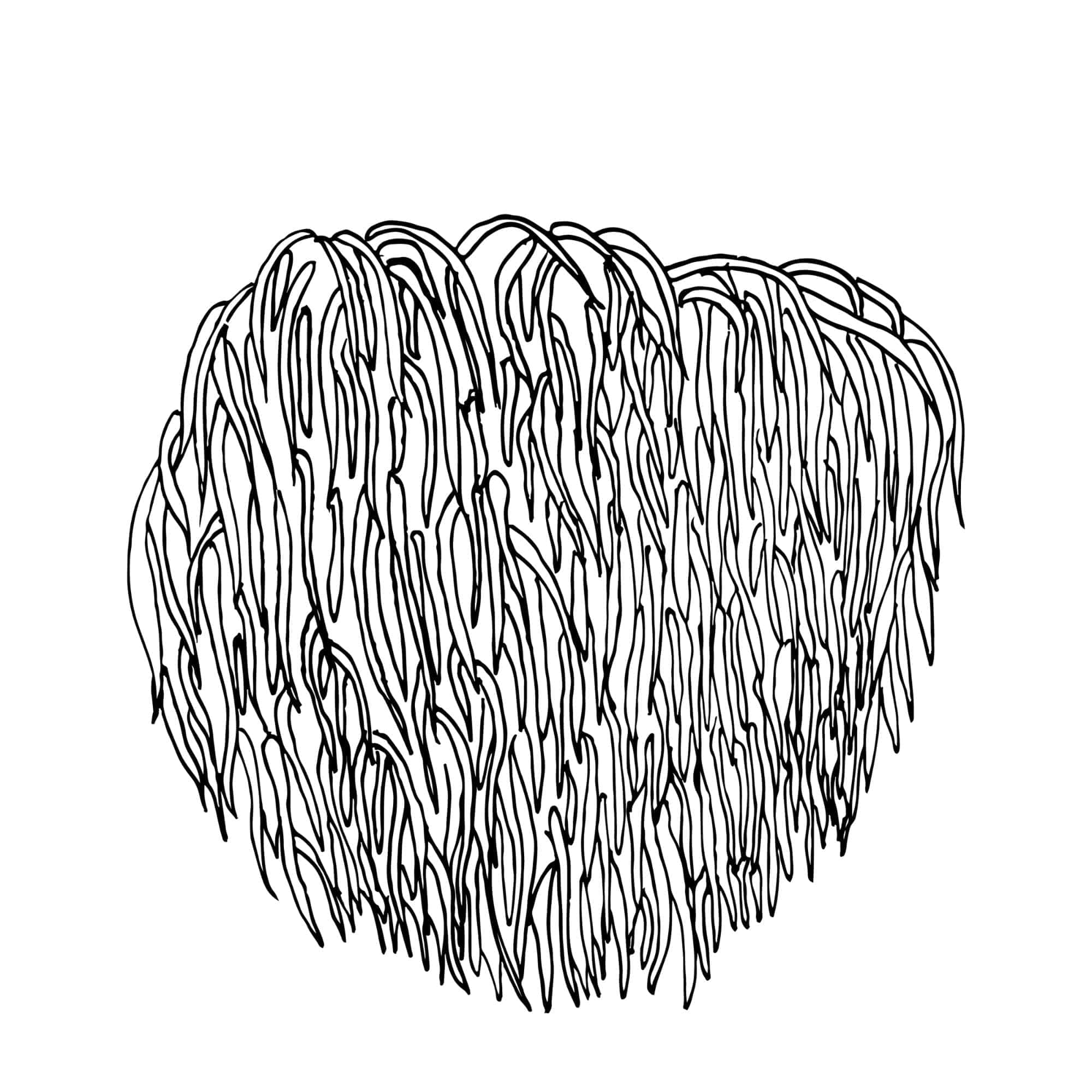
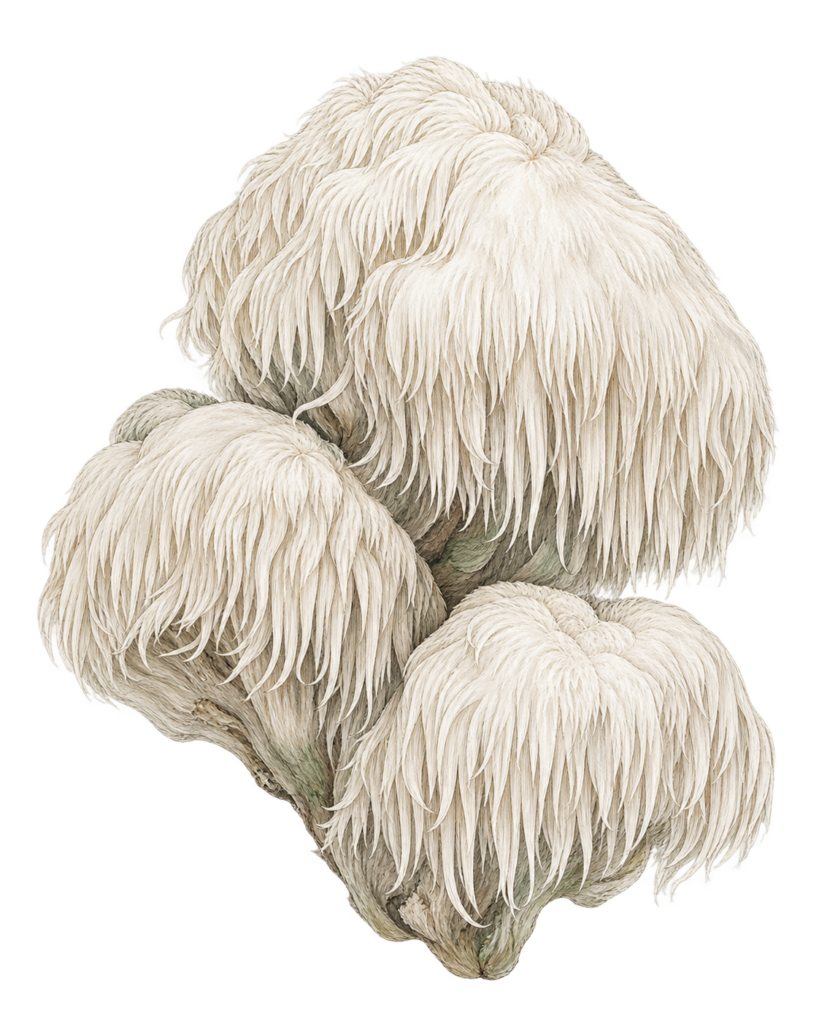
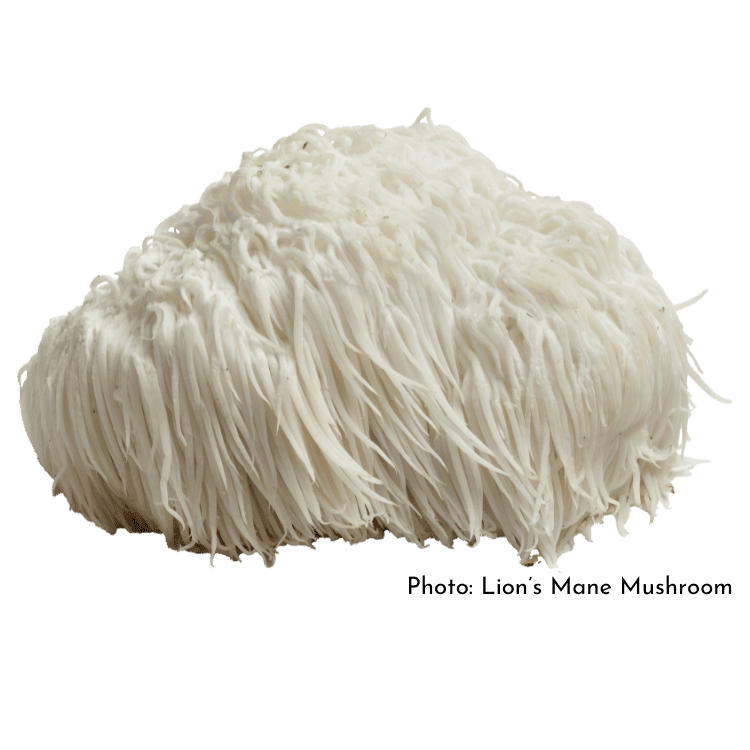
Lion’s Mane is the common name for Hericium erinaceus, a white, cascading fungus whose hanging spines give it the shaggy appearance that inspired the name. It is edible, it grows naturally across parts of Europe, Asia and North America, and it has become one of the most recognisable functional mushrooms in the UK supplement market.
This guide is the place to start if you want the full picture: what Lion’s Mane actually is, where it grows, why wild Lion’s Mane is protected in Britain, what researchers are studying, how supplements differ and what we think is worth checking before you buy one.
What Is Lion’s Mane Mushroom?

Hericium erinaceus is a fungus that forms distinctive white fruiting bodies covered in downward-pointing spines. Kew describes Lion’s Mane as a saprotroph — an organism that obtains nutrients by breaking down organic material — and notes that it is particularly associated with dead or damaged trees.1
The Latin name is rather appropriate too: Kew explains that both Hericium and erinaceus relate to the idea of a hedgehog, a reference to those hanging spines.1

DID YOU KNOW?
Does Lion’s Mane Grow in the UK?

Yes. Lion’s Mane occurs in Britain, although it is rare. It is associated with mature woodland and decaying wood, particularly broadleaf trees.
The important UK-specific point is that wild Lion’s Mane is legally protected. Kew states that it is one of the few fungi protected under the Wildlife and Countryside Act 1981 and that harvesting it from the wild in the UK is illegal.1
That distinction matters because “Lion’s Mane is legal in the UK” and “you can pick wild Lion’s Mane in the UK” are not the same statement. Commercially produced Lion’s Mane foods and supplements are one thing; removing a protected wild specimen is another.

MYTH BUSTER
What Does Lion’s Mane Taste Like?
Fresh Lion’s Mane is eaten as food in several cuisines. Its texture is often described as tender and slightly fibrous, while the flavour is mild and savoury rather than aggressively “mushroomy”. Depending on how it is cooked, people sometimes compare the texture with seafood.
That culinary side can get lost in supplement marketing. It is worth remembering that the familiar white fungus came before the capsules, extracts and functional coffees.
Why Has Lion’s Mane Become So Popular?
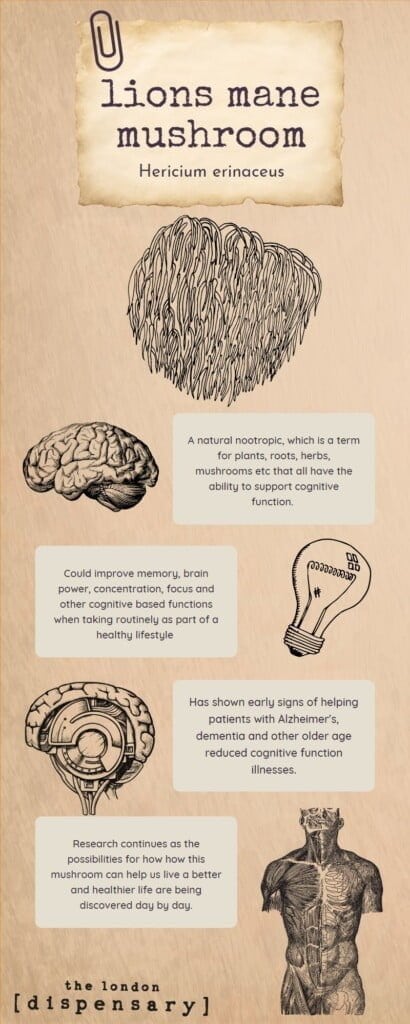
The obvious answer is the research interest around the nervous system and cognition. Lion’s Mane contains a mixture of polysaccharides and other compounds, and particular attention has been paid to groups known as hericenones and erinacines.
But this is where sensible wording matters. Laboratory mechanisms are not the same thing as a proven outcome in a person taking a supplement. A 2025 systematic review found a mixed evidence base that included five randomised controlled trials, three pilot clinical trials and numerous laboratory studies. The preparations, populations and outcomes varied substantially.2
So Lion’s Mane is not interesting because science has already settled everything. It is interesting because there are enough human and preclinical findings to justify further research, while plenty of important questions remain open.
For a deeper evidence review, see our dedicated guide to Lion’s Mane benefits. If your question is specifically cognitive performance, our separate article looks at Lion’s Mane for focus and concentration without turning research into a product promise.
What Does Human Research on Lion’s Mane Actually Show?
Human trials are still relatively small, and they do not all point in the same direction.
Older adults with mild cognitive impairment
A small 2009 double-blind placebo-controlled trial enrolled Japanese adults aged 50–80 with mild cognitive impairment. Participants receiving Lion’s Mane powder showed higher scores on the study’s cognitive scale during the intervention, but scores declined after supplementation stopped.3
That is interesting, but it was a small trial in a specific clinical population. It should not be translated into “Lion’s Mane improves everyone’s memory”.
Healthy younger adults
A 2023 pilot trial tested 1.8g of Lion’s Mane in 41 healthy adults aged 18–45. Researchers reported faster performance on one Stroop task 60 minutes after a dose and a trend towards lower subjective stress after 28 days, while other outcomes were not clearly improved.4
A separate 2025 double-blind crossover study in 18 healthy adults found no significant overall cognitive or mood effect after a single dose of a standardised Lion’s Mane extract, although an individual motor-task measure improved.5
Put together, that is a much more useful picture than either “Lion’s Mane works” or “Lion’s Mane does nothing”: there are signals worth investigating, but the human evidence is not yet robust enough for sweeping promises.
Fruiting Body vs Mycelium: Is One Always Better?
This has become one of the loudest arguments in mushroom supplements. The fruiting body is the visible mushroom; the mycelium is the network of fungal threads from which it grows.
We use UK-grown Lion’s Mane fruiting-body extract in our own formulation, and clear sourcing information is something we value. But we would not turn that preference into the claim that mycelium is scientifically worthless.
Why? Because Lion’s Mane research includes compounds associated with mycelial material. A 2025 systematic review specifically examined erinacines in preclinical models, while a 49-week pilot study in people with mild Alzheimer’s disease used erinacine A-enriched Hericium erinaceus mycelia.67
The better buying question is therefore not simply “fruiting body or mycelium?” but: what material is used, how is it described, what has been measured and how transparent is the manufacturer?
What the 2026 hericenones review adds
A 2026 scoping review identified 24 known natural hericenones plus one semisynthetic derivative and summarised extensive laboratory research into their structures and biological activity.8
That makes the chemistry more interesting, not more clinically certain. A manufacturer naming “hericenones” on a label still needs product-specific analytical support, and the existence of a compound in the research literature does not prove that the finished supplement improves cognition in people.
Lion’s Mane Powder vs Extract
A whole-mushroom powder is dried material milled into a powder. An extract has gone through a process intended to draw selected compounds out of the starting material and concentrate them into a finished preparation.
Neither word is a magic quality guarantee. An extract ratio tells you something about processing, but does not by itself prove clinical potency. Equally, a large raw-powder milligram figure does not establish a stronger effect.
If you are comparing supplement formats, the useful checks are species, material used, amount per serving, extraction information, additional ingredients and testing — not whichever label carries the biggest number.

TOP TIP
What Forms of Lion’s Mane Can You Buy in the UK?
You will commonly see Lion’s Mane sold as:
- capsules or tablets;
- powder;
- extract powder;
- liquid extracts or tinctures;
- gummies;
- coffee and functional drink blends;
- multi-mushroom or multi-ingredient formulations.
If you are already at the buying stage, our best Lion’s Mane supplements UK guide compares gummies, capsules, powders, liquid extracts and drink formats without ranking competitor brands.
If you want to compare the broader functional mushroom market rather than one ingredient, our functional mushroom products collection brings those formats together.
Cooking With Fresh Lion’s Mane
The original version of this guide spent more time on Lion’s Mane as a food, and that is useful context worth preserving. Hericium erinaceus is an edible culinary mushroom as well as a supplement ingredient. Cultivated fresh Lion’s Mane has a soft, fibrous texture that firms as it cooks and is often compared with seafood-like textures.
A simple approach is to tear or slice cultivated Lion’s Mane into pieces and sauté it in a little oil or butter until the moisture cooks off and the edges colour. It can also be added to soups, pasta dishes, risotto or stir-fries. Fresh mushroom and a concentrated supplement extract are different preparations, so eating the mushroom should not be described as equivalent to taking a standardised supplement used in a clinical study.
Storing fresh cultivated Lion’s Mane
Fresh mushrooms are best kept cool and dry with some airflow rather than sealed while damp. A paper bag in the refrigerator is a common short-term storage method. Clean them shortly before cooking rather than soaking them in advance, because excess moisture can accelerate deterioration.
Growing Lion’s Mane at Home
The UK wild-species rules make an important distinction between foraging a protected wild Lion’s Mane and growing cultivated Lion’s Mane at home. Home grow kits use cultivated material and can be an accessible way to see the fruiting body develop without disturbing wild specimens.
Beginner kits normally arrive with an inoculated substrate block. The exact humidity, temperature, light and misting requirements depend on the kit, so follow the supplier’s instructions rather than treating one generic timetable as universal. Clean handling and adequate humidity are particularly important because a drying block or contamination can prevent a good flush.
Growing the mushroom at home also helps make one part of supplement labelling easier to understand: the white, cascading structure you harvest is the fruiting body, while the network growing through the substrate is the mycelium. Both terms appear on supplement labels, but they describe different fungal tissues.
Why We Use Lion’s Mane in a Gummy
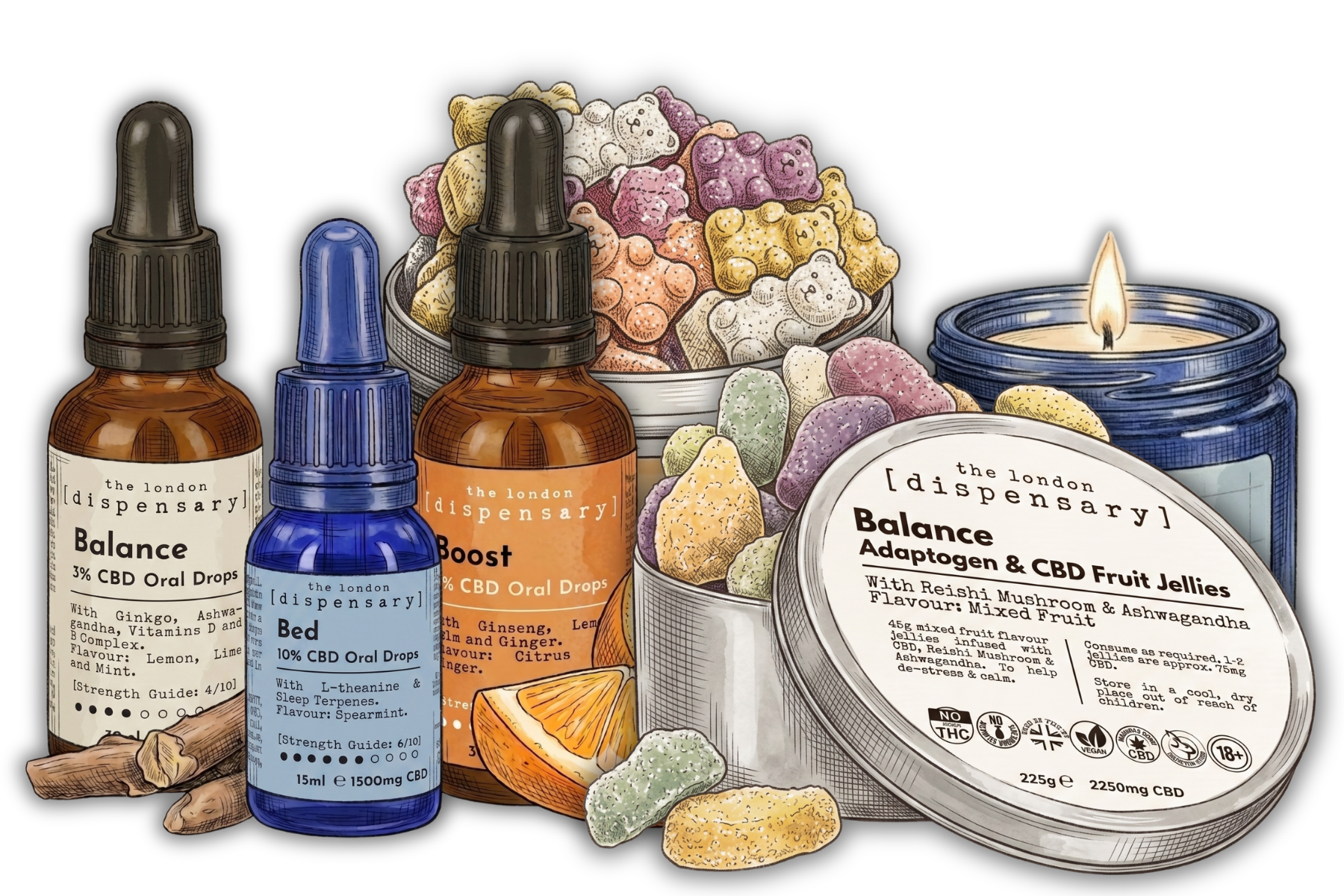
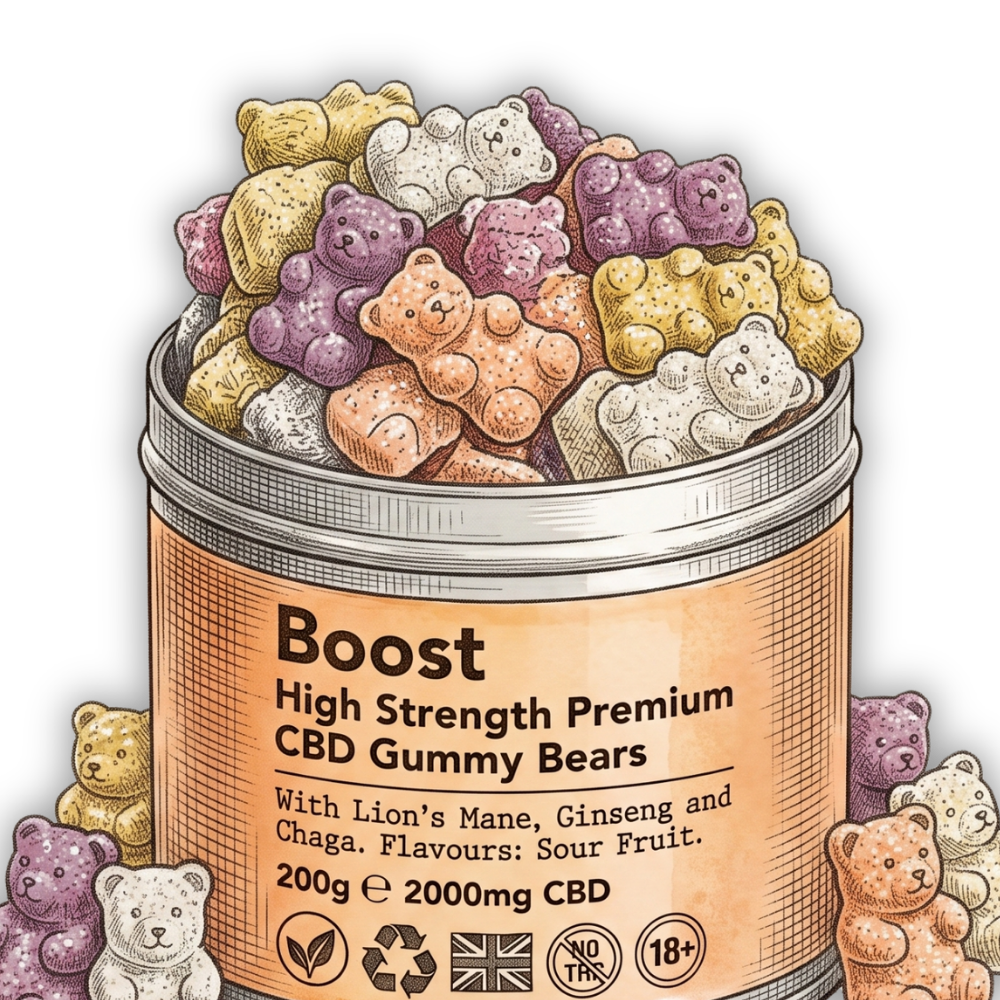
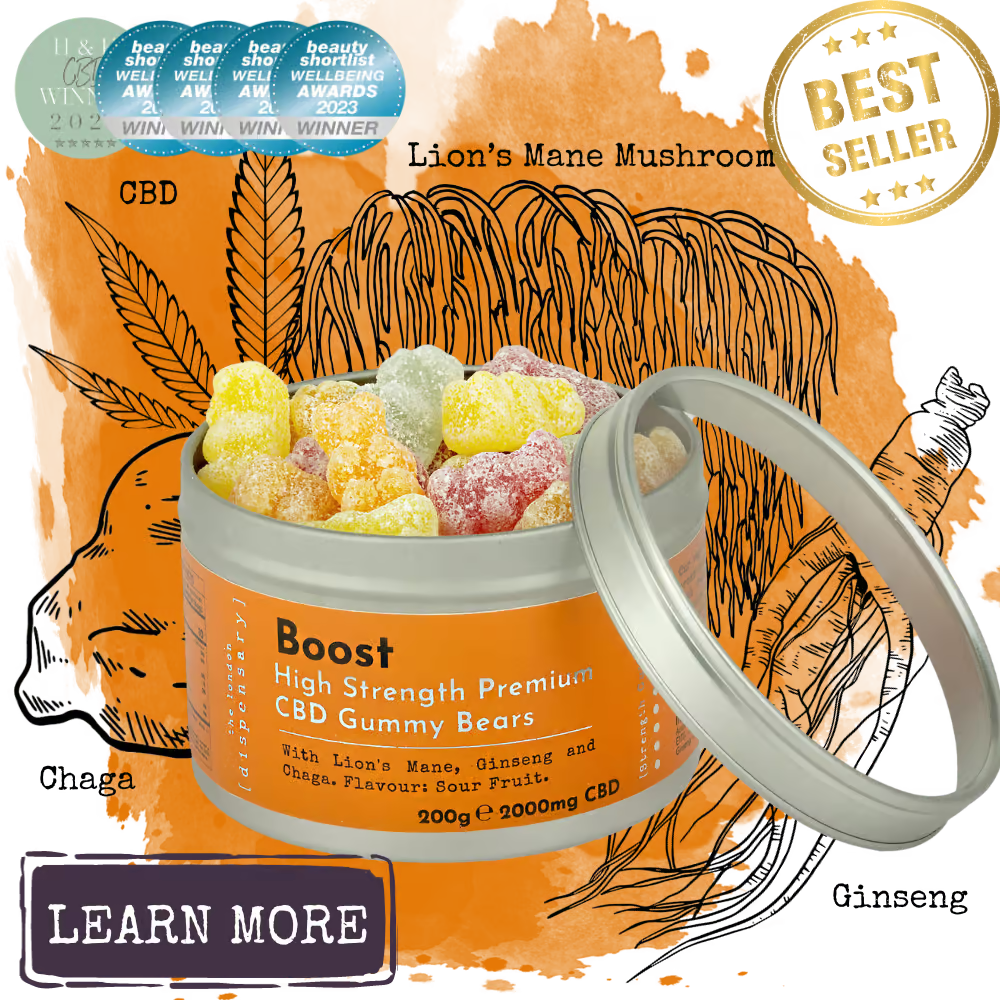
At The London Dispensary, we use Lion’s Mane in our daytime Boost gummy alongside Chaga, Ginseng and broad-spectrum CBD. That choice is partly about the ingredient, but also about the format: gummies are portable, pre-portioned and do not ask somebody to measure an earthy powder every day.
From Our Boost Range: Lion’s Mane in a Gummy Format
Our CBD mushroom gummies with Lion’s Mane use UK-grown Lion’s Mane fruiting-body extract with Chaga, Ginseng and broad-spectrum CBD. They are a multi-ingredient food supplement, not evidence that Lion’s Mane or the finished gummy improves cognition, focus or any medical condition.
Is Lion’s Mane Safe?
The human evidence base is not large enough to call Lion’s Mane risk-free. In the 2025 systematic review, reported adverse effects in included human studies were generally limited, with gastrointestinal symptoms and headache among those described; the literature also includes an older case report of a possible hypersensitivity reaction.2
A 49-week pilot trial using erinacine A-enriched mycelia reported four withdrawals associated with abdominal discomfort, nausea or skin rash.7
If you have a mushroom allergy, take medication, are pregnant or breastfeeding, have a medical condition or are unsure whether a supplement is appropriate for you, speak to an appropriate healthcare professional and follow the finished product’s label.
How to Choose a Lion’s Mane Supplement in the UK
We would check these before buying:
- Does it identify Hericium erinaceus?
- Does it say powder or extract?
- Does it state the amount per serving?
- Does it explain fruiting body, mycelium or both?
- Are other ingredients obvious?
- Are allergens and dietary information clear?
- Does the manufacturer provide meaningful testing or traceability information?
- Are the claims realistic?
That final point is important in Great Britain. Only authorised health claims on the GB Nutrition and Health Claims Register may be used in commercial communications for foods, and foods cannot be marketed as treating, preventing or curing disease.910
The Bottom Line on Lion’s Mane Mushroom UK
Lion’s Mane is unusual enough without adding mythology to it. It is a distinctive edible fungus, rare and protected in the British wild, and the subject of a growing but still developing research base.
The most interesting human evidence concerns cognition, but studies remain small, use different preparations and populations, and sometimes produce mixed results. At the same time, preclinical work is investigating a much wider set of mechanisms. Those two evidence levels should not be blurred together.
If you are buying Lion’s Mane in the UK, our advice is straightforward: enjoy the curiosity, read the research, choose a transparent product and be suspicious of anyone promising that one mushroom will transform your brain.
Frequently Asked Questions
What is Lion’s Mane mushroom?
Lion’s Mane is the common name for Hericium erinaceus, an edible white fungus with distinctive hanging spines. It grows on wood and is used as food and in supplement products.
Is Lion’s Mane legal in the UK?
Commercial Lion’s Mane food and supplement products are not psychedelic controlled drugs. However, wild Lion’s Mane is protected in Britain and Kew states that harvesting it from the wild in the UK is illegal.
Is Lion’s Mane psychedelic?
No. Lion’s Mane is an edible fungus and is not used for an intoxicating or psychedelic effect.
Does Lion’s Mane actually work?
Human studies have reported some interesting cognitive findings, but trials are generally small and results are not uniformly positive. The evidence is promising enough for further research, not strong enough for guaranteed supplement outcomes.
What should I look for when buying Lion’s Mane?
Check the species, powder or extract information, amount per serving, fruiting-body or mycelium disclosure, additional ingredients, allergens, testing information and whether the marketing claims are realistic.
- Royal Botanic Gardens, Kew. Lion’s mane mushroom: King of the jungle? Published 14 January 2025. https://www.kew.org/read-and-watch/lions-mane-fungus
- Menon A, Jalal A, Arshad Z, Nawaz FA, Kashyap R. Benefits, side effects, and uses of Hericium erinaceus as a supplement: a systematic review. Front Nutr. 2025;12:1641246. https://pubmed.ncbi.nlm.nih.gov/40959699/
- Mori K, Inatomi S, Ouchi K, Azumi Y, Tuchida T. Improving effects of the mushroom Yamabushitake (Hericium erinaceus) on mild cognitive impairment: a double-blind placebo-controlled clinical trial. Phytother Res. 2009;23(3):367-372. https://pubmed.ncbi.nlm.nih.gov/18844328/
- Docherty S, Doughty FL, Smith EF. The Acute and Chronic Effects of Lion’s Mane Mushroom Supplementation on Cognitive Function, Stress and Mood in Young Adults: A Double-Blind, Parallel Groups, Pilot Study. Nutrients. 2023;15(22):4842. https://pubmed.ncbi.nlm.nih.gov/38004235/
- Surendran G, Saye J, Mohd Jalil SB, et al. Acute effects of a standardised extract of Hericium erinaceus (Lion’s Mane mushroom) on cognition and mood in healthy younger adults: a double-blind randomised placebo-controlled study. Front Nutr. 2025;12:1405796. https://pubmed.ncbi.nlm.nih.gov/40276537/
- Spangenberg ET, Moneypenny A, Bozzo GG, Perreault ML. Unveiling the role of erinacines in the neuroprotective effects of Hericium erinaceus: a systematic review in preclinical models. Front Pharmacol. 2025;16:1582081. https://pubmed.ncbi.nlm.nih.gov/40626304/
- Li IC, Chang HH, Lin CH, et al. Prevention of Early Alzheimer’s Disease by Erinacine A-Enriched Hericium erinaceus Mycelia Pilot Double-Blind Placebo-Controlled Study. Front Aging Neurosci. 2020;12:155. https://pubmed.ncbi.nlm.nih.gov/32581767/
- Othman A, Amen Y, Shimizu K. Hericenones From Hericium erinaceus: A Scoping Review of Structural Diversity and Health Benefits. Chem Biodivers. 2026;23(1):e02560. PubMed.
- Department of Health and Social Care. Great Britain nutrition and health claims (NHC) register. Updated 19 May 2026. https://www.gov.uk/government/publications/great-britain-nutrition-and-health-claims-nhc-register
- GOV.UK. Food labelling and packaging: Nutrition, health claims and supplement labelling. https://www.gov.uk/food-labelling-and-packaging/nutrition-health-claims-and-supplement-labelling