












Can Lion’s Mane help with focus? It is one of the most searched questions around Hericium erinaceus — and one of the easiest to answer too confidently.
The short version: Lion’s Mane has been studied in relation to cognition, attention and mental performance, but current human evidence is small and mixed. One pilot study found a faster result on a particular attention-related task after a single dose; a later study in healthy adults found no significant overall cognitive effect after a single standardised extract.12
That makes Lion’s Mane an interesting research subject. It does not make it a clinically proven “focus supplement”, and it certainly does not make a finished Lion’s Mane gummy a treatment for poor concentration, brain fog or ADHD.
If you want the wider evidence beyond this one cognition question, our guide to broader Lion’s Mane benefits evidence separates human findings from preclinical claims. For the species, extract terminology and UK supplement formats, start with our main What Is Lion’s Mane? guide.

What Do We Mean by Focus, Concentration and Attention?
These words overlap, but searchers often use them for slightly different experiences:
- Focus — staying mentally engaged with what you are doing.
- Concentration — sustaining mental effort on a task.
- Attention — selecting and responding to relevant information.
- Mental clarity — the everyday feeling that thinking is organised rather than muddled.
- Brain fog — an informal umbrella phrase people use for experiences such as forgetfulness, slower thinking or difficulty concentrating.
Those experiences can have many causes. A supplement page should not imply that Lion’s Mane diagnoses or treats the reason somebody is struggling to concentrate.
What Does Research Say About Lion’s Mane for Focus?
The 2023 healthy-adult pilot
A 2023 double-blind placebo-controlled pilot study enrolled 41 healthy adults aged 18–45 and tested 1.8g of Lion’s Mane. Researchers measured cognitive performance after a single dose and again during a 28-day intervention.1
The Lion’s Mane group was faster on a Stroop task 60 minutes after the acute dose. That result is genuinely interesting for a focus/attention discussion because the Stroop task involves selective attention and response control.
But it was one finding in a small pilot. The study did not demonstrate a broad improvement across every cognitive outcome, and its 28-day stress finding was a trend rather than a decisive result.1
How the two healthy-adult studies compare
| Study | Participants | Preparation / timing | Result relevant to focus |
|---|---|---|---|
| Docherty 2023 | 41 healthy adults, 18–45 | 1.8g; acute + 28-day pilot | Faster Stroop performance after the acute dose; not a broad improvement across all outcomes |
| Surendran 2025 | 18 healthy adults, 18–35 | 3g 10:1 fruiting-body extract; acute crossover | No significant overall improvement in global cognition or mood; one fine-motor measure improved |
These trials are particularly useful together because they resist a simple marketing story. One produces a specific attention-task signal; the later trial does not reproduce a broad acute cognitive effect. The 2025 systematic review likewise describes the clinical evidence as promising but heterogeneous.3
The 2025 acute study
A 2025 double-blind crossover study then tested a single dose of a standardised Lion’s Mane extract in 18 healthy younger adults. It found no significant overall effect on global cognitive performance or mood, although one fine-motor measure improved.2
We actually like having both studies. If you only quote the positive Stroop result, Lion’s Mane looks much more settled than it is. If you only quote the later null result, you lose a potentially interesting signal. Together they tell the more useful story: human research exists, but reliable focus effects have not been established.

MYTH BUSTER
What About the Older Lion’s Mane Memory Studies?
There are older human trials that are relevant to the wider cognition picture, but they answer different questions.
A 2009 study involved 30 adults aged 50–80 with mild cognitive impairment. The Lion’s Mane group showed higher scores on the trial’s cognitive scale at several time points during a 16-week intervention, with scores declining after supplementation stopped.4
A 2019 double-blind study also reported improvement on one general cognitive measure after 12 weeks, although other tests were less conclusive.5
These studies support continued research into Lion’s Mane and cognition. They do not prove that a healthy person will become more focused at work after taking a Lion’s Mane supplement.
How Might Lion’s Mane Affect Cognition?
You will often see Lion’s Mane discussed alongside nerve growth factor (NGF), hericenones and erinacines. Experimental research has investigated whether compounds from Lion’s Mane influence neurotrophic pathways involved in neuronal growth and maintenance.
A 2025 systematic review focused specifically on erinacines and neuroprotective mechanisms in preclinical cellular and animal models.6
That mechanism is scientifically interesting, but it is still a long way from “Lion’s Mane regrows brain cells” — a type of claim the ASA has specifically challenged in mushroom-gummy advertising.7
Can Lion’s Mane Help With Brain Fog?
This page now absorbs the useful part of our older standalone brain-fog article because, from a search-intent point of view, “brain fog”, “mental clarity”, “focus” and “concentration” overlap heavily.
There is no good evidence that lets us say Lion’s Mane treats brain fog. Brain fog is an everyday description rather than one single cause, and difficulty concentrating can sit alongside sleep loss, stress, medication effects, illness and many other factors.
Research on Lion’s Mane cognition is relevant to the question, but the small trials above do not establish “brain fog relief” as a reliable supplement outcome.

DID YOU KNOW?
If a new or persistent change in concentration, memory or thinking is affecting everyday life, it makes more sense to discuss that with an appropriate healthcare professional than to assume a supplement is the answer.
Is Lion’s Mane a Nootropic?
Lion’s Mane is commonly discussed in the nootropics market because “nootropic” is generally used for substances associated with cognition or mental performance.
But in UK advertising, that word is not neutral if it implies a beneficial effect. The ASA has explicitly considered “nootropic” a specific health claim in supplement advertising where consumers would understand it to mean improved cognitive function or mental performance.9
So we can discuss why Lion’s Mane is researched and categorised within nootropic culture. We should not treat the word itself as proof that a finished food supplement improves focus.
Lion’s Mane and ADHD: An Important Boundary
People searching for concentration supplements also search for Lion’s Mane and ADHD. The boundary here needs to be very clear: Lion’s Mane is not an established treatment for ADHD, and a food supplement should not be marketed as treating or managing a recognised medical condition.
The ASA has previously upheld complaints where supplement advertising linked ingredients and products to ADHD symptoms or suggested benefits for attention and focus in that disease context.10
If you are concerned about ADHD or another condition affecting concentration, use clinical routes for assessment and treatment rather than trying to self-treat with Lion’s Mane.
How Long Does Lion’s Mane Take to Work for Focus?
There is no established timeline.
The 2023 pilot reported one acute task difference 60 minutes after a dose, while the same study also looked at a 28-day period. Older cognition trials ran for 12 or 16 weeks.14
That does not create a customer timeline of “one hour for focus” or “four weeks for brain fog”. Different studies used different people, products and tests. Anyone giving an exact guaranteed onset is going beyond the data.
What Is the Best Time to Take Lion’s Mane?
Clinical research does not establish a best time of day. Morning use is popular because it fits an existing routine, not because Lion’s Mane has been proven to work better at 8am.
Follow the label on the finished product and choose a routine you can realistically maintain. There is also no good basis for telling everybody to avoid Lion’s Mane at night because it is supposedly “stimulating” in the same way as caffeine.
How Much Lion’s Mane Should You Take?
There is no universal dose that can be copied across products. Human studies have used different preparations and quantities, from mushroom powders to specific extracts. The 2025 systematic review highlighted substantial heterogeneity across the evidence base.11
Use the finished product’s serving information rather than converting a research dose into instructions for a different product.
TOP TIP
If you have moved from research to choosing a product, we compare the main Lion’s Mane supplement formats — gummies, capsules, powders, extracts and drinks — without sending you through a list of competitor brands.
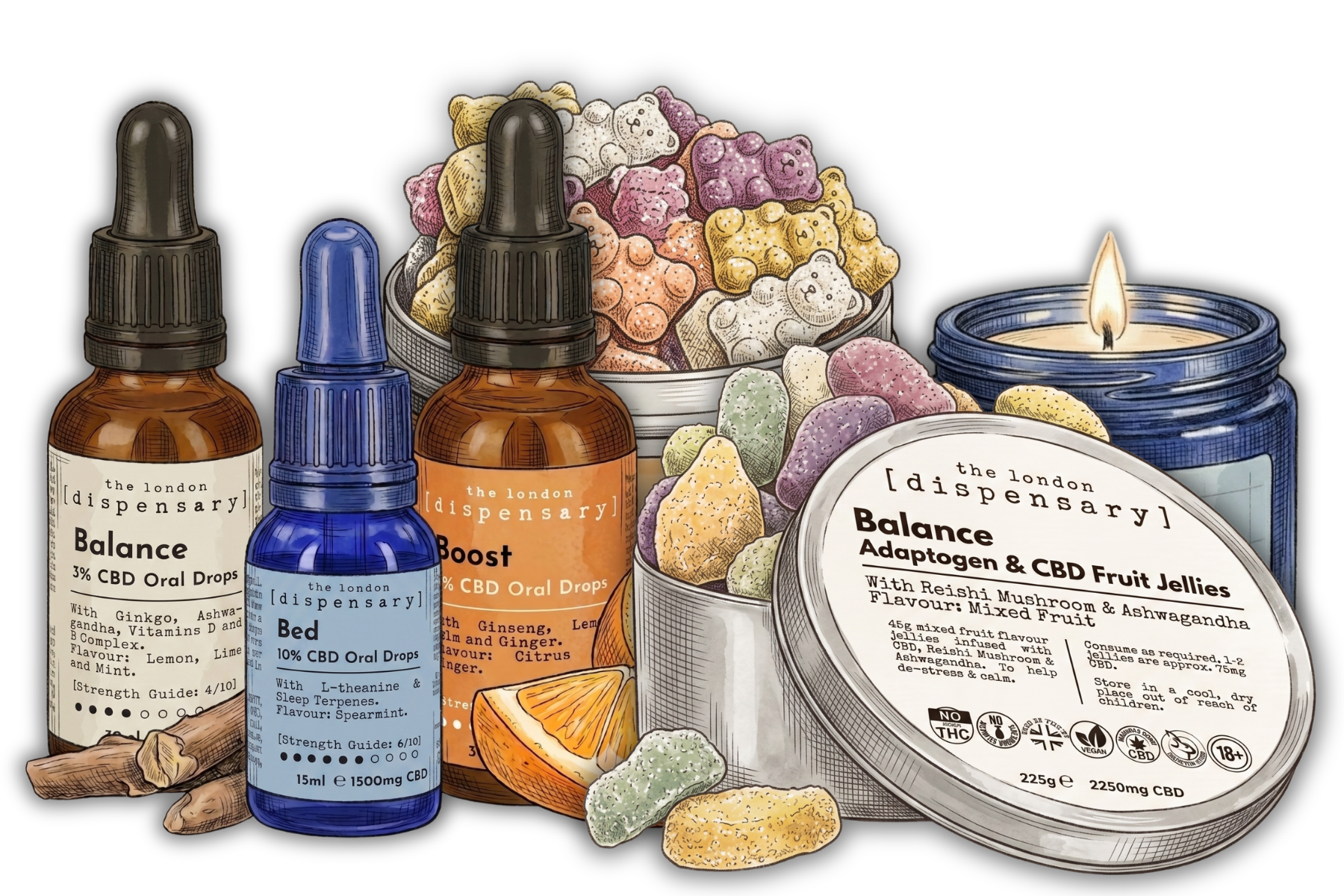
How Lion’s Mane Fits Into Our Boost Range
Our Boost range groups together products and ingredients we use in a daytime routine. Lion’s Mane sits there alongside other ingredients such as Ginseng — but we do not use that formulation choice as proof of a “synergy” that has been clinically shown to improve focus.
Lion’s Mane in the Boost Gummy
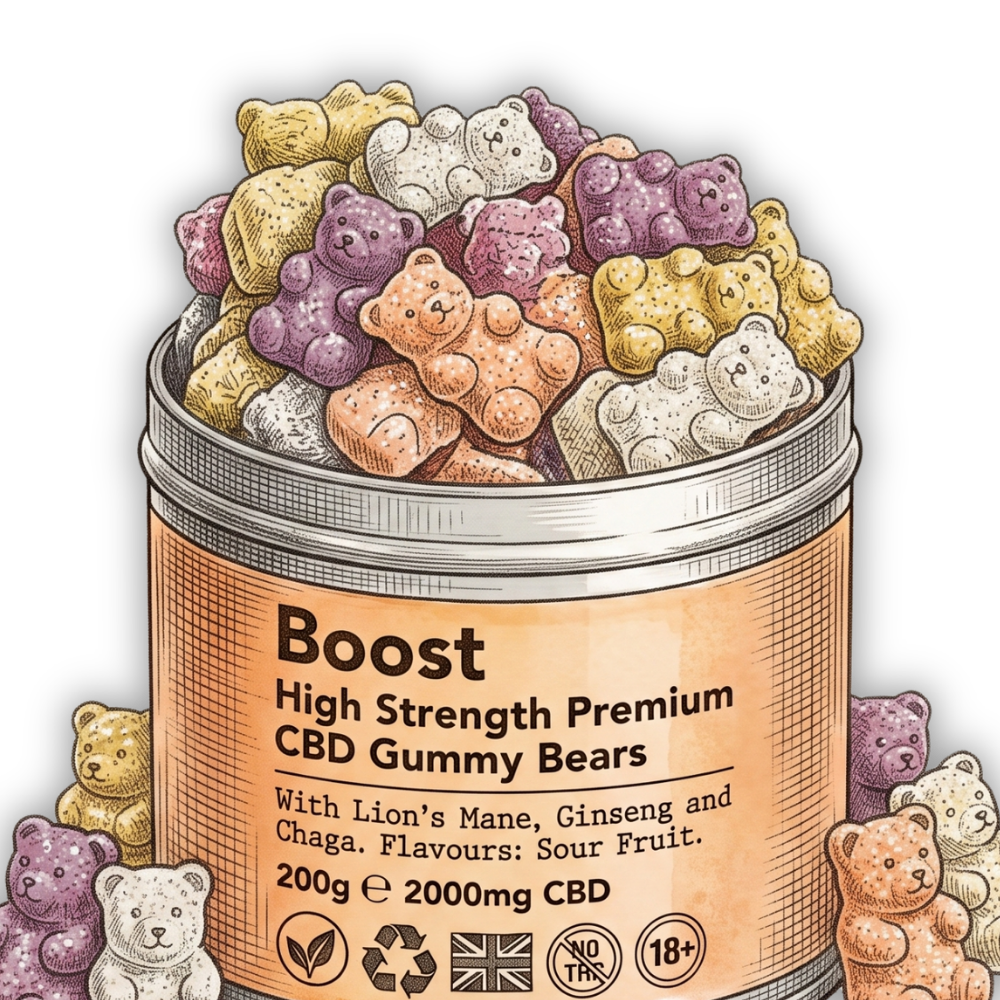
Our Lion’s Mane CBD mushroom gummies combine UK-grown Lion’s Mane fruiting-body extract with Chaga, Ginseng and broad-spectrum CBD in a vegan sour-fruit format.
That is a description of the formulation, not a claim that the gummy treats brain fog or improves concentration. You can also browse the wider Boost range.
The Bottom Line: Lion’s Mane for Focus
Lion’s Mane deserves a more interesting answer than either “brain booster” or “wellness nonsense”. Human trials have produced some cognition-related signals, including an attention-task finding in healthy young adults, but the evidence is still small and mixed, and a later acute study did not show an overall cognitive benefit.
That means there is a genuine research story here. There is not yet a reliable promise that taking Lion’s Mane will improve your focus, concentration, mental clarity or brain fog.
For us, the useful approach is to keep those two things separate: follow the science because it is interesting; choose a supplement because the format and product information make sense for you — not because somebody guaranteed a sharper brain.
Frequently Asked Questions
Does Lion’s Mane help with focus and concentration?
Small human studies have reported some cognition-related signals, but results are mixed and do not establish Lion’s Mane as a proven focus or concentration treatment.
Can Lion’s Mane help brain fog?
Research on cognition is relevant, but current trials do not establish Lion’s Mane as a treatment for brain fog. Brain fog is an informal term and concentration problems can have many different causes.
How long does Lion’s Mane take to work for focus?
There is no established timeline. Studies have measured different outcomes from around an hour after a dose to several weeks, using different preparations and populations.
When is the best time to take Lion’s Mane?
Research does not establish one best time of day. Follow the finished product’s directions and choose a time that fits your routine.
Is Lion’s Mane a treatment for ADHD?
No. Lion’s Mane is not an established treatment for ADHD, and food supplements should not be marketed as treating or managing recognised medical conditions.
- Docherty S, Doughty FL, Smith EF. The Acute and Chronic Effects of Lion’s Mane Mushroom Supplementation on Cognitive Function, Stress and Mood in Young Adults: A Double-Blind, Parallel Groups, Pilot Study. Nutrients. 2023;15(22):4842. https://pubmed.ncbi.nlm.nih.gov/38004235/
- Surendran G, Saye J, Mohd Jalil SB, et al. Acute effects of a standardised extract of Hericium erinaceus (Lion’s Mane mushroom) on cognition and mood in healthy younger adults: a double-blind randomised placebo-controlled study. Front Nutr. 2025;12:1405796. https://pubmed.ncbi.nlm.nih.gov/40276537/
- Menon A, Jalal A, Arshad Z, Nawaz FA, Kashyap R. Benefits, side effects, and uses of Hericium erinaceus as a supplement: a systematic review. Front Nutr. 2025;12:1641246. PubMed.
- Mori K, Inatomi S, Ouchi K, Azumi Y, Tuchida T. Improving effects of the mushroom Yamabushitake (Hericium erinaceus) on mild cognitive impairment: a double-blind placebo-controlled clinical trial. Phytother Res. 2009;23(3):367-372. https://pubmed.ncbi.nlm.nih.gov/18844328/
- Saitsu Y, Nishide A, Kikushima K, et al. Improvement of cognitive functions by oral intake of Hericium erinaceus. Biomed Res. 2019;40(4):125-131. https://pubmed.ncbi.nlm.nih.gov/31413233/
- Spangenberg ET, Moneypenny A, Bozzo GG, Perreault ML. Unveiling the role of erinacines in the neuroprotective effects of Hericium erinaceus: a systematic review in preclinical models. Front Pharmacol. 2025;16:1582081. https://pubmed.ncbi.nlm.nih.gov/40626304/
- Advertising Standards Authority. Person(s) unknown, VitaShroom Magic ruling. 24 July 2024. https://www.asa.org.uk/rulings/person-s–unknown-g24-1248968-person-s–unknown.html
- Advertising Standards Authority. ASA Ruling on Well Gummies. 24 July 2024. https://www.asa.org.uk/rulings/well-gummies-a24-1239904-well-gummies.html
- Advertising Standards Authority. ASA Ruling on Ejec Ventures LLC. 24 July 2024. https://www.asa.org.uk/rulings/ejec-ventures-llc-a24-1239910-ejec-ventures-llc.html
- Advertising Standards Authority. ASA Ruling on Dochsa Ltd. https://www.asa.org.uk/rulings/dochsa-ltd-a22-1177091-dochsa-ltd.html
- Menon A, Jalal A, Arshad Z, Nawaz FA, Kashyap R. Benefits, side effects, and uses of Hericium erinaceus as a supplement: a systematic review. Front Nutr. 2025;12:1641246. https://pubmed.ncbi.nlm.nih.gov/40959699/