










Are CBD edibles legal in the UK? What about THC gummies? The answer in 2026 is more complicated than the old rule of thumb that “CBD edibles are legal and THC edibles are illegal”. CBD itself is not generally a controlled drug, but a CBD food must still satisfy the rules that apply to novel foods and any controlled cannabinoids present in the finished product. High-THC recreational edibles, meanwhile, remain controlled cannabis products and are not lawful general retail products in the UK.
That distinction matters because “edibles” is a broad consumer term. A CBD gummy containing only trace controlled cannabinoids is not legally the same thing as a THC gummy designed to deliver an intoxicating dose of THC. Nor does the familiar 0.2% THC figure tell you whether a finished edible is lawful.
This guide was checked against current Food Standards Agency, Home Office and Food Standards Scotland sources on 28 September 2026. It preserves the useful practical material from our original guide — including the different edible formats, CBD-versus-oil comparison, laboratory testing and buying checks — while updating the legal position.
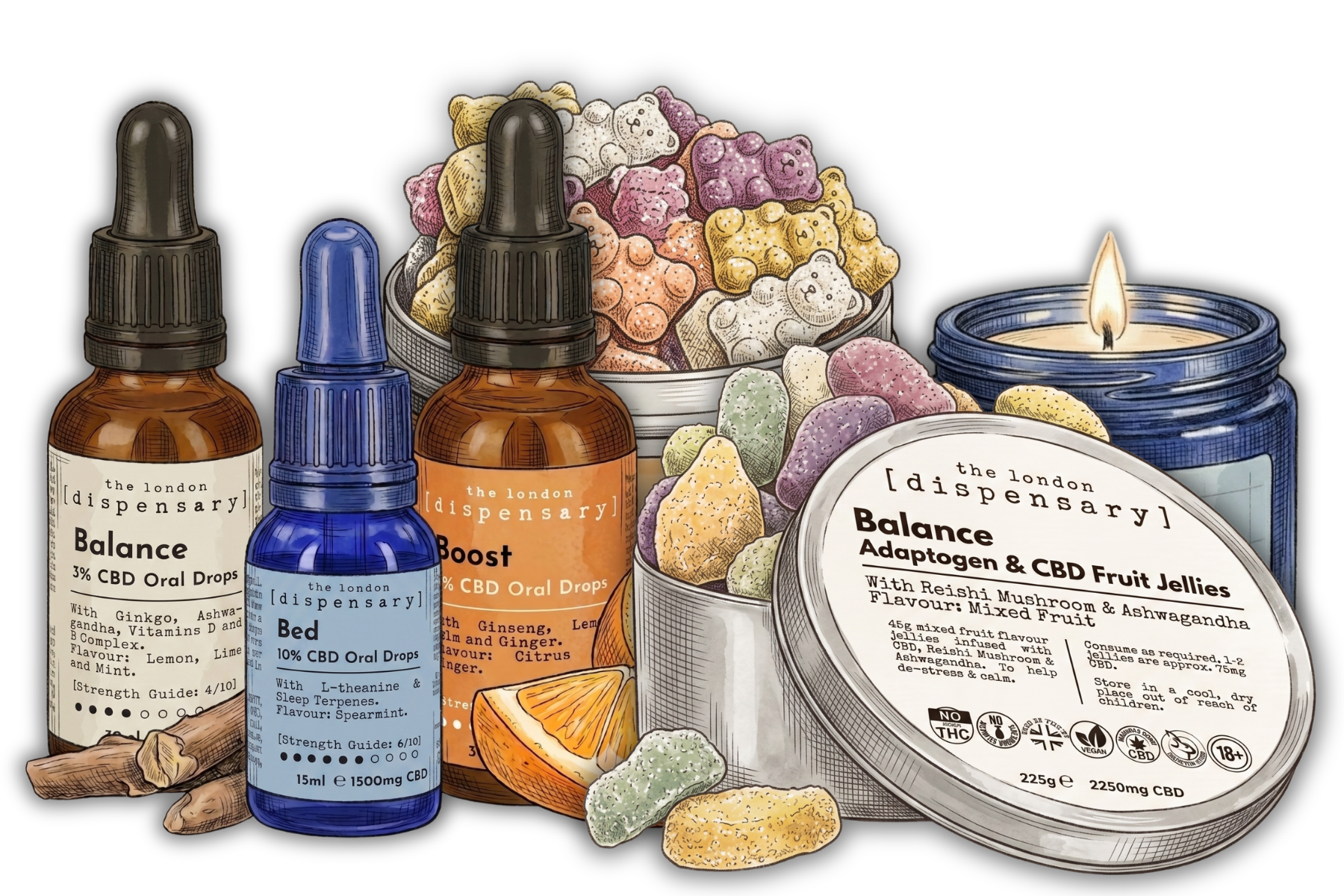
If you are comparing legal-market formats, you can browse our CBD gummies and CBD edibles or explore the wider CBD products range.
CBD and THC Edibles in the UK: The Short Answer
| Edible type | 2026 UK position |
|---|---|
| CBD gummies / CBD sweets | CBD itself is not generally controlled, but CBD foods are novel foods. In England and Wales, qualifying legacy products linked to progressing applications may remain on the FSA public list pending authorisation decisions. Controlled-cannabinoid rules still apply. |
| CBD food newly launched after the FSA cut-off | The FSA says new CBD extracts, isolates and associated final products should not be placed on the England and Wales market until the necessary novel-food authorisation exists. |
| High-THC recreational gummies / brownies | THC is controlled. Recreational high-THC edibles are not ordinary lawful retail products and possession or supply can engage the Misuse of Drugs Act 1971. |
| Prescription cannabis products | A separate regulated medical route exists. That does not make recreational THC edibles generally lawful. |
The key point is that “CBD edible” and “THC edible” are marketing descriptions, not complete legal tests. Composition, intended use, novel-food status and the controlled-cannabinoid rules all matter.
2026 Regulatory Update: CBD Foods Are Still Awaiting First Authorisations
This is the most important change since the original version of this article.
The Food Standards Agency’s CBD guidance, updated on 28 August 2026, states that CBD extracts, isolates, synthetic CBD and foods to which they are added are novel foods. It also states that there are currently no CBD extracts or isolates authorised as novel foods. 1
At the same time, the authorisation process has moved further than it had when this guide was first written. The FSA has completed its consultation process for three CBD novel-food applications covering synthetic CBD, CBD isolate and hemp-derived isolated CBD. The consultation outcome published in September 2026 records proposed recommendations to authorise the three novel foods subject to specified conditions, but the determination itself sits with ministers. 2
So, as of this update, it would be inaccurate to describe CBD foods on the market as “FSA approved”. The public-list system is a transitional mechanism while applications progress; it is not the same thing as full novel-food authorisation.

MYTH BUSTER
What Are Edibles?
“Edibles” simply means products designed to be eaten or drunk that contain cannabis-derived or cannabinoid ingredients. The original article covered everything from gummies and fruit jellies to chocolate and brownies, and that distinction is still useful because the format itself does not tell you whether a product is legal.
In the legal UK CBD market, common edible formats include:
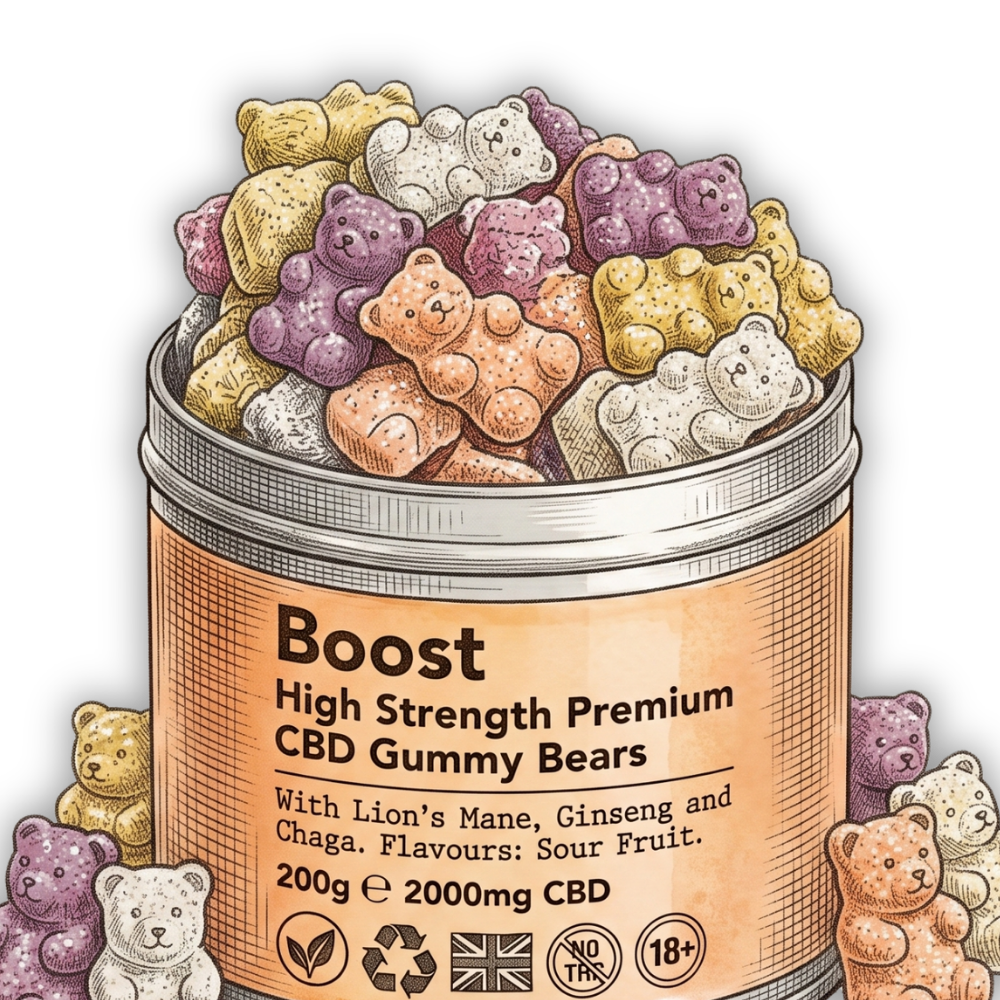
- CBD gummies — pre-portioned chewable sweets.
- CBD fruit jellies — a softer confectionery format.
- CBD capsules — swallowed supplements rather than confectionery, but still ingestible CBD foods.
- CBD drinks — beverages containing a CBD ingredient.
- CBD bakery or confectionery products — where the product itself and the CBD ingredient must still satisfy the applicable food rules.
High-THC “weed edibles” use similar formats — gummies, chocolates, brownies and drinks — but the legal position can be completely different because THC is a controlled cannabinoid.

CBD Edibles vs THC Edibles: What Is the Difference?
CBD and THC are both cannabinoids found in cannabis, but they are treated very differently under UK controlled-drug law.
The Home Office states that pure CBD is not controlled. THC, including delta-9-THC, is a controlled cannabinoid. Consumer CBD extracts can contain trace quantities of controlled cannabinoids, which is why the legal analysis focuses on the finished product rather than merely whether its headline ingredient is CBD. 3
That gives us a more accurate distinction than the old shorthand:
- A CBD edible is intended to deliver CBD as the principal cannabinoid ingredient. It still has to comply with food law and any rules relating to controlled cannabinoids.
- A THC edible normally means a product deliberately formulated to deliver an intoxicating or otherwise meaningful amount of THC. Recreational products of that type are controlled drugs rather than ordinary retail food supplements.
If you want a deeper explanation of CBD without the legal detail, read our complete guide to CBD.
Why Are Edibles So Popular?
The original guide described edibles as popular because they are convenient, discreet and available in many forms. Those practical points still stand without needing to turn the article into a list of medical claims.
Gummies and jellies are pre-portioned and portable. They avoid droppers, bottles and measuring, and the flavour or texture can be more familiar to someone who does not like CBD oil. They are also easy to compare by the amount of CBD in each piece and the total CBD in the pack.
That convenience does not make one format inherently “better”. Some people prefer a measured oil; others prefer a pre-portioned gummy. The useful comparison is the product specification, ingredients, serving information and legal status.

DID YOU KNOW?
Are CBD Edibles Legal in the UK?
The most accurate answer is: some CBD foods are permitted to remain on parts of the UK market under transitional arrangements, but CBD food law is not as simple as saying every product containing CBD is “legal”.
For England and Wales, the FSA says CBD extracts and isolates are novel foods and require authorisation before they can be sold legally. Because the market existed before the novel-food process was fully implemented, the FSA created a public list for certain legacy products linked to credible applications.
The England and Wales FSA public-list system
To qualify for the public-list route described in the FSA’s current guidance, CBD food products must meet the relevant criteria, including having been on the market at the time of the FSA’s 13 February 2020 announcement and being linked to an application received by 31 March 2021 that has been validated or is sufficiently progressing towards validation. 4
The FSA says products on that list must still comply with other legal requirements and should not be incorrectly labelled, unsafe or controlled substances. Products that do not appear on the list, or are marked “Removed”, are expected to be withdrawn from the England and Wales market.
This is important because it separates two different questions:
- Food-law status: is the CBD ingredient/product covered by the relevant novel-food process?
- Controlled-drug status: does the finished product contain controlled cannabinoids, and if so does it meet the statutory exempt-product definition?
A product needs to survive both analyses. Passing one does not automatically answer the other.

Does a CBD Edible Have to Be Under 0.2% THC?
No — not as a general finished-product rule.
This is one of the most useful corrections retained from the original article. The 0.2% THC figure is widely repeated online as though it were the universal UK limit for a finished CBD gummy, oil or sweet. It is not.
The 0.2% figure is associated with the Home Office’s low-THC industrial-hemp cultivation policy and historic agricultural rules. Finished CBD products containing controlled cannabinoids must instead be considered against the Misuse of Drugs Act 1971, the Misuse of Drugs Regulations 2001 and the Home Office’s interpretation of the statutory exempt-product definition.
MYTH BUSTER
What Does the 1mg Controlled-Cannabinoid Rule Mean for Edibles?
The old version of this article correctly spotted that the 1mg rule matters, but it simplified it too far by saying a CBD edible is legal whenever the pack contains less than 1mg THC.
The Home Office interpretation is more detailed. For a product to fall within the statutory “exempt product” definition, all of the relevant conditions have to be met. Those include a condition that the product is not designed for administration of the controlled drug, a condition relating to whether the controlled drug can be recovered, and a condition that no component part contains more than one milligram of any one controlled drug. 5
The Home Office further says the relevant unit for the 1mg threshold is the component part of the product or preparation and, for a product such as bottled oil, gives the example of the container rather than the supposed typical dose. It also says the level of each controlled drug must not exceed the threshold and recommends appropriately sensitive laboratory testing. 6
For a specific gummy pack or other food, that can become a technical product-specific question. The safe consumer takeaway is therefore not “under 1mg THC = automatically legal”; it is “the finished product must satisfy the controlled-drug rules as well as the food rules”.
Are THC Edibles Legal in the UK?

High-THC recreational edibles are not lawful general retail products in the UK. THC is a controlled cannabinoid, and cannabis is a Class B controlled drug. Possessing, supplying or producing a non-exempt high-THC edible can therefore engage controlled-drug offences.
This is different from a compliant CBD product that contains only trace controlled cannabinoids and meets the applicable exemption conditions. The fact that both products may technically contain some THC does not make them legally equivalent.
It is also why the phrase “THC gummies” can be misleading. A CBD gummy with trace residual THC is not what most people mean when they search for THC gummies. In ordinary use, “THC gummy” usually refers to a gummy deliberately formulated to deliver THC as an active intoxicating ingredient.
Are THC gummies legal in the UK?
For recreational retail sale, high-THC gummies should be treated as controlled cannabis products rather than ordinary confectionery. A separate medical-cannabis framework exists for prescribed cannabis-based medicinal products, but that does not create a general consumer exemption for recreational THC gummies.
If a website is openly offering high-THC sweets for ordinary UK delivery without explaining the controlled-drug position, the fact that the checkout works does not make the product lawful.
Are the Rules the Same Across England, Wales, Scotland and Northern Ireland?
No. The controlled-drug framework is UK-wide, but the food and novel-food position differs between nations.
| Nation | CBD food position |
|---|---|
| England & Wales | FSA novel-food regime with a public list for qualifying legacy products linked to progressing applications. Public-list status is not full authorisation. |
| Scotland | Food Standards Scotland says CBD foods require pre-market safety assessment and authorisation by Scottish Ministers, and that no CBD food products have yet been authorised as novel foods in Scotland. |
| Northern Ireland | EU novel-food rules apply to the ordinary Northern Ireland market. FSA guidance says there are currently no EU-authorised CBD foods; separate movement arrangements can apply to qualifying pre-packed GB retail goods. |
Food Standards Scotland states that foods containing CBD require pre-market authorisation before they can legally be placed and sold on the Scottish market, and that no CBD food products have yet been authorised as novel foods in Scotland. 7
For Northern Ireland, the FSA says CBD foods remain unauthorised novel foods under the EU regime and notes that the European Commission has not yet authorised CBD foods for the EU market. 8
Are CBD Edibles Safe? Current FSA Advice
The original article contained several broad safety claims that are no longer appropriate. The stronger 2026 version uses the regulator’s current advice instead.
The FSA now strongly encourages CBD food businesses to align products with a provisional acceptable daily intake of 10mg CBD per day for a healthy adult. Its August 2026 guidance also refers to a safe upper limit of 70 micrograms of delta-9-THC per day for CBD foods. 9
The FSA advises that CBD should not be used by people in vulnerable groups unless under medical direction. This includes people under 18, people taking medication, people trying to conceive and people who are pregnant or breastfeeding. Its labelling advice also tells consumers to consider total CBD from all CBD food products used on the same day rather than treating each product as a separate allowance.
Food Standards Scotland gives the same 10mg-per-day precautionary advice for healthy adults and similar advice for vulnerable groups. 10

TOP TIP
CBD Edibles vs CBD Oil: Which Format Is More Practical?
This was a useful part of the original guide and is worth keeping because it answers a real shopping question without drifting into unsupported claims.
CBD edibles are pre-portioned. A gummy or jelly has a stated CBD amount per piece, so there is no dropper to measure. They are portable and can be easier to fit into a routine if you prefer a chewable format.
CBD oil comes in a dropper bottle. Products can be compared by percentage, total CBD, bottle volume and CBD per millilitre. The format gives more flexibility in how a bottle is used, but the directions and current daily-intake guidance still matter.
| Feature | CBD edibles | CBD oil |
|---|---|---|
| Portioning | Usually pre-portioned per gummy or jelly | Measured using the product dropper/directions |
| Comparison | CBD per piece, pack total, ingredients and number of pieces | Percentage, total CBD, bottle size and CBD per ml |
| Format | Chewable food or confectionery | Liquid oil/drop format |
| Regulatory layer | CBD food / novel-food rules plus controlled-cannabinoid rules | Ingestible CBD oil is also a CBD food, so the same broad food-law and controlled-cannabinoid layers apply |
You can compare our current CBD gummies with our CBD oils and drops if format is the main decision.
How to Buy CBD Edibles More Carefully in the UK
The buying section in the original article was one of its strongest practical parts. The 2026 version keeps that approach but tightens the checks.
1. Check the exact CBD amount
Look at both the amount of CBD per piece and the total CBD in the pack. Those numbers answer different questions. A large pack total is not a daily serving recommendation.
2. Look for meaningful laboratory reports
Laboratory testing can help verify cannabinoid composition, but the report needs to be relevant to the product or batch and sensitive enough to identify controlled cannabinoids at the levels that matter. A generic “lab tested” badge tells you very little on its own.
The Home Office specifically recommends suitably sensitive full-spectrum analysis by an appropriately accredited laboratory when businesses are seeking to demonstrate compliance with the controlled-cannabinoid threshold in the exempt-product definition.
Where available, review our CBD lab reports alongside the relevant product information.
3. Check the FSA / novel-food position
For CBD foods in England and Wales, do not confuse a brand saying “novel food application submitted” with authorisation. Check whether the relevant product is linked to the FSA public-list system while the application progresses.
4. Read the complete ingredients and allergens
CBD is only one ingredient in an edible. Gummies and jellies can contain sugars, acids, flavourings, colourings, starches, botanical extracts and allergens. The complete ingredient list matters just as much as the cannabinoid headline.
5. Be cautious with medical promises
A food supplement should not be sold to you as though it were an approved treatment for anxiety, pain, insomnia or another medical condition. Evidence-led educational content can discuss research, but a retail food product should not be presented as diagnosing, treating, preventing or curing disease.
6. Check reviews and the business behind the product
The original guide suggested checking customer reviews, awards, sourcing information and the overall reputation of the business. That remains sensible. Reviews cannot prove legal compliance, but they can help you judge fulfilment, service and whether the company is transparent about what it sells.
What Makes a Good CBD Edible?
Rather than using “best” as a synonym for strongest, compare the things you can actually verify:
- CBD per piece and total CBD per pack;
- current serving directions;
- spectrum type and cannabinoid testing;
- complete ingredients and allergens;
- vegan or dietary status where relevant;
- flavour and texture;
- product/batch laboratory information;
- novel-food/public-list status where applicable;
- brand transparency, delivery and customer support.
Some CBD edibles also contain functional mushrooms, adaptogens or other botanical ingredients. Those additions can make the formulation more distinctive, but they should be judged by the ingredient list and evidence rather than used to promise a guaranteed health outcome.

What Happened to the Old “Future of THC Edibles” Predictions?
The original article included a long 2024 section predicting when cannabis and THC-edible law might change. We have intentionally not carried those predictions forward as factual guidance.
Other countries continue to take different approaches to cannabis, but that does not tell a UK buyer whether a product is lawful here today. For a legal-intent article, current primary UK sources are more useful than trying to predict when Parliament, the Home Office or future governments might change policy.
If the law changes, this page should change with it.
CBD Edibles, THC Edibles and the 2026 UK Position: Summary
The simplest accurate summary is:
- CBD itself is not generally controlled, but CBD foods are subject to novel-food regulation.
- England and Wales currently use a transitional public-list system for qualifying legacy CBD foods linked to progressing applications; that is not the same as full authorisation.
- As of 28 September 2026, the FSA still states that no CBD extracts or isolates have been authorised as novel foods, although the first three applications have reached the ministerial-recommendation stage.
- The 0.2% THC figure is not the universal finished-product limit.
- The Home Office 1mg threshold is only one limb of the exempt-product definition; all conditions matter and the analysis is product-specific.
- High-THC recreational gummies and other THC edibles remain controlled products, not ordinary lawful confectionery.
- Current FSA advice for healthy adults is 10mg CBD per day from food, with separate precautionary advice for vulnerable groups and a 70µg/day delta-9-THC food-safety upper limit.
For consumers, that means the sensible route is to look past the headline word “CBD”. Check the exact product, its food-law status, controlled-cannabinoid testing, serving information and the business behind it.
For shopping, start with our CBD gummies and edibles category or browse the broader CBD products UK collection.
Frequently Asked Questions
Frequently Asked Questions
Are CBD edibles legal in the UK?
The answer is product- and nation-specific. In England and Wales, qualifying legacy CBD foods linked to progressing novel-food applications may remain on the FSA public list pending authorisation decisions, but public-list status is not full authorisation. The finished product must also comply with controlled-cannabinoid and other food-law requirements.
Are CBD gummies legal in the UK?
CBD gummies are subject to the same broad rules as other CBD foods. CBD itself is not generally controlled, but the specific product must satisfy the applicable novel-food rules and controlled-cannabinoid requirements.
Are THC gummies legal in the UK?
High-THC recreational gummies are controlled cannabis products and are not lawful ordinary retail confectionery. A separate regulated medical-cannabis route exists, but it does not create a general recreational exemption.
Is 0.2% THC the legal limit for a CBD edible?
No. The 0.2% figure is associated with low-THC industrial-hemp cultivation and historic agricultural rules. Finished CBD foods containing controlled cannabinoids require a separate analysis under UK controlled-drug law.
Does the 1mg rule make a CBD gummy legal?
Not by itself. The one-milligram threshold is one condition within the statutory exempt-product definition. The other conditions also need to be met, and the Home Office treats the analysis as product-specific.
Does being on the FSA CBD public list mean a product is approved?
No. The public list is a transitional mechanism for qualifying products linked to novel-food applications. The FSA’s August 2026 guidance still states that no CBD extracts or isolates have yet been authorised as novel foods.
What is the current FSA advice for daily CBD intake?
The FSA currently strongly encourages CBD foods to be formulated so a healthy adult does not exceed the provisional acceptable daily intake of 10mg CBD per day. It also advises vulnerable groups not to consume CBD unless under medical direction.
References
- Food Standards Agency. (2026). Cannabidiol (CBD) guidance. Updated 28 August 2026. https://www.gov.uk/government/publications/cannabidiol-cbd-guidance/cannabidiol-cbd-guidance
- Food Standards Agency. (2026). Consultation on applications for authorisation of 3 CBD food products as novel foods — outcome. Updated 3 September 2026. https://www.gov.uk/government/consultations/consultation-on-applications-for-authorisation-of-3-cbd-food-products-as-novel-foods
- Home Office. (2024). Drug licensing factsheet: cannabis, CBD and other cannabinoids. https://www.gov.uk/government/publications/cannabis-cbd-and-other-cannabinoids-drug-licensing-factsheet/drug-licensing-factsheet-cannabis-cbd-and-other-cannabinoids
- Food Standards Agency. (2026). Cannabidiol (CBD) guidance — CBD food products linked to novel food applications. https://www.gov.uk/government/publications/cannabidiol-cbd-guidance/cannabidiol-cbd-guidance
- Home Office. (2024). Drug licensing factsheet: cannabis, CBD and other cannabinoids — exempt product definition. https://www.gov.uk/government/publications/cannabis-cbd-and-other-cannabinoids-drug-licensing-factsheet/drug-licensing-factsheet-cannabis-cbd-and-other-cannabinoids
- Home Office. (2024). Drug licensing factsheet: cannabis, CBD and other cannabinoids, paragraphs 32–35. https://www.gov.uk/government/publications/cannabis-cbd-and-other-cannabinoids-drug-licensing-factsheet/drug-licensing-factsheet-cannabis-cbd-and-other-cannabinoids
- Food Standards Scotland. (2026). Cannabidiol (CBD). https://www.foodstandards.gov.scot/consumer-advice/food-safety/novel-foods/cannabidiol
- Food Standards Agency. (2026). Cannabidiol (CBD) guidance — Northern Ireland guidance. https://www.gov.uk/government/publications/cannabidiol-cbd-guidance/cannabidiol-cbd-guidance
- Food Standards Agency. (2026). Cannabidiol (CBD) guidance — safety of CBD products. Updated 28 August 2026. https://www.gov.uk/government/publications/cannabidiol-cbd-guidance/cannabidiol-cbd-guidance
- Food Standards Scotland. (2026). Cannabidiol (CBD) — consumer advice. https://www.foodstandards.gov.scot/consumer-advice/food-safety/novel-foods/cannabidiol