















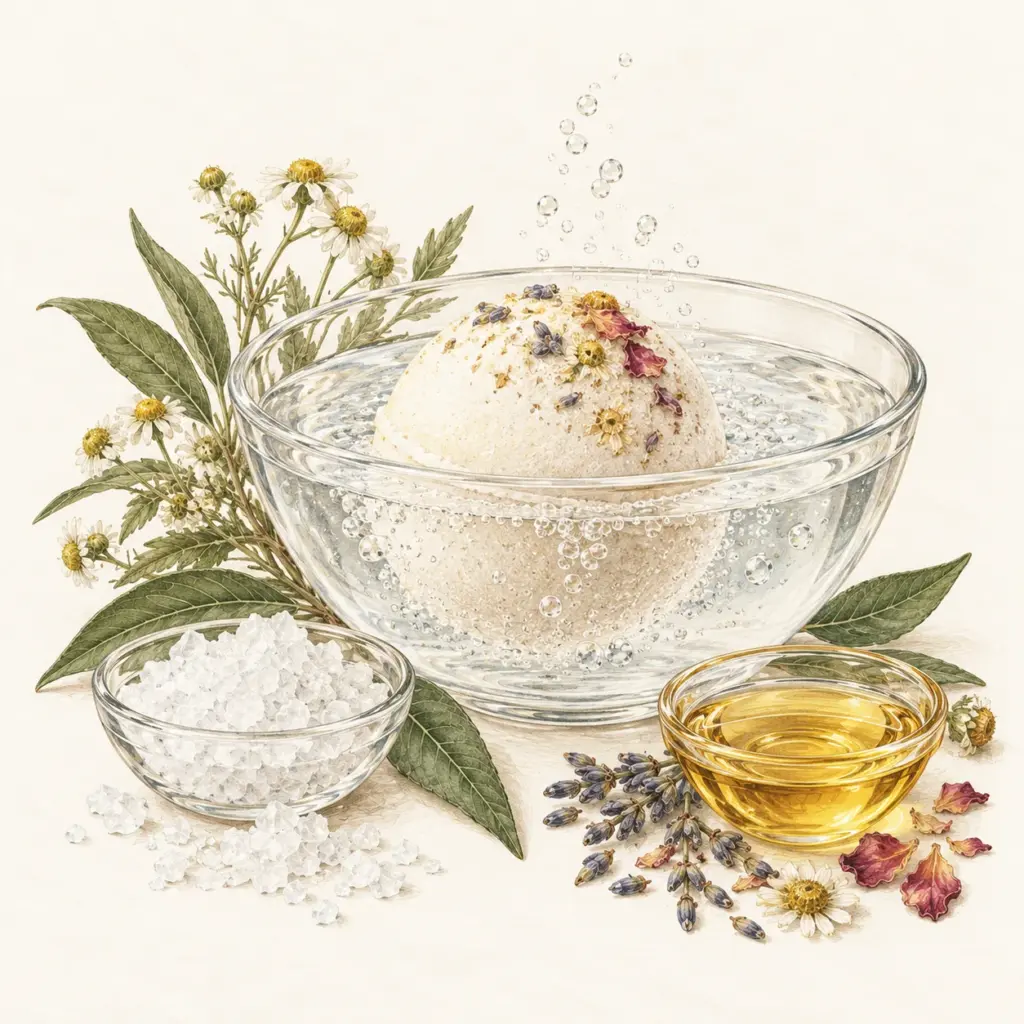
What do bath bombs do? At their simplest, bath bombs use a fizzy acid-and-base reaction to break apart in water and disperse the rest of their formulation through the bath. That can include fragrance, essential oils, colour, Epsom salt, botanical oils, butters and other ingredients depending on the product.
The fizz is the dramatic bit, but it is not really the point of a well-formulated bath bomb. The more useful question is what the fizz is carrying into the water — and whether the ingredients are there for a genuine formulation reason or simply because they sound good on the label.
In this guide, we are looking at how bath bombs work, what bath bomb ingredients actually do, which benefits are realistic, and where the marketing can get ahead of the chemistry.
What Is a Bath Bomb?
A bath bomb is a compressed bath product designed to dissolve and fizz when it comes into contact with water. Most formulas are built around two core ingredients: sodium bicarbonate — bicarbonate of soda or baking soda — and citric acid.
When they are dry, those ingredients can sit together quite happily. Add water and the reaction starts. The bath bomb begins to break down, carbon dioxide bubbles create the familiar fizz, and the other ingredients in the formula are released into the bath.
That basic mechanism is remarkably simple. What separates one bath bomb from another is everything built around it: the quality and proportion of the base ingredients, the fragrance, the oils or butters, mineral salts, colourants, binders and any additional active or botanical ingredients.
How Do Bath Bombs Work?
The science is an acid-base reaction. Citric acid reacts with sodium bicarbonate once both ingredients dissolve in water. One of the products of that reaction is carbon dioxide gas, and those tiny escaping gas bubbles are what you see as fizz.1
The reaction also helps the compressed bath bomb break apart and disperse the rest of the formulation. So if the bomb contains essential oils, carrier oils, butters, salts or colour, the fizz helps release those ingredients into the surrounding water.
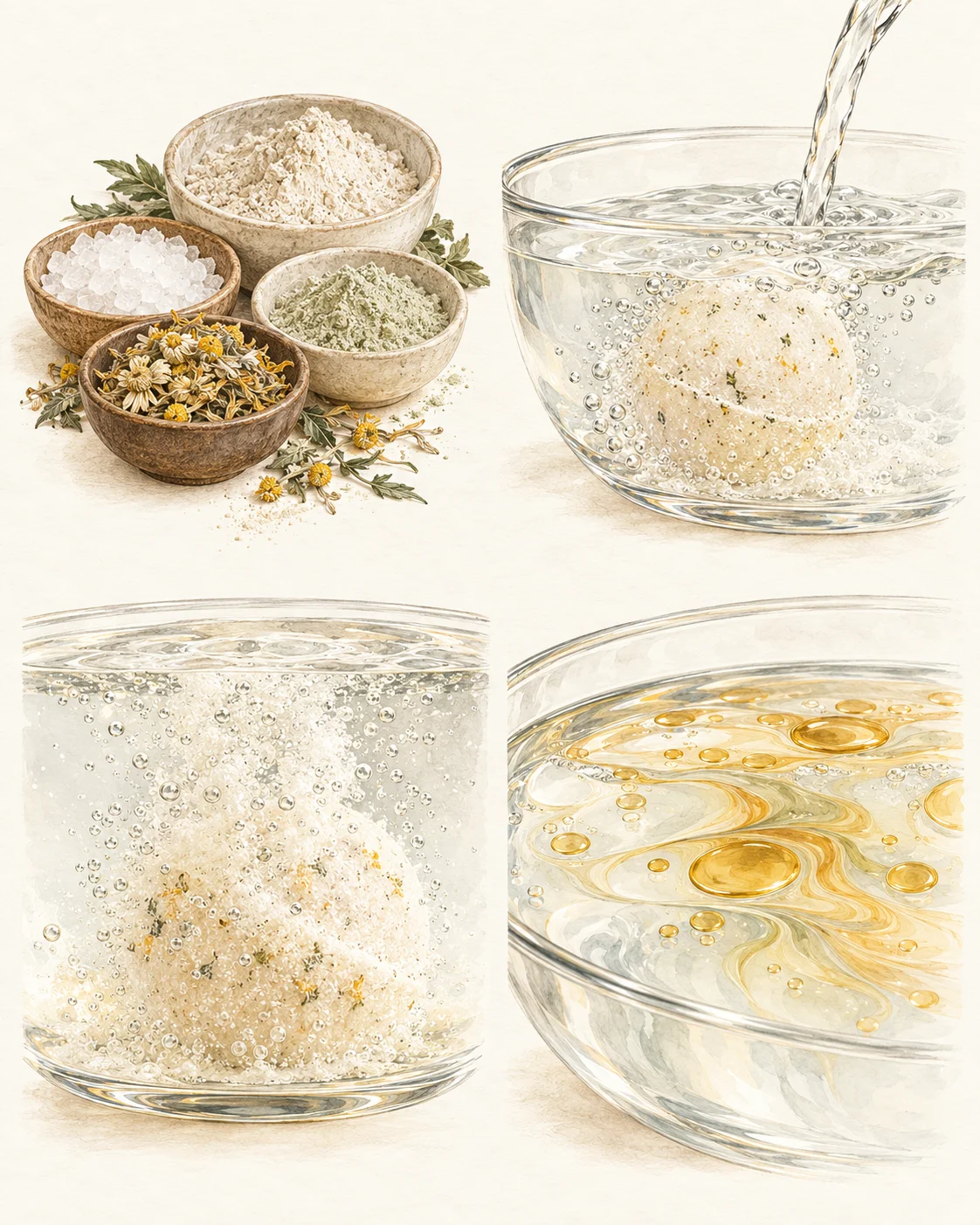
The bath-bomb reaction in plain English
Dry bath bomb: citric acid + sodium bicarbonate sit together without much happening.
Add water: both begin to dissolve.
The reaction starts: carbon dioxide gas is produced.
You see the result: bubbles escape, the bomb breaks down and the rest of the ingredients disperse into the bath.
It is the same basic chemistry used in plenty of classroom science experiments. That does not make a bath bomb unsophisticated. A good formula still has to balance how quickly it dissolves, how strongly it fizzes, how it holds together before use and how the oils, fragrance and other ingredients behave once they are in a full bath of water.
Why does a bath bomb lose its fizz?
Water is the trigger, including moisture in the air. If a bath bomb is stored somewhere humid, it can slowly begin reacting before it ever reaches the bath. That is why older or badly stored bath bombs can become soft, crumbly or disappointingly flat.
Keeping them cool and dry is not just packaging advice; it protects the chemistry that creates the fizz.
So, What Do Bath Bombs Actually Do?
A bath bomb can do several different things at once, but not every bath bomb does all of them. It depends entirely on the finished formula.
1. They create fizz and movement in the water
This is the universal bath-bomb function. The carbon dioxide reaction makes the product effervesce and break apart. It is visual, tactile and part of the reason bath bombs feel more like a ritual than simply adding a liquid product to the tub.
The fizz itself should not be confused with a therapeutic effect. It is primarily the mechanism that dissolves the bomb and disperses its contents.
2. They carry fragrance through the bath
Many bath bombs are fragranced with essential oils, fragrance materials or a combination of aromatic ingredients. Warm water helps scent become noticeable around the bath and bathroom, which is why Lavender, citrus, Eucalyptus and similar profiles are so common.
Fragrance can help create a particular atmosphere — softer and floral for an evening bath, brighter and fresher for daytime — but we would not turn that into a claim that a bath bomb treats anxiety, insomnia, fatigue or another medical condition.
3. They can disperse oils and butters
This is where formulation starts to matter more than fizz.
Some bath bombs contain very little beyond the fizzing base, colour and fragrance. Others include meaningful amounts of carrier oils, plant butters, glycerine or similar emollient ingredients. These can change how the bath water feels and leave the skin feeling softer or more conditioned after bathing.
That does not mean every bath bomb is automatically moisturising. You have to read the ingredient list. A product containing Coconut Oil, Shea Butter, Cocoa Butter, Avocado Oil and other emollient ingredients is doing something very different from a novelty bath bomb built mainly around colour and scent.
4. They can add mineral salts and other formulation ingredients
Epsom salt — magnesium sulphate — is a common addition. It changes the mineral composition of the bath water and has a long history of use in bathing products.
What it does not justify is the common claim that an Epsom-salt bath delivers a clinically meaningful magnesium dose through your skin. Reviews of transdermal magnesium have found the evidence insufficient to support the way that claim is often marketed.2
A warm mineral bath can still be enjoyable without needing to turn it into a medical delivery system.
5. They turn an ordinary bath into a sensory ritual
This may sound less impressive than a list of health claims, but it is probably the most honest reason bath bombs have remained popular.
They change the scent, feel and visual character of the bath. They make you stop, fill the tub properly and create a deliberate moment around bathing. If that helps you slow down at the end of the day, that experience has value without needing to pretend the fizz itself is medicine.
What Are Bath Bombs Made Of?
There is no single bath-bomb recipe, but most formulas use some combination of the ingredients below.
| Ingredient type | Typical role | What to know |
|---|---|---|
| Sodium bicarbonate | Alkaline half of the fizzing reaction | Reacts with the acid once water is added. |
| Citric acid | Acidic half of the fizzing reaction | Helps produce carbon dioxide when dissolved with bicarbonate. |
| Magnesium sulphate / Epsom salt | Mineral salt used in many bath formulations | Do not assume a bath provides a meaningful systemic magnesium dose. |
| Plant oils | Emollient feel and formulation character | Examples include Coconut, Avocado, Olive, Argan or Rosehip oils. |
| Plant butters | Richer emollient component | Shea and Cocoa Butter are common examples. |
| Glycerine | Humectant / formulation ingredient | Used in many cosmetic products to help manage water and skin feel. |
| Essential oils or fragrance | Aroma | Natural fragrance ingredients can still contain allergens or irritants. |
| Colourants / decorative ingredients | Visual effect | Not essential to the chemistry and may matter more for sensitive skin. |
| Starch or other fillers | Can alter structure or the speed/character of the fizz | Cornstarch is common but not required in every formula. |
Scientific American’s bath-bomb chemistry experiment describes cornstarch as a dry filler that can alter the behaviour of the bicarbonate-and-citric-acid reaction.3 It is therefore perfectly possible to make a bath bomb without starch; it is a formulation choice, not a requirement for the chemistry to work.
We will look at that in more detail in our separate guide to what cornstarch does in bath bombs and why our own formula is starch-free.
Do Bath Bombs Moisturise Your Skin?
Some can. Some barely do.
The phrase “bath bomb” tells you the format, not the complete formula. A bomb containing several carrier oils and plant butters may leave the skin feeling noticeably different from one containing mainly bicarbonate, citric acid, colour and fragrance.
Oils and butters are emollient ingredients: they can help soften the surface of the skin and reduce that dry, squeaky feeling some people get after bathing. Glycerine is another familiar cosmetic ingredient used to support hydration and skin feel.
But there are two sensible caveats.
First, these ingredients are being dispersed into an entire bath of water, so a bath bomb is not the same thing as applying a leave-on moisturiser directly to your skin. Second, fragrance materials, essential oils and colourants can irritate some people, particularly those with sensitive skin or a history of eczema or fragrance allergy. Dermatology guidance routinely makes the point that “natural” does not automatically mean non-irritating.4
So the more useful question is not “are bath bombs moisturising?” but “what moisturising ingredients are actually in this bath bomb, and are they suitable for my skin?”

MYTH BUSTER
Do Bath Bombs Help Sore Muscles?
This is one of the areas where bath-bomb marketing tends to overreach.
A comfortably warm bath can feel soothing after a long day or exercise. Sitting in warm water also gives you a period of rest where you are not loading the muscles in the same way as when you are standing or moving around.
If the product also contains Epsom salt, it is reasonable to describe it as an Epsom-salt bath formulation. It is much less reasonable to claim that magnesium is absorbed through the skin in a reliable therapeutic dose and then treats muscle pain. The evidence for that systemic transdermal-magnesium story remains weak.
The same principle applies to CBD bath bombs. If a bath bomb contains 100mg CBD isolate, that is a useful formulation specification. It does not mean the user absorbs a 100mg CBD dose from the bath.
We think that distinction makes the product easier to understand, not less interesting. You can judge a bath bomb by the complete formulation — fizz, fragrance, salts, oils, butters and how it feels to use — rather than by the most dramatic medical claim somebody can attach to one ingredient.
What Do Essential Oils Do in Bath Bombs?
Essential oils are primarily there to create the aromatic profile of the bath.
Lavender gives a familiar floral-herbal fragrance. Sweet Orange and Grapefruit create a brighter citrus direction. Eucalyptus, Peppermint, Ylang Ylang, Rosemary and other essential oils all change the sensory character of the finished product.
There is legitimate scientific research into aromatherapy and individual essential oils. That does not mean every bath bomb containing an oil inherits every outcome ever reported in an aromatherapy study.
For a retail bath bomb, we prefer to describe the scent honestly: floral, citrus, herbal, fresh, warming, evening-led or bright. That tells you what the bath will actually smell like without promising a medical outcome.
Why the Oils and Butters Matter More Than the Fizz
The fizz is over in minutes. The formula is what remains in the water.
This is one of the main reasons we formulate our own bath bombs differently from very simple novelty bombs. Our Lavender and Orange & Grapefruit bath bombs both use a broad botanical oil-and-butter base built around ingredients including:
- Coconut Oil
- Shea Butter
- Cocoa Butter
- Avocado Oil
- Peach Kernel Oil
- Evening Primrose Oil
- Pomegranate Seed Oil
- Olive Oil
- Argan Oil
- Rosehip Oil
They also include Magnesium Sulphate, glycerine and 100mg CBD isolate in a substantial 160g single-use format. Both are vegan and deliberately made without starch.
That gives us a much more useful product story than simply saying “luxury bath bomb”. You can see what is in the formulation and decide whether the fragrance and ingredient profile appeal to you.

Explore the range
Explore our CBD bath bombs
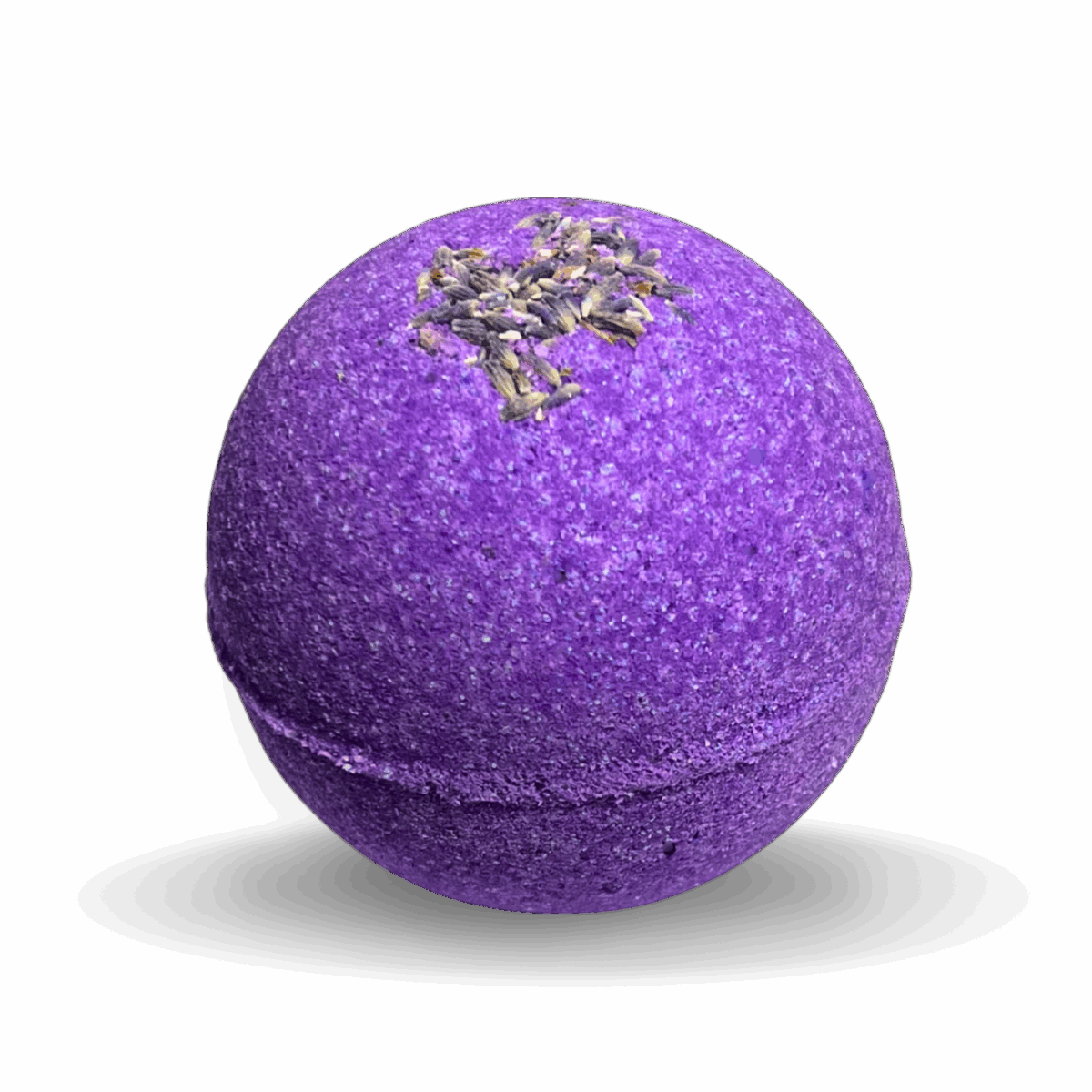
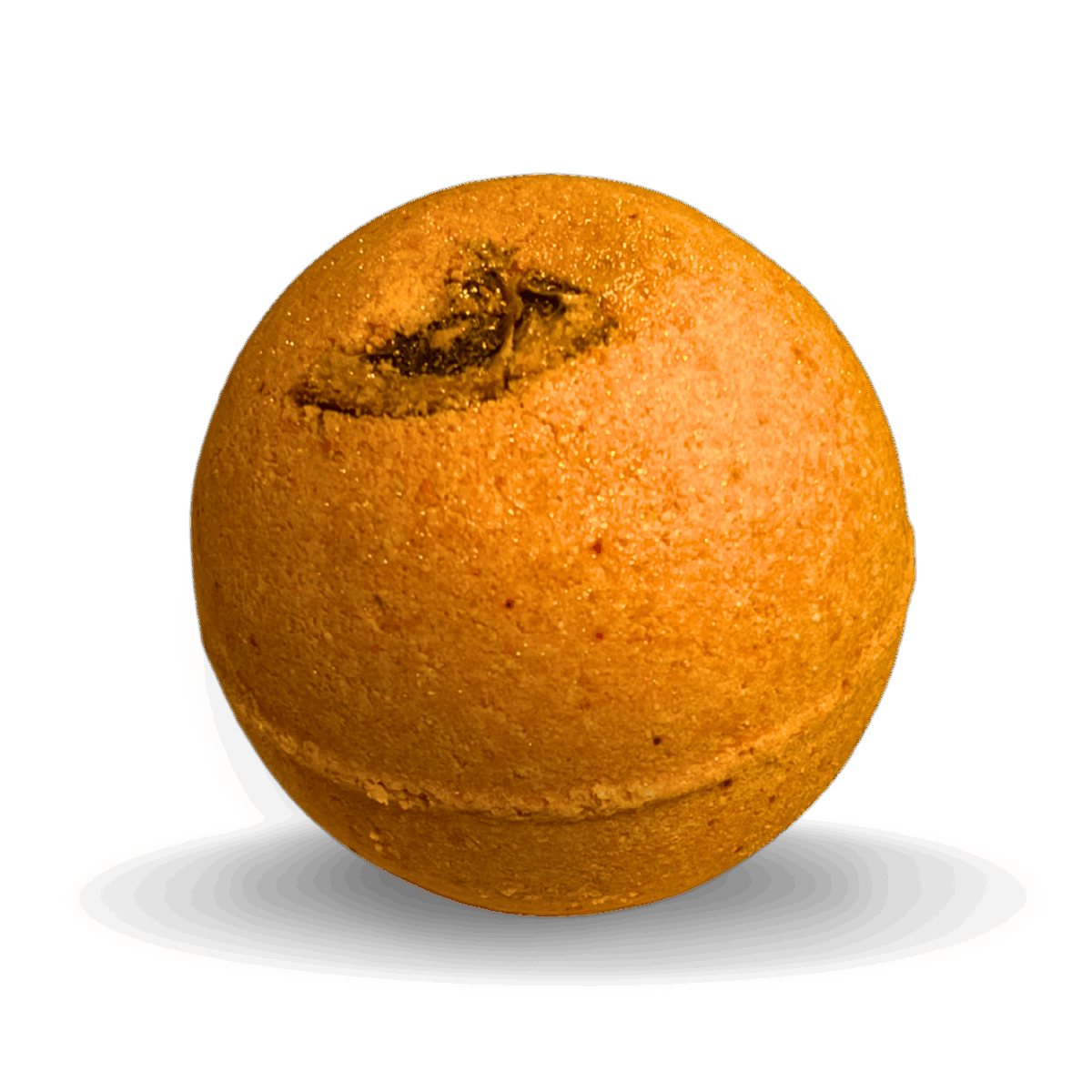
Lavender for a softer evening fragrance
Our Lavender CBD Bath Bomb uses Lavender essential oil with the shared botanical base. We position it within the Bed range because the fragrance naturally fits an evening bath ritual — not because we claim a bath bomb treats insomnia.
Orange & Grapefruit for a brighter citrus bath
The Orange & Grapefruit Citrus CBD Bath Bomb uses the same 160g / 100mg CBD isolate format but moves in a brighter citrus direction with Sweet Orange and Grapefruit.
If you want to compare both formulas side by side, the bath bombs collection keeps the commercial comparison in one place.
Are Bigger or More Expensive Bath Bombs Better?
Not automatically.
A larger bath bomb gives a manufacturer more room for the overall formulation, but size alone does not tell you whether the product contains better ingredients. Price does not tell you either.
When comparing bath bombs, we would look at:
- Weight: how much product are you actually getting?
- Ingredient list: is it mainly fizz, colour and fragrance, or is there a meaningful oil-and-butter base?
- Fragrance: essential oils, fragrance materials, or both?
- Allergens: are relevant fragrance allergens clearly declared?
- Mineral salts: does it contain Epsom salt or another mineral component?
- Fillers: does the product use starch or other structural ingredients?
- Directions: is it clear how the product should be stored and used safely?
- Claims: is the brand explaining the formula, or promising to cure half the contents of a medical textbook?
We will cover those questions in more depth in our separate bath-bomb buying guide. For now, the key point is that a bath bomb should be judged by the whole formula, not the fizz alone.
Can Bath Bombs Irritate the Skin?
They can, depending on the formula and the person using it.
Fragrance, essential oils, dyes, preservatives and decorative ingredients are all potential sources of irritation for somebody who is sensitive to them. Cleveland Clinic advises particular caution for people with eczema or known sensitivities to fragrance or dyes.4
That does not mean bath bombs are inherently “bad for your skin”. It means cosmetic products are formulations, and individual tolerance matters.
Check the full ingredient and allergen information, stop using a product if it causes irritation, and be particularly cautious if you already know that fragranced bathing products cause problems for you.
We are giving skin and sensitive-skin questions their own guide because that subject deserves more than a throwaway line in a general bath-bomb article.
Why Do Some Bath Bombs Fizz More Than Others?
Fizz can vary because of the ratio of bicarbonate to acid, the amount and type of fillers, the way the product has been pressed, its size and — importantly — how much moisture it has encountered during storage.
Scientific American’s experiment with different amounts of cornstarch showed that changing the proportion of filler altered how vigorously and how quickly the bombs fizzed and dissolved.3
So a huge immediate explosion of bubbles is not necessarily a sign of a “better” bomb. A slower dissolve may be completely intentional. Formulators are balancing stability, structure, release and sensory effect rather than competing for the loudest fizz.
What Do Bath Bombs Do? The Takeaway
Bath bombs are clever little pieces of cosmetic chemistry. Citric acid and sodium bicarbonate react in water, producing the carbon dioxide fizz that breaks the bomb apart and disperses its other ingredients.
After that, the formula determines the experience.
A simple bath bomb might mainly add colour and fragrance. A more considered one can also contain mineral salts, essential oils, plant oils, butters and other cosmetic ingredients that change the feel and aroma of the bath.
The part we would be wary of is the jump from “contains an ingredient” to “therefore treats a condition”. Epsom salt in a bath does not automatically become systemic magnesium therapy. CBD in a bath bomb is not the same as absorbing the labelled milligram amount. Lavender fragrance can suit an evening ritual without becoming an insomnia treatment.
We would rather tell you what is actually in the product and why it is there.
If you want to see that approach in practice, compare our Lavender and Orange & Grapefruit bath bombs. Both use a 160g starch-free format with 100mg CBD isolate, Epsom salt and a broad botanical oil-and-butter base; the main difference is the fragrance direction.
Frequently Asked Questions
What do bath bombs actually do?
Bath bombs fizz and dissolve in water, dispersing the rest of their formulation through the bath. Depending on the product, that may include fragrance, essential oils, colour, mineral salts, carrier oils and plant butters. The exact effects therefore depend on the finished formula rather than the bath-bomb format alone.
Why do bath bombs fizz?
Most bath bombs contain sodium bicarbonate and citric acid. When water dissolves them, they react and produce carbon dioxide gas. The escaping gas creates the visible bubbles and helps the bath bomb break apart.
Do bath bombs moisturise your skin?
Some bath bombs contain emollient oils, butters and ingredients such as glycerine that can leave skin feeling softer or more conditioned. Others contain very little beyond the fizzing base, fragrance and colour, so check the ingredient list rather than assuming every bath bomb is moisturising.
Are bath bombs good for sensitive skin?
It depends on the formulation and your individual sensitivities. Fragrance, essential oils, dyes and other cosmetic ingredients can irritate some people. If you have eczema, fragrance allergy or very sensitive skin, check the full ingredients and follow appropriate professional advice.
Does Epsom salt in a bath bomb give you magnesium?
Epsom salt is magnesium sulphate, but evidence does not establish that ordinary bathing reliably delivers a clinically meaningful systemic magnesium dose through the skin. It is better understood as part of the mineral bath formulation rather than a substitute for medically indicated magnesium treatment.
Why are some bath bombs more fizzy than others?
Fizz depends on the acid-to-bicarbonate balance, fillers and binders, how tightly the bomb is pressed, its size and how much moisture it has encountered in storage. More aggressive fizz is not automatically a sign of a higher-quality product.
- BBC Science Focus. How do bath bombs work? https://www.sciencefocus.com/science/how-do-bath-bombs-work
- Gröber U, Werner T, Vormann J, Kisters K. Myth or Reality—Transdermal Magnesium? Nutrients. 2017;9(8):813. https://pubmed.ncbi.nlm.nih.gov/28788060/
- Scientific American. Sudsy Science: Creating Homemade Bath Bombs. https://www.scientificamerican.com/article/sudsy-science-creating-homemade-bath-bombs/
- Cleveland Clinic. Is Marinating in the Tub With a Bath Bomb Safe for Your Skin? https://health.clevelandclinic.org/is-marinating-in-the-tub-with-a-bath-bomb-safe-for-your-skin