










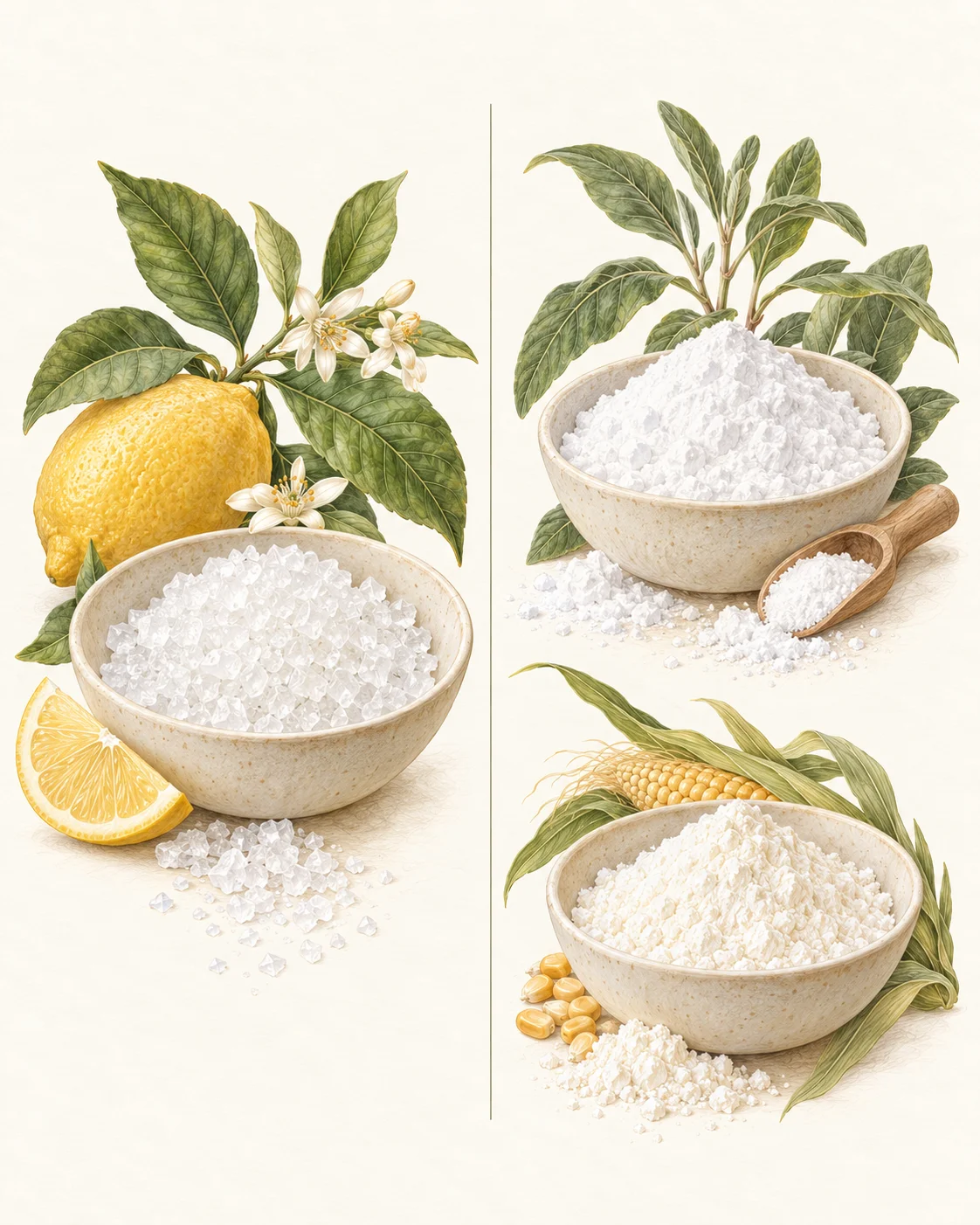
What does cornstarch do in bath bombs? Cornstarch is an optional dry filler. It can change the structure of a bath bomb and slow or soften the reaction between citric acid and sodium bicarbonate, producing a less aggressive, longer-lasting fizz.
What it does not do is create the fizz itself. The defining bath-bomb reaction still comes from acid + bicarbonate + water. That means a bath bomb can be made perfectly well without cornstarch.
This is one of those formulation details that is often repeated without explanation, so this guide looks at what the chemistry actually says, why some brands use starch, why others do not, and why our own bath bombs are deliberately starch-free.
Why Is Cornstarch Used in Bath Bombs?
Most bath bombs are built around two core dry ingredients:
- citric acid; and
- sodium bicarbonate.
When water dissolves them, they react and release carbon dioxide gas. That is the fizz.
Cornstarch can be added to that mixture as a dry filler. Scientific American’s bath-bomb chemistry experiment describes cornstarch in exactly those terms and shows that changing the amount of starch changes how the finished bomb behaves.1
In that experiment, a formula with more cornstarch and proportionally less reactive material fizzed less vigorously and dissolved more slowly.
So cornstarch can influence:
- how quickly a bomb dissolves;
- how vigorous the fizz appears;
- the bulk and texture of the dry mix; and
- how the formula behaves structurally before use.
That makes it a formulation tool — not an essential ingredient.
Does Cornstarch Make a Bath Bomb Fizz?
No.
The fizz comes from the acid-base reaction between citric acid and sodium bicarbonate once water is present.
Cornstarch does not replace either half of that reaction. It can dilute the reactive ingredients and alter how quickly water reaches and dissolves them, but it is not the ingredient generating the carbon dioxide bubbles.
This distinction matters because “contains cornstarch” is sometimes discussed as if it were a requirement of bath-bomb chemistry. It is not.
Scientific American explicitly suggests comparing bath bombs made with no cornstarch at all, confirming that starch-free formulations are entirely possible.1
Why Would a Formulator Leave Cornstarch Out?
There are several perfectly ordinary reasons.
1. They want a different fizz profile
A starch-free formula can be tuned around the acid/base balance, compression, oils, salts and other ingredients rather than using starch to slow the reaction.
2. They want the formula to focus on other ingredients
If a bath bomb already contains mineral salts, carrier oils, plant butters and fragrance, a formulator may prefer not to add another filler unless it contributes something useful to the finished product.
3. They want a simpler ingredient architecture
Some brands prefer a shorter or more functionally focused formula. That does not automatically make it “better”, but it is a valid formulation choice.
4. They have developed the product to hold together without it
Bath-bomb stability depends on much more than starch. Moisture control, compression, oils, binders, particle size and packaging all matter.
Are Bath Bombs Without Cornstarch Better?
Not automatically.
A starch-free bath bomb can be excellent or terrible, just as a bath bomb containing cornstarch can be excellent or terrible.
The presence or absence of one filler does not tell you enough about the finished formula.
| Question | Why it matters more than the starch label alone |
|---|---|
| What is the acid/base balance? | This drives the core fizz reaction. |
| What oils or butters are included? | These change the feel and emollient character of the bath. |
| What fragrance is used? | Fragrance and essential oils shape the sensory profile and sensitivity risk. |
| Does it contain salts? | Mineral salts create a different bath formulation. |
| How is it stored? | Moisture exposure can ruin the fizz before use. |
Starch-free is therefore best understood as a transparent formulation detail, not a universal quality badge.
Does Cornstarch Cause Yeast Infections?
This is where we need to be particularly careful.
There is a widely repeated idea that cornstarch “feeds yeast” and therefore causes yeast infections. That is too broad a claim to make from the available evidence.
A controlled human-skin study published in Pediatric Dermatology experimentally inoculated Candida albicans onto volunteers’ skin and found that adding cornstarch did not enhance Candida growth. The authors concluded that cornstarch and talc did not increase yeast growth on human skin in that experiment.2
That study is old and it was not a bath-bomb trial, so it does not answer every intimate-health question. But it is enough to show why the simple statement “cornstarch causes yeast infections” is not evidence-led.
Bath additives more broadly can irritate some people, and fragrance, dyes and other ingredients can affect sensitive skin or intimate areas. That is a different issue from proving cornstarch itself causes infection.

MYTH BUSTER
So Why Are Our Bath Bombs Starch-Free?
Because that is how we chose to formulate them.
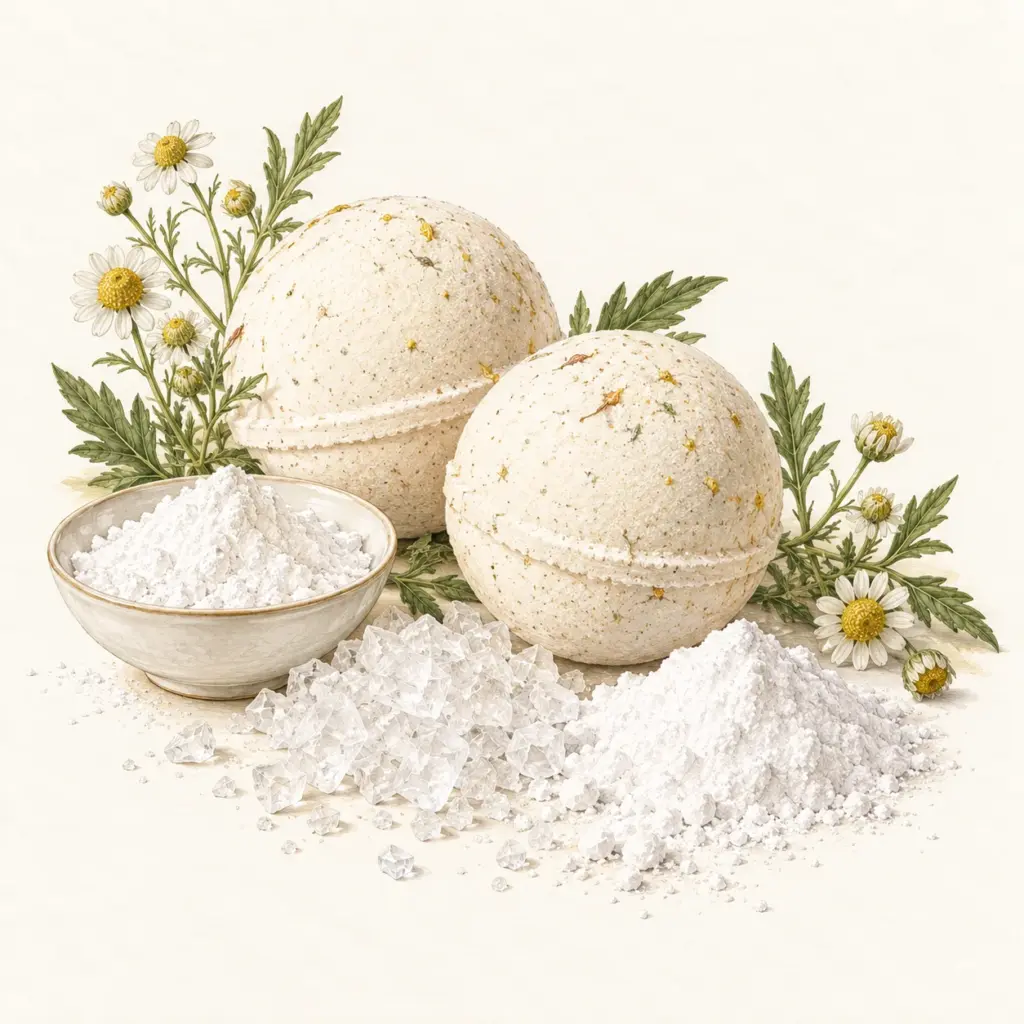
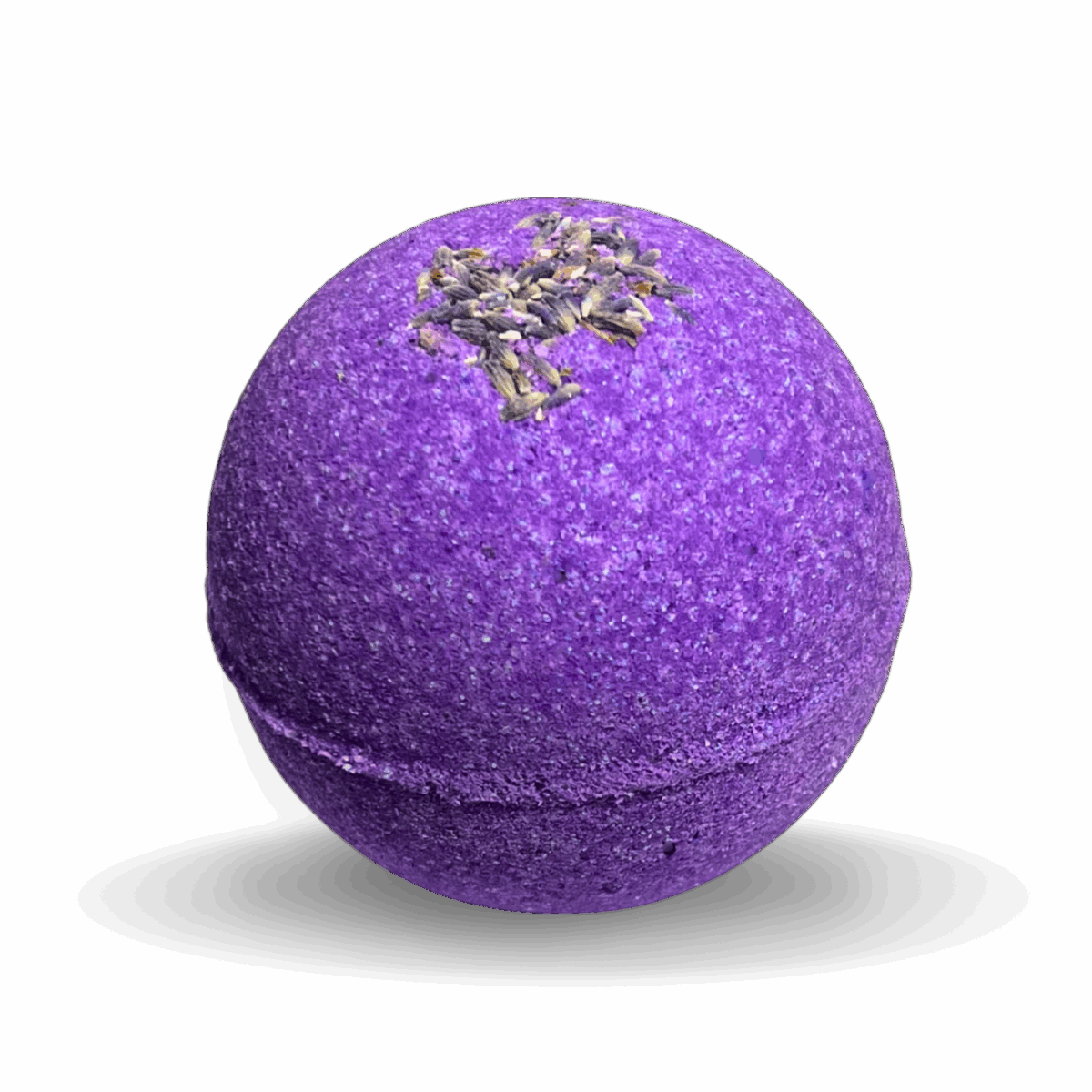
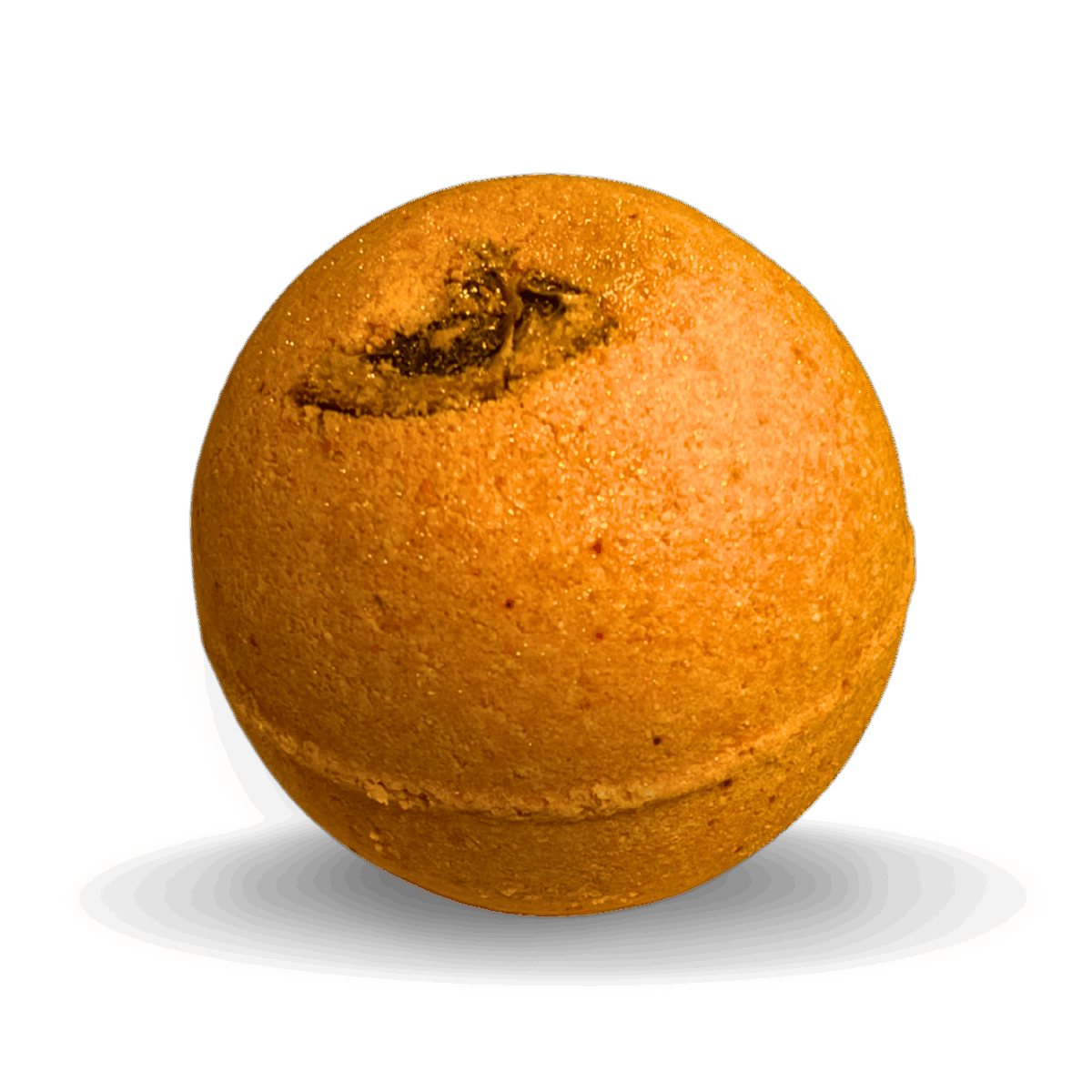
Our current Lavender and Orange & Grapefruit bath bombs use a fizzing base of sodium bicarbonate and citric acid without adding starch. Around that base we build the bath experience with:
- Magnesium Sulphate / Epsom salt;
- Coconut Oil;
- Shea Butter;
- Cocoa Butter;
- Avocado Oil;
- Peach Kernel Oil;
- Evening Primrose Oil;
- Pomegranate Seed Oil;
- Olive Oil;
- Argan Oil;
- Rosehip Oil;
- glycerine;
- essential-oil fragrance; and
- 100mg CBD isolate in each 160g bath bomb.
We therefore have no need to make starch the hero or villain. It is simply not part of the current formula.
That is the kind of product detail we think is worth publishing because it tells you something concrete about what you are buying.
Explore the range
Explore our CBD bath bombs
Does Starch-Free Mean “Natural”?
No. They are separate concepts.
Removing cornstarch does not magically define a product as natural, safer or non-irritating. A starch-free bath bomb can still contain fragrance, essential oils, colourants or other ingredients that some people react to.
Likewise, cornstarch itself is plant-derived, so “starch-free” should not be used as a synonym for “more natural”.
This is another reason we prefer specific ingredient language over vague front-of-pack claims.
Does Cornstarch Affect How Fast a Bath Bomb Dissolves?
It can.
In the Scientific American comparison, a higher-cornstarch recipe dissolved more slowly and fizzed less vigorously than the lower-starch version. That makes sense because the formula contained proportionally less of the ingredients responsible for the acid-base reaction.1
But starch is not the only factor. Bomb size, compression, water temperature, particle size, oil content and humidity during storage can all alter dissolution.
So if one bath bomb fizzes for much longer than another, you cannot diagnose the entire formula just by watching the stopwatch.
What Does Cornstarch Do in Bath Bombs? The Takeaway
Cornstarch is an optional formulation ingredient. It can act as a dry filler and change the speed and character of a bath bomb’s fizz, but it is not what creates the carbon dioxide reaction.
A bath bomb does not need starch to work.
We also would not tell you that starch-free automatically means safer, healthier or medically superior. The whole formula matters much more.
Our own reason for making starch-free bath bombs is straightforward: we built the products around a different formulation architecture, with Epsom salt, a broad botanical oil-and-butter base, essential-oil fragrance and CBD isolate alongside the core fizzing ingredients.
That is a formulation choice we can explain. It does not need a scare story attached to it.
Frequently Asked Questions
What does cornstarch do in bath bombs?
Cornstarch can act as a dry filler in a bath-bomb formula and can slow or change the way the citric-acid and sodium-bicarbonate reaction proceeds. Experiments show that higher cornstarch proportions can produce a slower, less vigorous fizz.
Do bath bombs need cornstarch?
No. Cornstarch is optional. The defining fizz comes from the reaction between an acid such as citric acid and sodium bicarbonate once water is added. A bath bomb can be formulated successfully without starch.
Why do some brands use cornstarch in bath bombs?
It can help bulk out the dry formula and alter structure and dissolution behaviour. Formulators may use it to create a slower fizz or change how the bomb holds together, but it is only one of several possible formulation approaches.
Are starch-free bath bombs better?
Not automatically. Starch-free simply describes one formulation choice. Quality depends on the whole formula, including the acid/base balance, oils, butters, fragrance, salts, allergens, stability and intended use.
Does cornstarch in bath bombs cause yeast infections?
There is not good evidence to support a blanket claim that cornstarch in a bath bomb causes yeast infections. A human-skin study found cornstarch did not enhance Candida albicans growth. Bath additives can still irritate some people, so individual sensitivity and the whole formulation matter.
Are The London Dispensary bath bombs starch-free?
Yes. The current Lavender and Orange & Grapefruit bath bombs are formulated without starch. They use a citric-acid and sodium-bicarbonate fizzing base alongside Epsom salt and a broad botanical oil-and-butter formulation.
- Scientific American. Sudsy Science: Creating Homemade Bath Bombs. https://www.scientificamerican.com/article/sudsy-science-creating-homemade-bath-bombs/
- Leyden JJ. Corn starch, Candida albicans, and diaper rash. Pediatr Dermatol. 1984;1(4):322-325. https://pubmed.ncbi.nlm.nih.gov/6387672/