















Are bath bombs good for your skin? They can be pleasant to use, and formulas containing emollient oils, plant butters or glycerine may leave skin feeling softer. But bath bombs are not automatically “good for skin” just because they contain natural ingredients or essential oils.
Fragrance, essential oils, dyes, preservatives and decorative additives can irritate some people, particularly those with eczema or known fragrance sensitivity.
So the answer is not a simple yes or no. The whole formulation and your individual skin matter.
What Can a Bath Bomb Do to Your Skin?
A bath bomb can affect the skin in several ways at once.
The warm water itself cleanses and hydrates the outer skin temporarily, but long or very hot baths can also remove natural oils and leave the skin feeling dry.
The bath bomb then adds its own ingredients to that environment.
Depending on the product, those may include:
- carrier oils;
- plant butters;
- glycerine;
- mineral salts;
- essential oils;
- fragrance materials;
- colourants;
- preservatives;
- glitter or decorative particles; and
- other product-specific ingredients.
Some of those ingredients can improve the sensory feel of the bath. Others may be irrelevant to your skin. Some may cause irritation if you are sensitive to them.
Can Bath Bombs Moisturise the Skin?
Some formulations can leave the skin feeling more conditioned.
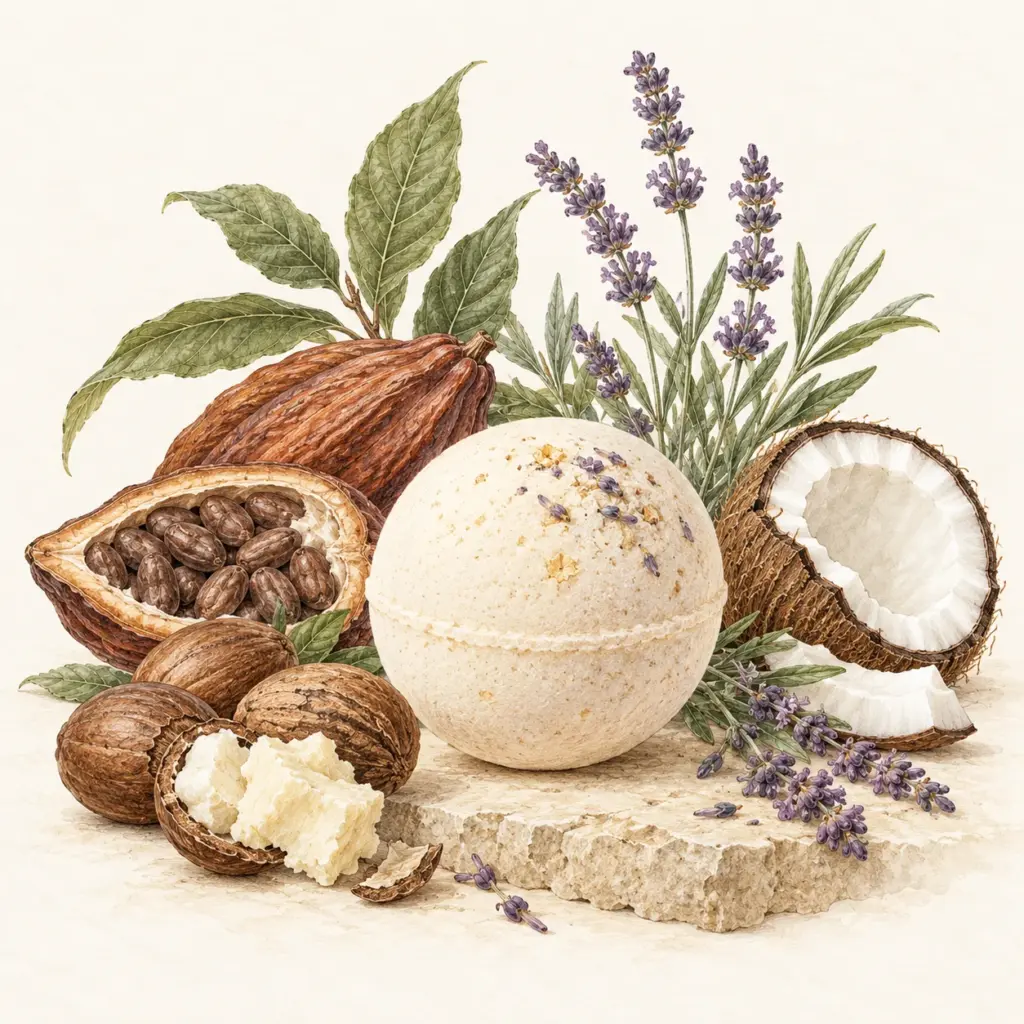
Bath bombs containing oils and butters such as Coconut Oil, Shea Butter, Cocoa Butter, Avocado Oil, Olive Oil or Argan Oil introduce emollient ingredients into the bath water.
Emollients work by helping smooth and soften the outer surface of the skin.
But there are two important limits.
First, the ingredients are dispersed through an entire bath rather than applied directly as a leave-on cream or balm. A bath bomb therefore should not be treated as equivalent to a moisturiser.
Second, the same product may also contain fragrance or essential oils that a sensitive person does not tolerate well.
So “contains Shea Butter” is useful information, but it does not automatically make the whole product suitable for every skin type.
Which Bath-Bomb Ingredients Can Irritate Skin?
Cleveland Clinic specifically highlights fragrance, dyes, preservatives and decorative additives such as glitter as possible sources of irritation in bath bombs. It also warns that natural ingredients can still cause problems for sensitive skin.1
| Ingredient group | Why it may matter |
|---|---|
| Fragrance | A common source of irritation or contact allergy in susceptible people. |
| Essential oils | Plant-derived but still capable of irritation or allergy. |
| Dyes / colourants | Can irritate some users and may leave residue. |
| Preservatives | Necessary in some cosmetic systems but certain individuals may be sensitive to specific preservatives. |
| Glitter / decorative particles | May create extra friction or residue depending on the material. |
| Botanical ingredients | “Natural” does not mean non-allergenic. |
WebMD’s 2026 review similarly notes that bath-bomb ingredients can trigger sensitivity, itching, dryness and irritation, particularly in people with underlying skin conditions such as eczema.2
Are Natural Bath Bombs Better for Sensitive Skin?
Not automatically.
This is one of the most persistent problems in cosmetic marketing: “natural” gets used as if it means “cannot cause irritation”.
Essential oils are natural. So are many botanical extracts. Both can contain substances capable of causing contact allergy or irritation.
Likewise, synthetic does not automatically mean harmful.
For sensitive skin, the useful questions are:
- What exact ingredients are in the product?
- Do I already know I react to any of them?
- How heavily fragranced or coloured is it?
- How long will it be in contact with my skin?
- Can I rinse residue away afterwards?

MYTH BUSTER
Are Bath Bombs Suitable if You Have Eczema?
People with eczema need to be more cautious with fragranced bath products.
Cleveland Clinic specifically identifies atopic dermatitis / eczema and known fragrance or dye sensitivity as reasons to be careful with bath bombs.1
If you have active eczema, a history of reacting to fragranced products or a dermatologist-approved bathing routine, follow that clinical guidance rather than assuming a retail bath bomb is compatible.
A bath bomb should never be marketed as a treatment for eczema.
Can Bath Bombs Cause Vaginal or Vulval Irritation?
Fragranced bath additives can irritate intimate skin in some people.
Cleveland Clinic notes that bath additives can alter the local environment and may contribute to irritation in some women and girls.1
The important thing is not to reduce that issue to one ingredient without evidence.
For example, we do not claim that cornstarch in bath bombs causes yeast infections. A controlled human-skin study found cornstarch did not enhance Candida albicans growth.3
If fragranced baths repeatedly cause burning, itching, discharge or other symptoms, stop using the product and seek appropriate medical advice if symptoms persist.
Should You Rinse After a Bath Bomb?
If your skin is sensitive or you can feel a residue, rinsing with lukewarm water is sensible.
Cleveland Clinic advises rinsing after bath-bomb use to remove residual ingredients, and WebMD gives similar advice.14
That is particularly useful after products with heavy fragrance, colour or decorative material.
If the bath bomb contains oils and butters, rinsing the tub afterwards is also sensible because the surface may become slippery.
How Long Should You Stay in a Bath With a Bath Bomb?
Follow the product label first.
For users without known sensitivity, Cleveland Clinic suggests around 10–15 minutes as a reasonable bath-bomb soak, noting that longer exposure can increase contact with potential allergens.1
If your skin feels itchy, tight, sore or uncomfortable, get out and rinse rather than staying in because the product has not “finished working”.
What Should Sensitive-Skin Users Look For?
- Read the full ingredient list.
- Avoid known personal triggers.
- Be cautious with heavily fragranced or highly coloured products.
- Remember essential oils can also irritate.
- Use comfortably warm rather than very hot water.
- Consider a shorter soak.
- Rinse afterwards if residue remains.
- Stop use if redness, itching or discomfort develops.
What About Oils and Butters?
Emollient ingredients are one of the more positive formulation differences between bath bombs.
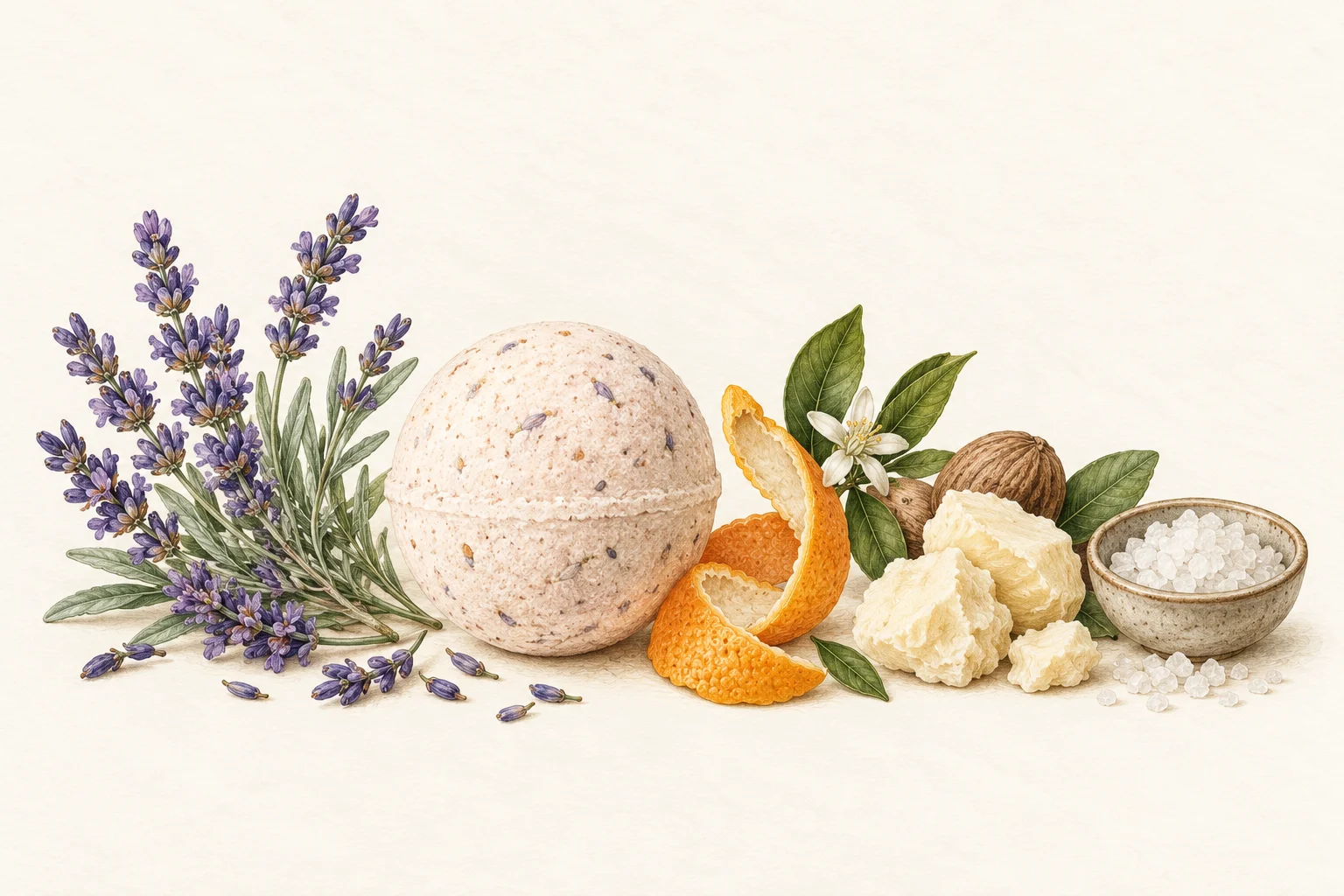
Our current Lavender and Orange & Grapefruit bombs contain a broad base including Coconut Oil, Shea Butter, Cocoa Butter, Avocado Oil, Peach Kernel Oil, Evening Primrose Oil, Pomegranate Seed Oil, Olive Oil, Argan Oil and Rosehip Oil.
These ingredients contribute to the feel of the bath water and can leave skin feeling more conditioned.
But they do not cancel out sensitivity to other ingredients. Somebody who reacts to Lavender fragrance, for example, does not become protected from that reaction because the same bath also contains Shea Butter.
How Our Bath Bombs Approach the Skin Question
We do not position our bath bombs as dermatological treatments.
Our current bath bombs are ingredient-led products with:
- a 160g single-use format;
- Epsom salt;
- a broad botanical oil-and-butter base;
- essential-oil fragrance;
- 100mg CBD isolate;
- a starch-free formula; and
- clear external-use and sensitivity precautions.
Explore the range
Explore our CBD bath bombs
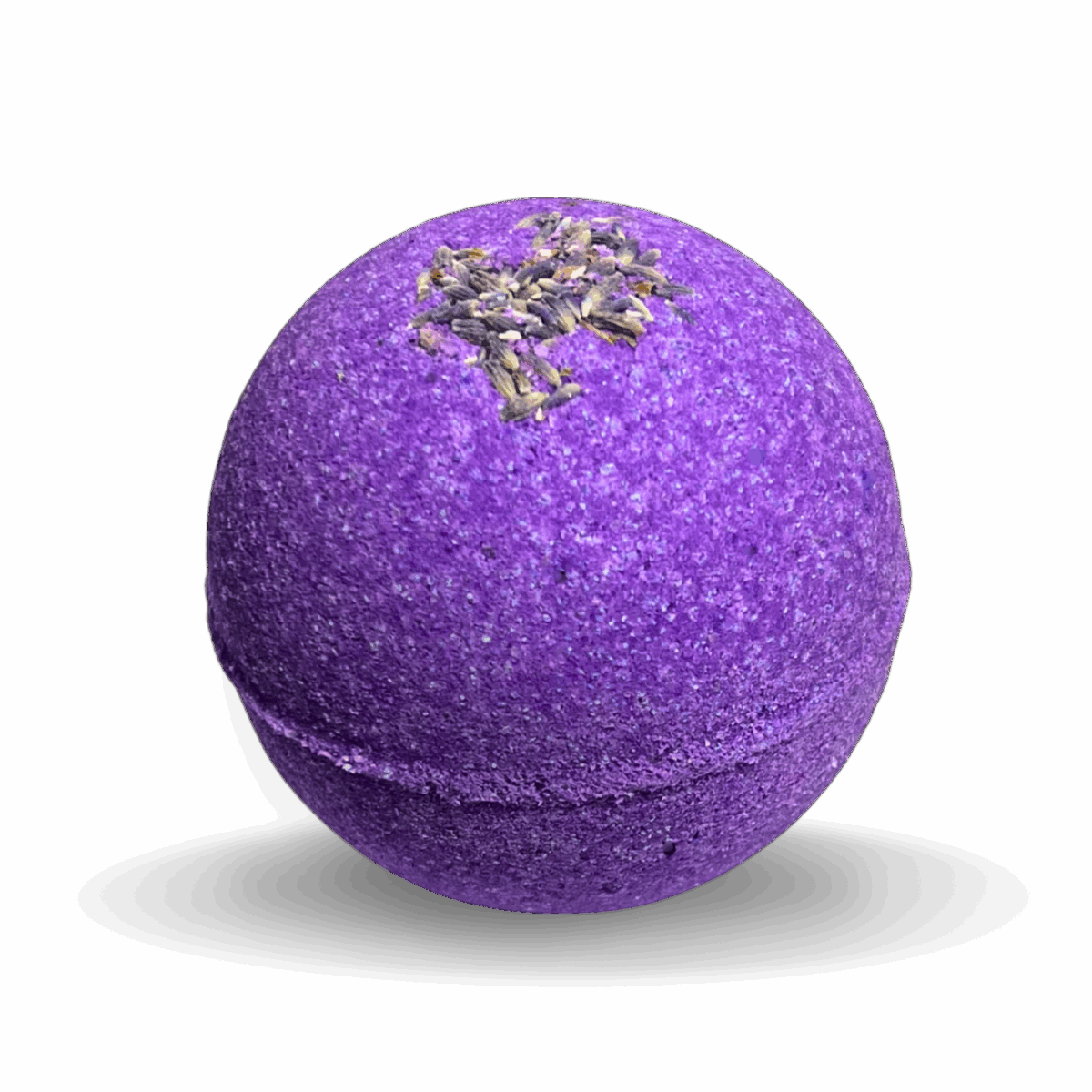
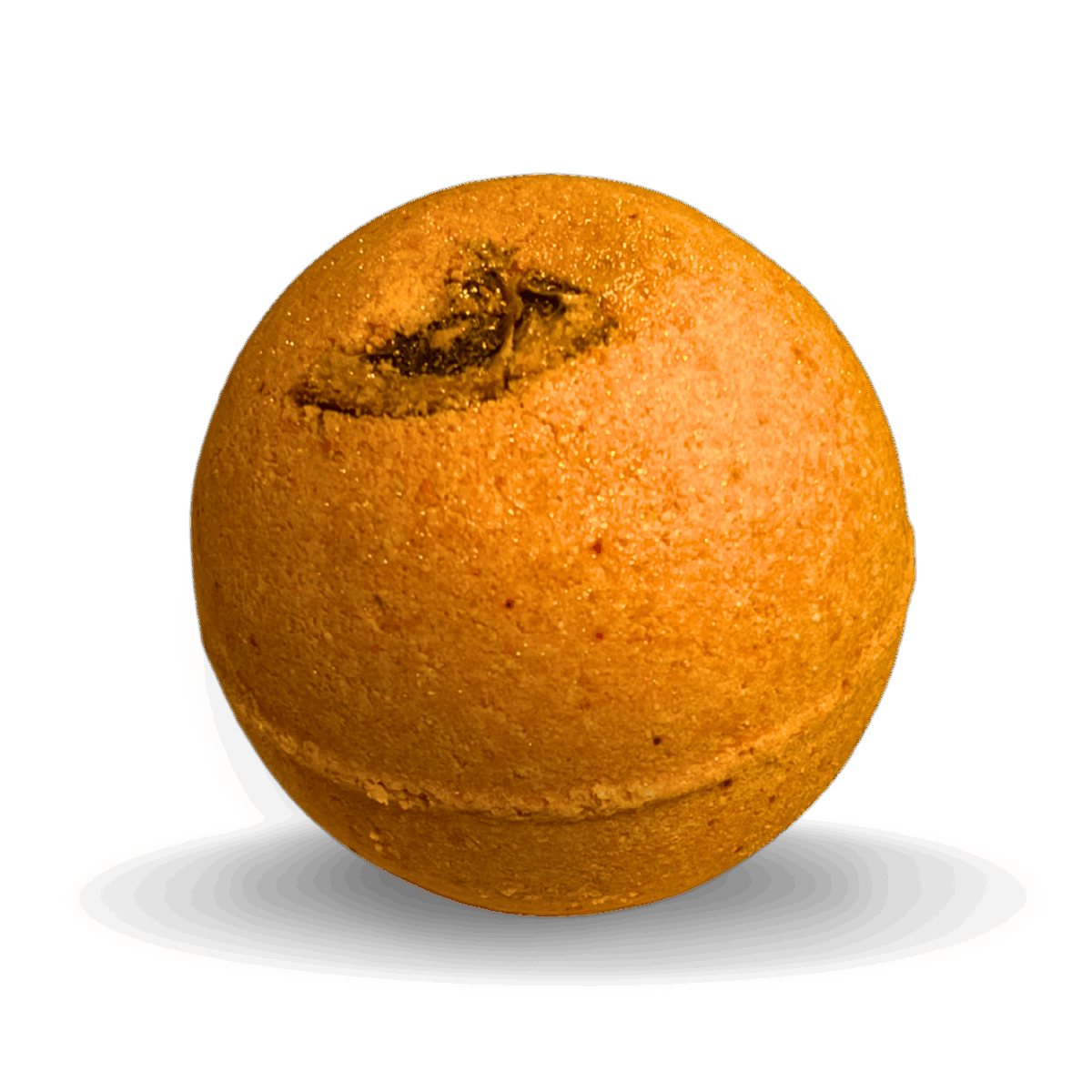
The Lavender bath bomb contains Lavender essential oil with declared Linalool and Limonene in the current verified record. The Orange & Grapefruit bath bomb has its own citrus fragrance profile and should be checked against the current cosmetic label for its controlling allergen declaration.
If you are prone to fragrance sensitivity, those details matter more than whether we describe the product as botanical or natural.
Are Bath Bombs Good for Your Skin? The Takeaway
Bath bombs can contain ingredients that make the bath feel richer and leave skin feeling softer, particularly when they include emollient oils and plant butters.
But there is no universal “skin benefit” that applies to every bath bomb.
Fragrance, essential oils, dyes and other additives can irritate sensitive skin. People with eczema or known fragrance allergy need particular caution. “Natural” is not a guarantee of tolerance.
The best approach is simple: read the ingredients, know your own triggers, follow the label, keep the water comfortable and stop using a product if your skin objects.
Frequently Asked Questions
Are bath bombs good for your skin?
They can be enjoyable and some formulas contain emollient oils, butters or glycerine that may leave skin feeling softer. They are not universally good for every skin type, because fragrance, essential oils, dyes and other additives can irritate susceptible people.
Can bath bombs moisturise your skin?
Bath bombs containing emollient oils and butters can change the feel of the bath water and may leave skin feeling more conditioned. The effect depends on the formula and is not the same as applying a leave-on moisturiser directly to the skin.
Can bath bombs irritate sensitive skin?
Yes. Fragrance, essential oils, dyes, preservatives and decorative additives can trigger redness, itching, dryness or dermatitis in some users. People with eczema or known fragrance sensitivity should be particularly cautious.
Are natural bath bombs safer for sensitive skin?
Not automatically. Natural essential oils and botanical ingredients can also cause irritation or allergy. A complete ingredient list and your own known sensitivities are more useful than a broad natural claim.
Should you rinse after using a bath bomb?
Rinsing is sensible if residue remains or if you are concerned about prolonged exposure to fragrance, colour or oils. Dermatology guidance commonly recommends a lukewarm rinse after bath-bomb use, particularly for sensitive skin.
Can bath bombs cause vaginal irritation?
Bath additives, fragrance and changes to the local environment can irritate the vulval area in some people. If fragranced bath products repeatedly cause irritation, stop using them and seek appropriate medical advice if symptoms persist. This should not be reduced to blaming one ingredient such as cornstarch without evidence.
What should you look for in a bath bomb if your skin is easily irritated?
Choose products with a clear ingredient list, check fragrance and essential oils, avoid known personal triggers, limit unnecessary dyes or decorative additives, follow the label and stop use if redness, itching or discomfort develops.
- Cleveland Clinic. Is Marinating in the Tub With a Bath Bomb Safe for Your Skin? https://health.clevelandclinic.org/is-marinating-in-the-tub-with-a-bath-bomb-safe-for-your-skin
- WebMD. What to Know About Bath Bombs and Your Skin. Medically reviewed 7 June 2026. https://www.webmd.com/skin-problems-and-treatments/what-to-know-bath-bombs
- Leyden JJ. Corn starch, Candida albicans, and diaper rash. Pediatr Dermatol. 1984;1(4):322-325. https://pubmed.ncbi.nlm.nih.gov/6387672/
- WebMD. What to Know About Bath Bombs and Your Skin. https://www.webmd.com/skin-problems-and-treatments/what-to-know-bath-bombs