















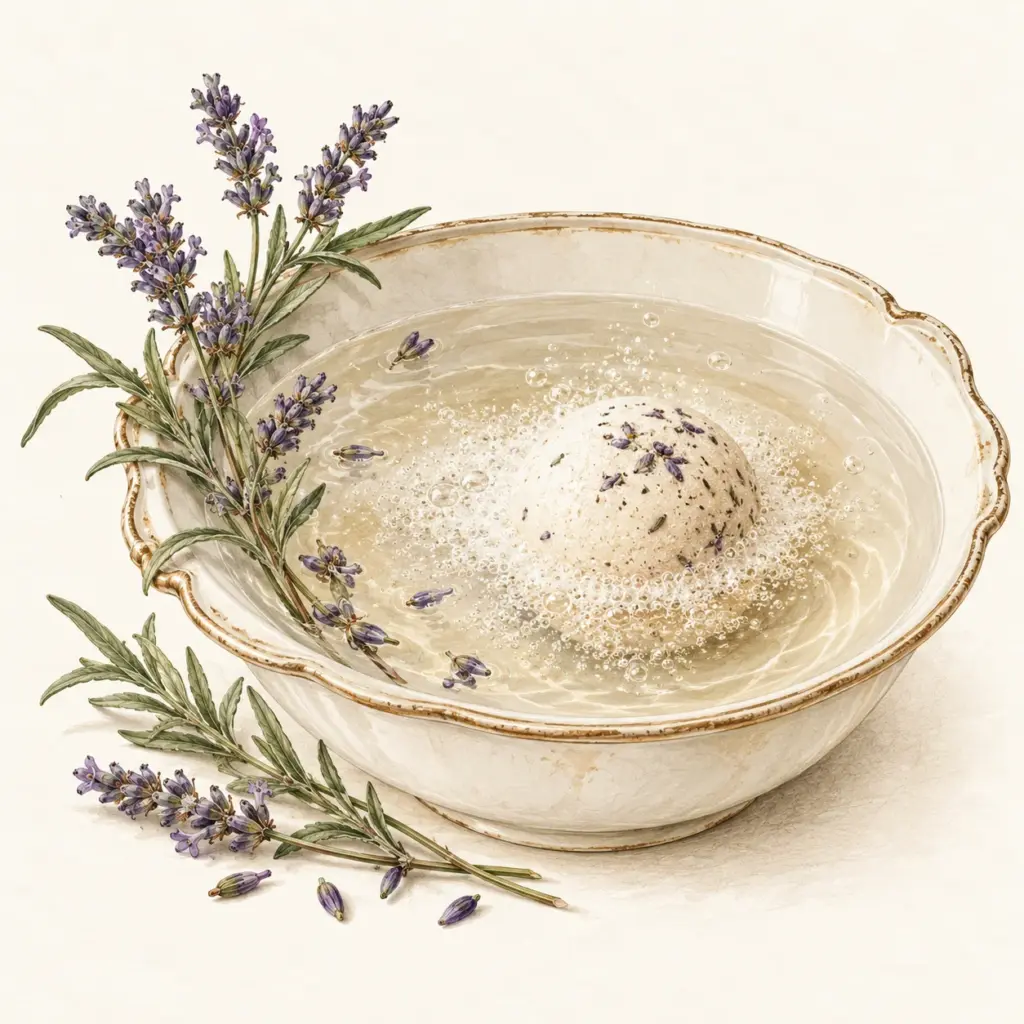
How do you use a bath bomb? Fill the bath with comfortably warm water, remove all packaging, place the bath bomb into the filled tub and let it fizz and disperse. Then get in, enjoy the bath according to the product directions, and rinse the tub afterwards if oils, colour or residue remain.
That is the short answer. The longer answer is useful because a few small choices — water temperature, when you add the bomb, how long you soak and what you do afterwards — can make the difference between a good bath and an oily, stained or irritating one.
This guide covers how to use a bath bomb properly, step by step, without wandering into the chemistry of how bath bombs work or the buying-guide questions that belong elsewhere in this cluster.
How to Use a Bath Bomb in 7 Steps
1. Check the label before you run the bath
Start with the product directions, not a generic internet rule. Bath bombs vary in size, fragrance, oils, colourants and intended use.
Check:
- whether the product is single-use;
- any stated age restrictions;
- allergen or sensitivity information;
- whether it is intended for external use only;
- any specific soak-time guidance; and
- storage or residue warnings.
This is especially important if you have sensitive skin, eczema, known fragrance allergy or a history of irritation from bath products.
2. Fill the bath first
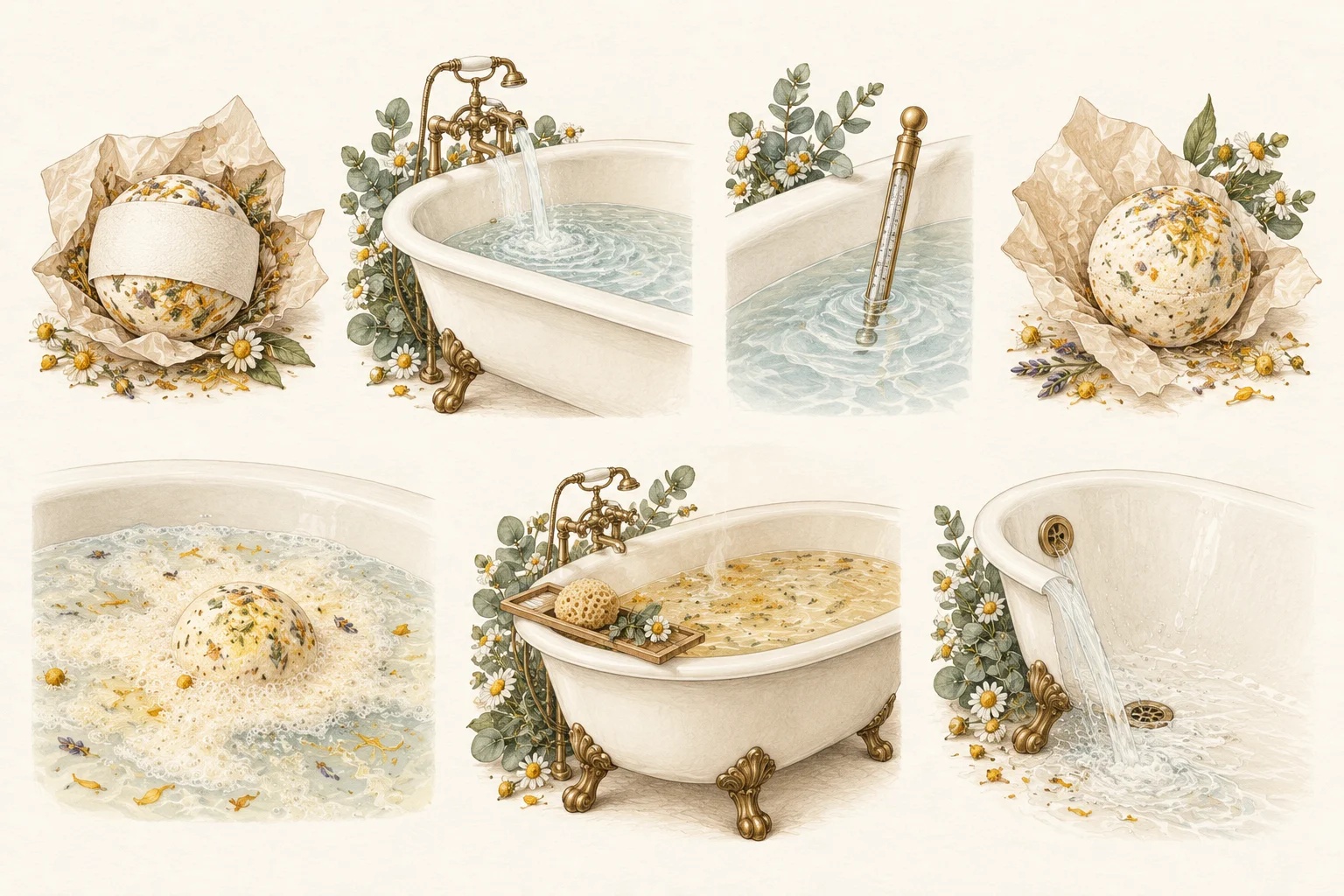
Run the bath to a depth you actually want to sit in before adding the bath bomb. Lush’s own use guide follows the same basic sequence: fill the tub with comfortable water, then add the bath bomb.1
There are practical reasons for doing it this way. You can judge the water temperature properly, you avoid losing product down the drain while the tub is still filling, and the bomb gets the whole bath volume to disperse into.
3. Use comfortably warm water, not painfully hot water
The bath should feel warm and comfortable rather than scalding.
Very hot water is not necessary to activate the fizz — water itself triggers the citric-acid and sodium-bicarbonate reaction — and excessively hot bathing can leave skin feeling dry or irritated.
If you are using the bath as part of an evening routine, our separate guide to warm baths before bed covers the sleep-temperature evidence in detail. This page is deliberately about use technique.
4. Remove all packaging
Take off the wrapper, box, film or other outer packaging before the bath bomb goes into the water.
That sounds obvious, but individually wrapped bombs are sometimes mistaken for dissolvable products. Unless the label specifically tells you otherwise, packaging belongs outside the bath.
5. Add the bath bomb to the filled bath
Place or drop the bath bomb into the water and let it do what it was formulated to do.
You do not need to crush it, hold it under the tap or rub it over your skin. A conventional bath bomb is designed to react with the bath water and disperse through it.
Watching the fizz is part of the experience. It also gives you a useful moment to see how much colour, oil or decorative material is being released before you get in.
6. Get in when the bath is ready for you
You can get in while the bath bomb is still fizzing or after it has mostly dissolved. There is no universal rule that says you must wait until the last bubble disappears.
Adding the bomb first does have one advantage: the fragrance, oils and other ingredients have time to spread through the water, and you can see whether anything unexpected has happened before getting in.
For our own 160g bath bombs, the current product directions say to add one bath bomb to a warm filled bath, allow it to fizz and disperse, and then soak according to the label.
7. Rinse yourself or the bath if needed
Some bath bombs leave almost nothing behind. Others contain rich oils, butters, colourants or decorative ingredients that can leave a visible film.
Cleveland Clinic recommends rinsing the skin after bath-bomb use to remove residual ingredients, particularly because fragrance and colourants can irritate susceptible skin.2
Rinse the tub too if oils, colour or residue remain. Oils and butters can make the surface slippery.

TOP TIP
Do You Put a Bath Bomb in Before or After You Get In?
Before is usually easier.
You can technically add a bath bomb after you are already sitting in the water, but adding it first lets you:
- watch how it dissolves;
- check the colour and fragrance level;
- let oils and other ingredients begin dispersing;
- avoid placing a rapidly fizzing product directly against the skin; and
- make sure the bath water is not becoming too slippery before you enter.
There is no special benefit to holding the bath bomb against your body while it fizzes. Let the bath do the work.
How Long Should You Soak With a Bath Bomb?
Follow the product label first. There is no scientifically established universal “perfect” bath-bomb soak time.
Cleveland Clinic suggests that people without eczema or known fragrance/dye sensitivity keep bath-bomb soaks to roughly 10 to 15 minutes, partly because longer contact increases exposure to potential irritants.2
That is a useful safety reference, not a rule that every bath must end at exactly 15 minutes.
If your skin starts to sting, itch or feel uncomfortable, get out and rinse rather than trying to “get your money’s worth” from the product.
Can You Use Half a Bath Bomb?
Physically, many bath bombs can be broken in half. Whether you should depends on the product.
A single-use bath bomb is usually formulated and labelled around the whole unit. Dividing it changes how much fragrance, colour, CBD, mineral salt, oil and butter reaches the bath, and a hand-broken bomb may not divide those ingredients perfectly evenly.
Our Lavender and Citrus bath bombs are sold as 160g single-use products, so our own direction is straightforward: use one bomb per bath.
If somebody wants a smaller dose of bath product regularly, mini bombs or a loose bath-salt format may make more sense than repeatedly breaking a product designed as one unit.
Should You Use a Bath Bomb Under Running Water?
You can, but it is not necessary.
Dropping a bath bomb under the running tap can make the fizz look more dramatic and may spread the product more quickly. The downside is that some of the fragrance and colour can be carried towards the drain before the bath reaches its final level.
For a predictable result, fill the bath first and then add the product.
Do You Shower Before or After a Bath Bomb?
You do not need a compulsory pre-bath shower just because you are using a bath bomb.
A quick rinse afterwards is more relevant if:
- your skin feels coated;
- the bomb was heavily fragranced or coloured;
- you are concerned about residue; or
- your skin is prone to sensitivity.
WebMD likewise advises rinsing with lukewarm water after bath-bomb use to remove residue.3
Common Bath-Bomb Mistakes
Using water that is uncomfortably hot
Hotter is not automatically better. Use a temperature you can sit in comfortably.
Putting the wrapped bomb in the bath
Remove the product packaging first unless the manufacturer explicitly says it is water-soluble.
Assuming every bath bomb is suitable for sensitive skin
Essential oils, fragrance, dyes and other additives can all cause irritation in susceptible people. “Natural” is not an allergy guarantee.
Leaving the tub oily afterwards
Rich bath bombs can leave a film. Rinsing the bath helps prevent slipperiness and build-up.
Using a damp or badly stored bomb
Humidity can start the fizzing reaction early, so keep unused bath bombs somewhere cool and dry.
Expecting the labelled CBD amount to be an absorbed dose
If a bath bomb contains CBD, that tells you what is in the formulation. It does not mean the same number of milligrams enters your body through bath water.
How We Use Our Own Bath Bombs
Our bath bomb collection currently includes Lavender and Orange & Grapefruit. Both are 160g single-use bath bombs containing 100mg CBD isolate, Epsom salt and a broad botanical oil-and-butter base.
The practical use is the same for both:
- Remove the packaging.
- Fill the bath with comfortably warm water.
- Add one bath bomb.
- Let it fizz and disperse.
- Soak according to the current label.
- Take care because the oils and butters can make the bath surface slippery.
- Rinse the tub if residue remains.
Explore the range
Explore our CBD bath bombs
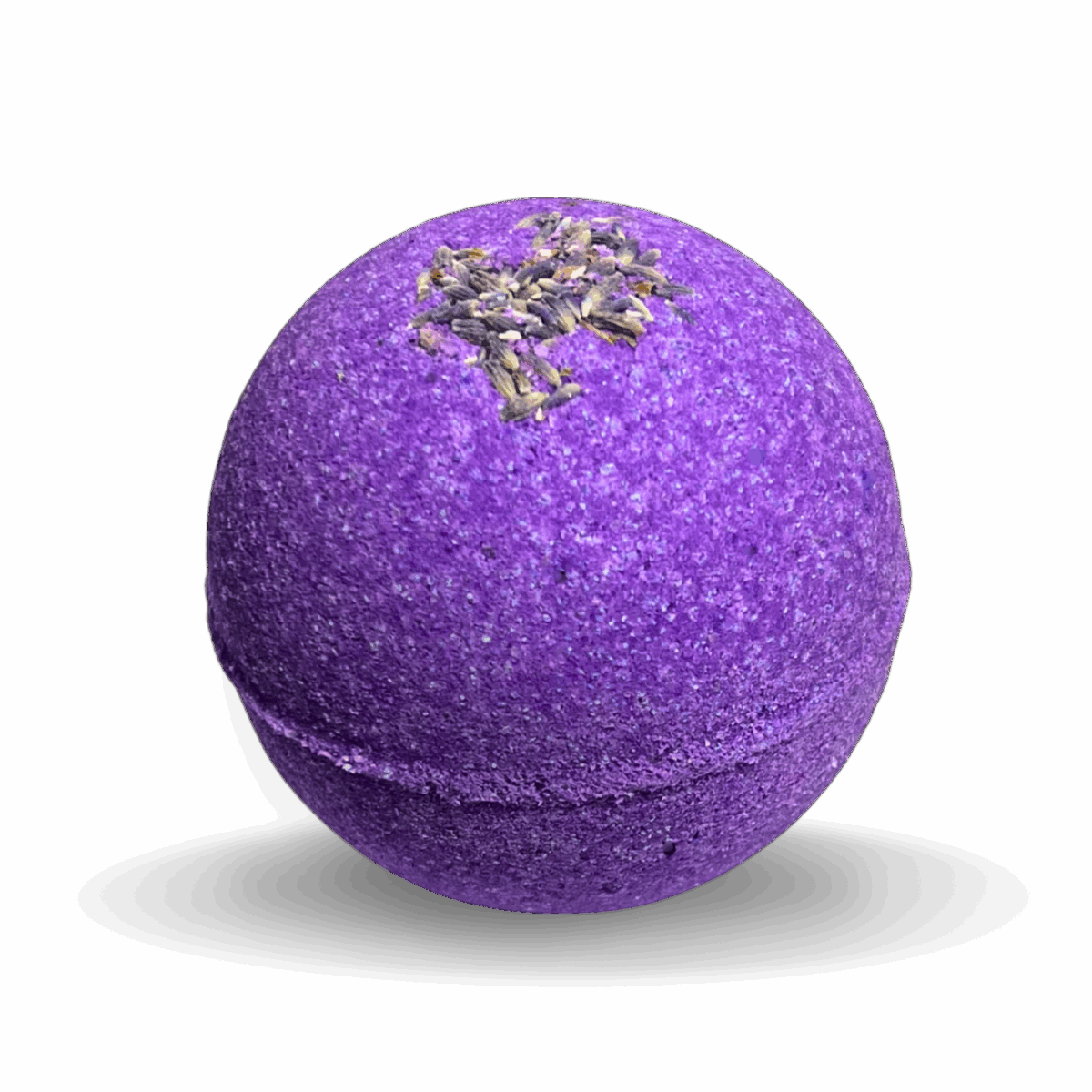

Choose the Lavender bath bomb for the softer floral-herbal fragrance or the Orange & Grapefruit bath bomb for a brighter citrus profile.
How to Use a Bath Bomb: The Takeaway
Using a bath bomb properly is simple: fill the bath, unwrap the bomb, add it to the water, let it disperse and follow the product directions.
The details that matter are comfort and safety. Do not use scalding water. Check the ingredients if your skin is sensitive. Take care with oily surfaces. Rinse off if residue bothers your skin, and rinse the bath if colour or oils remain.
If you want to understand what is actually happening while the bomb fizzes, our guide to what bath bombs do and how they work owns the chemistry question.
Frequently Asked Questions
How do you use a bath bomb?
Fill the bath with comfortably warm water, unwrap the bath bomb, place it into the filled bath and allow it to fizz and disperse. Get in once the water is ready for you, then follow the product label for soak time and any additional directions.
Do you put a bath bomb in before or after you get in?
Either can work, but adding it to a filled bath before you get in lets you see how it dissolves and gives the ingredients time to disperse. It also makes it easier to check the water temperature and any colour or residue before entering.
Do you leave the plastic on a bath bomb?
No. Remove all outer packaging and wrapping before putting a bath bomb in the water. Packaging is not designed to dissolve in the bath unless a product explicitly states otherwise.
How long should you stay in a bath with a bath bomb?
Follow the product label first. For fragranced bath products, especially if you have sensitive skin, a shorter soak may reduce exposure to fragrance, dyes and other additives. Cleveland Clinic suggests around 10 to 15 minutes for bath-bomb users without known sensitivities.
Do you need to rinse after using a bath bomb?
Rinsing is sensible if your skin feels coated, if the product contains heavy fragrance or colour, or if residue remains. Dermatology guidance commonly recommends rinsing after fragranced bath-bomb use to remove residue, particularly for sensitive skin.
Can you use half a bath bomb?
You can physically divide some bath bombs, but whether that is appropriate depends on the product. A single-use bath bomb is formulated and labelled to be used as one product, so follow the current directions rather than assuming half gives an equivalent experience.
Why should you rinse the bath after a bath bomb?
Bath bombs containing oils, butters, colourants or decorative ingredients can leave residue on the tub. Rinsing after use helps reduce staining, build-up and slippery surfaces.
- Lush. How to use a bath bomb. https://lush.ee/en/blogs/how-to-use/how-to-use-a-bath-bomb
- Cleveland Clinic. Is Marinating in the Tub With a Bath Bomb Safe for Your Skin? https://health.clevelandclinic.org/is-marinating-in-the-tub-with-a-bath-bomb-safe-for-your-skin
- WebMD. What to Know About Bath Bombs and Your Skin. Medically reviewed 7 June 2026. https://www.webmd.com/skin-problems-and-treatments/what-to-know-bath-bombs