














Can a warm bath before bed help you sleep? There is some good evidence that it can. A systematic review and meta-analysis found that warm bathing or showering before bedtime was associated with improved sleep measures, particularly a shorter time to fall asleep when the warm-water exposure happened roughly 1 to 2 hours before bed.1
That does not mean a bath is a cure for insomnia. It means something much more useful: temperature and timing appear to matter, and a warm bath can fit naturally into a sensible wind-down routine.
This guide looks at what the evidence actually says, why body cooling after a bath may help with sleep onset, how long before bed to bathe, and where fragrance products such as Lavender bath bombs or candles fit without turning them into medical treatments.
What Does the Research Say About a Warm Bath Before Bed?
The strongest frequently cited evidence comes from a 2019 systematic review and meta-analysis in Sleep Medicine Reviews. Researchers screened more than 5,000 candidate papers and included 17 studies, with 13 providing comparable data for meta-analysis.
The review found that water-based passive body heating — a warm bath or shower — was associated with:
- better self-rated sleep quality;
- improved sleep efficiency in some analyses; and
- a shorter sleep-onset latency, meaning less time spent trying to fall asleep.
The most interesting finding was timing. Warm-water exposure at around 40–42.5°C, scheduled approximately 1–2 hours before bedtime, showed a significant reduction in the time taken to fall asleep, even with exposure as short as about 10 minutes.2
| Question | What the evidence suggests |
|---|---|
| Can a warm bath help sleep? | Possibly yes, especially for sleep onset and subjective sleep quality. |
| Best timing? | Roughly 1–2 hours before bed in the 2019 meta-analysis. |
| How long? | Benefits were reported with warm-water exposure as short as around 10 minutes. |
| Is this an insomnia treatment? | No. The evidence supports a sleep-hygiene strategy, not a substitute for appropriate care. |
The authors also stressed that the research base was still relatively small, particularly around exact timing, duration and mechanism. That caveat matters.
Why Can Warming Yourself Before Bed Help You Cool Down?
It sounds backwards: if sleep is associated with a fall in core body temperature, why would you deliberately get warm first?
The likely explanation is heat redistribution.
Warm water increases blood flow to the skin, especially the hands and feet. Once you get out of the bath, that peripheral blood flow helps the body release heat more efficiently. The resulting decline in core body temperature appears to be one of the signals associated with preparing for sleep.
The 2019 review describes this in terms of increased blood perfusion to the palms and soles and a stronger distal-to-proximal skin temperature gradient, which supports heat dissipation.2
In plain English: the bath warms the skin, then your body can shed heat more effectively afterwards.

How Long Before Bed Should You Take a Bath?
If you want to follow the strongest signal from the published meta-analysis, aim for roughly one to two hours before you plan to sleep.
That does not mean bathing at 8:43pm is scientifically correct and 8:13pm is wrong. The research is not precise enough for that.
NHS guidance is broader and more practical. The NHS insomnia page recommends relaxing for at least an hour before bed, giving a bath or reading as examples.3 Royal National Orthopaedic Hospital likewise includes bathing in sleep-hygiene advice and explains the idea of warming followed by a fall in body temperature.4
A sensible practical window is therefore:
- bathe during the wind-down period;
- finish roughly 60–120 minutes before sleep if that works for your routine; and
- use the time afterwards for lower-stimulation activities such as reading, dim lighting or quiet music.
How Warm Should a Bedtime Bath Be?
The studies in the 2019 review used warm-water temperatures around 40–42.5°C. That does not mean you should chase a precise number if the water feels uncomfortably hot.
Use comfortably warm water. Never use water that feels scalding or makes you feel faint, dizzy or overheated.
If you have a medical condition that affects circulation, heat tolerance or blood pressure, follow appropriate clinical advice rather than a generic bath-temperature target.
How Long Should a Bedtime Bath Last?
The evidence review reported benefit from exposures as short as around 10 minutes, but the perfect duration has not been established.
For most people, the better question is: how long can you bathe comfortably without overheating or irritating your skin?
Long, very hot baths can dry the skin. If you are also using a fragranced bath bomb, prolonged exposure means more contact time with essential oils, fragrance, colourants and other ingredients.
That is why the warm-bath sleep article and the bath-bomb skin article should remain separate: the sleep mechanism is mainly about heat and timing, while skin tolerance depends on the bath product and the individual.
Does a Bath Have to Contain Lavender to Help With Sleep?
No.
The warm-bath evidence is about passive body heating. You do not need Lavender, Epsom salt, CBD or a bath bomb for that thermoregulatory mechanism.
Lavender can still have a role in the ritual. It is a familiar evening fragrance, and separate aromatherapy research has studied Lavender in relation to sleep. But that is a different evidence question.
Our existing guide to essential oils for sleep owns the Lavender/aromatherapy evidence. Keeping those pages separate prevents us from pretending that the warm-water effect is caused by the fragrance.

MYTH BUSTER
What About a Shower Before Bed?
The 2019 review included both showers and baths under water-based passive body heating, so the principle is not limited to full immersion.
NHS guidance also commonly recommends either a warm bath or shower as part of a wind-down routine. University College London Hospitals, for example, lists a warm bath or shower before bed among practical sleep-hygiene measures.5
A bath simply gives you a longer, more deliberate period of passive warming and can double as a screen-free routine.
How to Build a Bedtime Bath Routine
A bath works best as one part of a broader wind-down rather than the only thing you change.
- Start winding down: dim the lights and reduce stimulating activity.
- Run a comfortably warm bath: warm, not scalding.
- Bathe for around 10–20 minutes if comfortable: the evidence does not require an hour-long soak.
- Finish around 1–2 hours before bed: this matches the strongest timing signal from the meta-analysis.
- Keep the period afterwards quiet: reading, calm music or another low-stimulation activity.
- Keep your bedroom comfortable: dark, quiet and not excessively warm.
- Maintain a regular sleep schedule: the bath is a cue inside the routine, not a replacement for the routine.
The NHS also advises regular sleep and wake times, reducing late caffeine, avoiding large late meals and limiting screens immediately before bed.3
Where a Lavender Bath Bomb Fits
If you enjoy fragrance in the bath, this is where product choice becomes relevant.
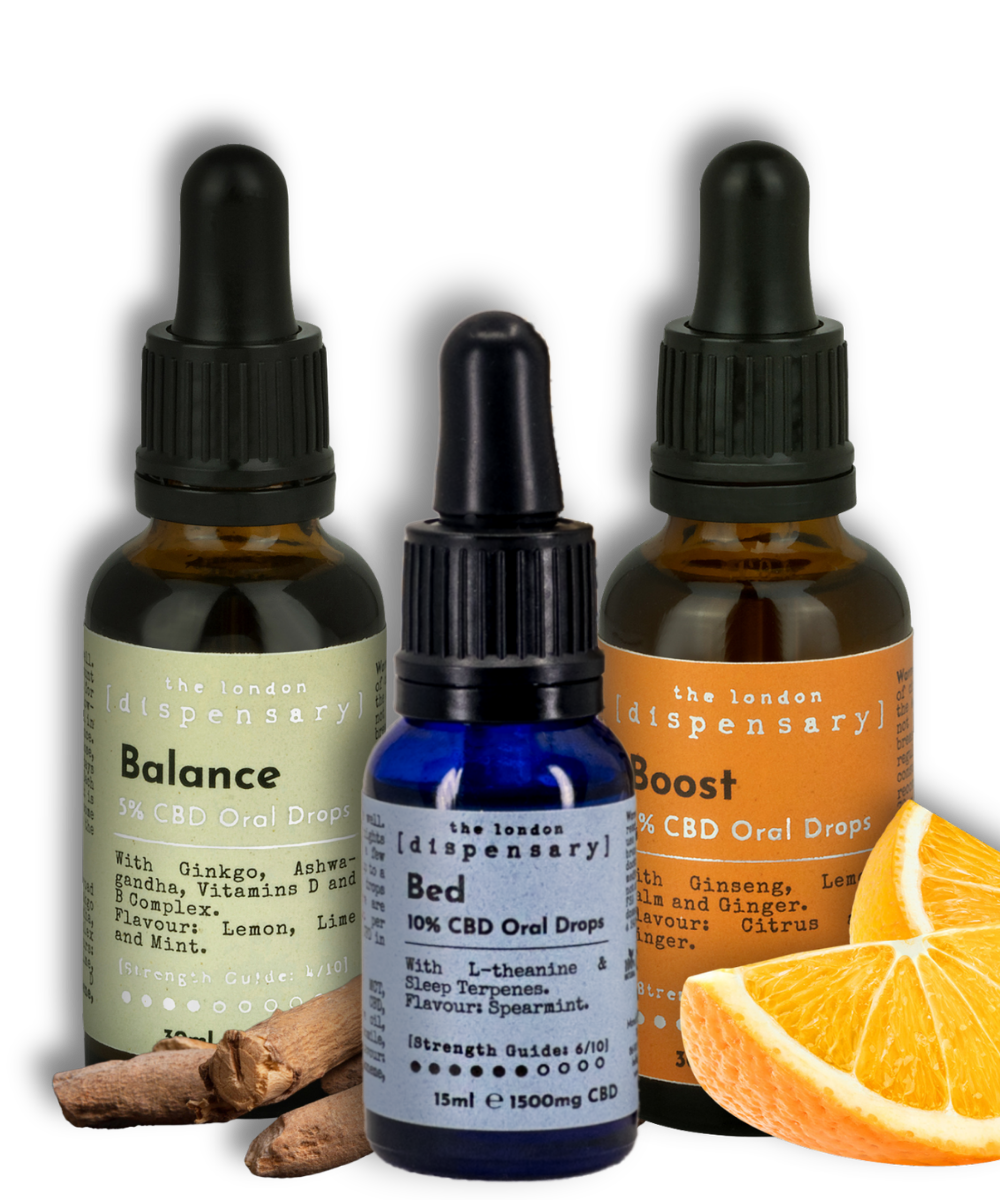
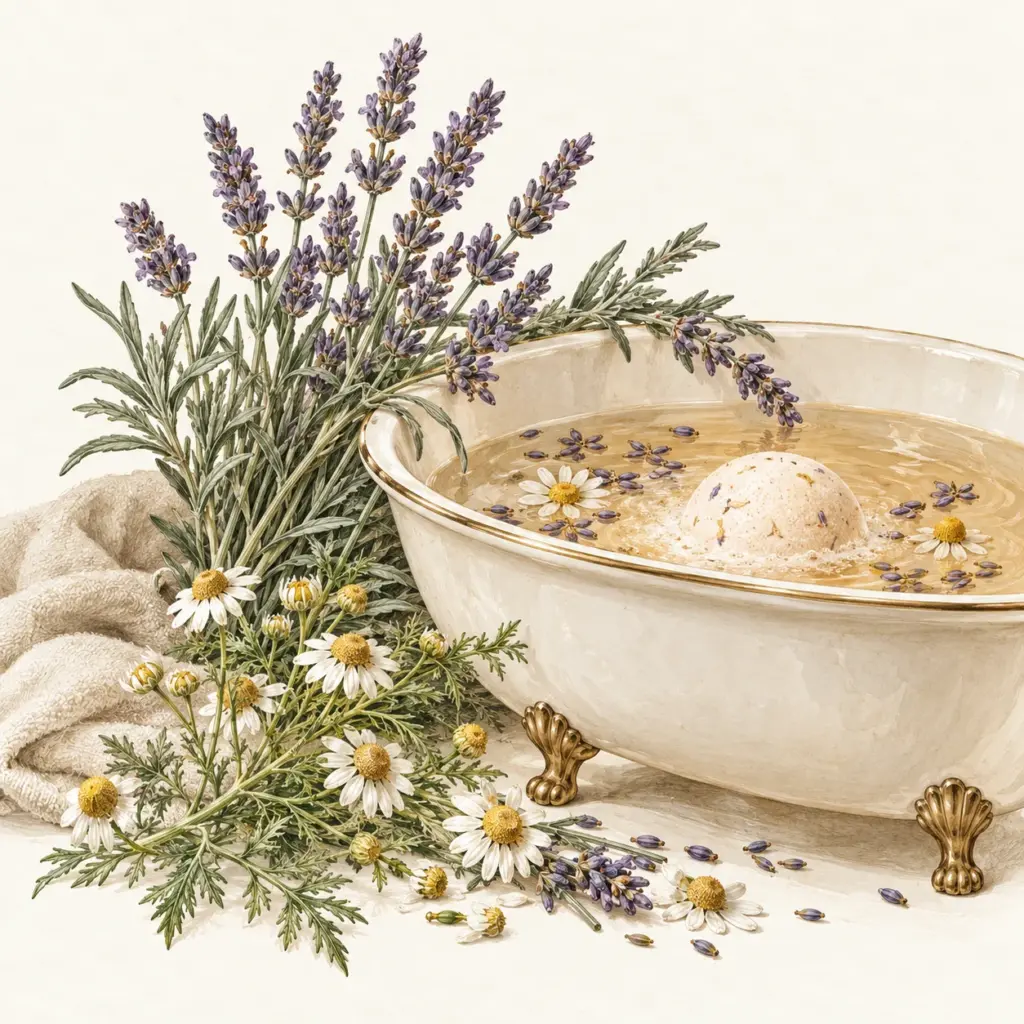
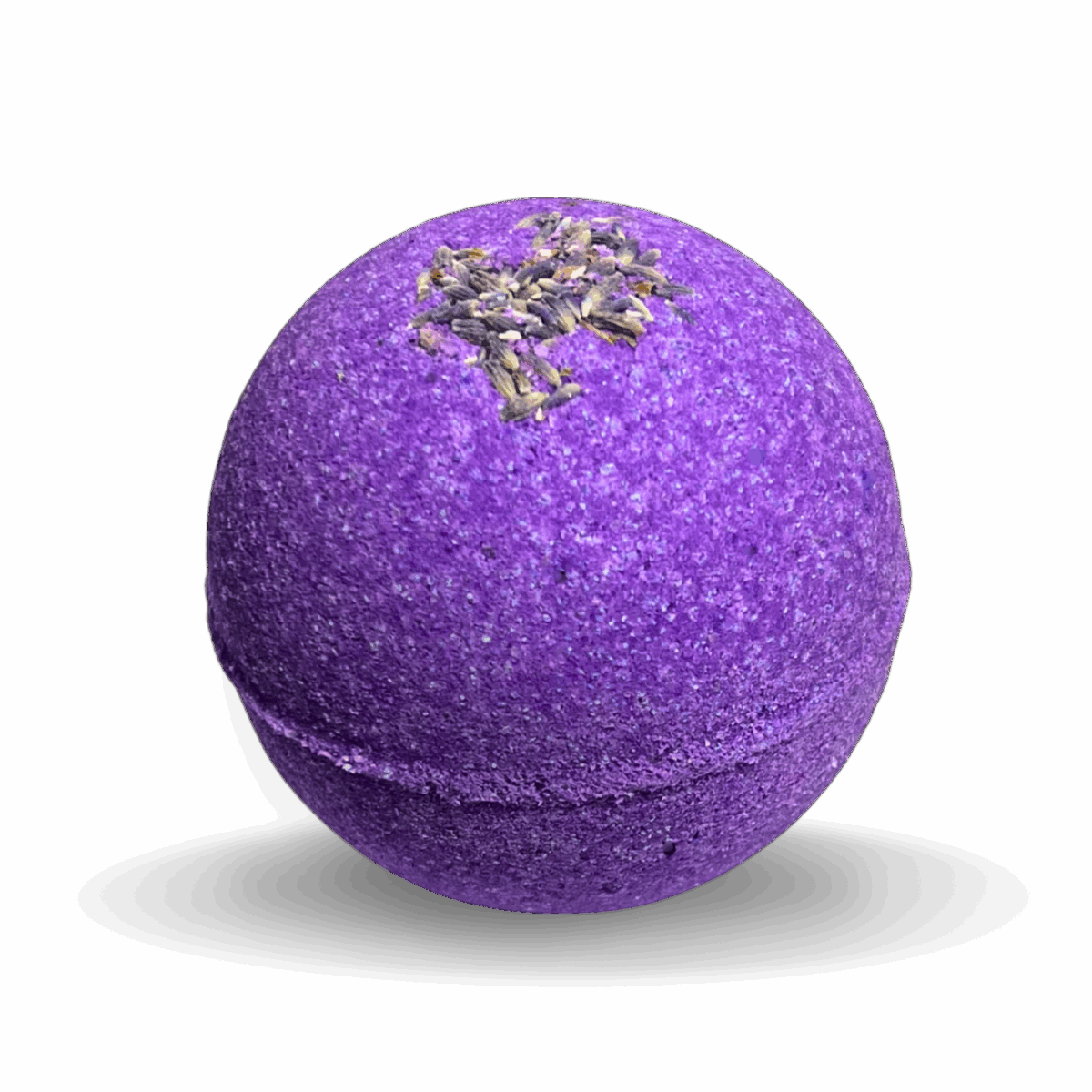
Our Lavender CBD Bath Bomb is positioned within the Bed range because Lavender gives it a softer floral evening profile. The product itself is a 160g, starch-free bath bomb containing 100mg CBD isolate, Epsom salt and a broad botanical oil-and-butter base.
That specification should not be confused with the sleep evidence above. The strongest evidence here is for warm bathing and timing. The Lavender bath bomb adds fragrance and bath-product format to the ritual.
Explore the range
Explore our Lavender CBD bath bomb
After the bath, somebody who enjoys a consistent scent cue might use the Lavender & Eucalyptus Pillow Spray on suitable textiles or use the Slumber candle earlier in the evening.
Any candle must be extinguished before sleep. The candle belongs to the wind-down period while you are awake, not the overnight environment.
When a Bath Is Not Enough
If you regularly struggle to fall asleep, wake repeatedly, wake too early or feel persistently exhausted despite enough opportunity to sleep, do not treat a bath routine as the whole answer.
Insomnia can be linked with stress, mental-health conditions, physical illness, medication, sleep disorders, alcohol, caffeine and many other factors.
The NHS advises speaking to a GP when changing sleep habits has not helped, when sleep problems have lasted for months, or when insomnia is significantly affecting daily life.3
Warm Bath Before Bed: The Takeaway
A warm bath before bed is more than an old-fashioned relaxation ritual. There is a plausible thermoregulatory mechanism and a systematic review showing improvements in sleep measures, particularly when warm-water exposure happens around one to two hours before bedtime.
The sensible interpretation is modest:
- warm bathing can be a useful part of sleep hygiene;
- timing appears to matter;
- post-bath cooling may help the body transition towards sleep;
- you do not need a particular bath additive for the temperature effect; and
- a bath is not a cure for persistent insomnia.
If fragrance helps make the routine something you actually enjoy repeating, that is where Lavender, a bath bomb or another sensory cue can earn its place.
Frequently Asked Questions
Can a warm bath before bed help you sleep?
Research suggests it can help some people. A 2019 systematic review and meta-analysis found warm bathing or showering before bed was associated with improved sleep measures, particularly shorter sleep-onset latency when timed around 1 to 2 hours before bedtime. The evidence base is useful but not large enough to treat a bath as an insomnia treatment.
How long before bed should you take a warm bath?
The 2019 meta-analysis found the strongest signal when warm-water passive heating was scheduled around 1 to 2 hours before bedtime. NHS guidance also recommends using a bath as part of the wind-down period before bed.
How long should a bedtime bath last?
The systematic review reported benefits from warm-water exposure as short as about 10 minutes, although the optimal duration is not firmly established. Comfort and personal tolerance matter, and very long or very hot baths can dry or irritate the skin.
Should a bedtime bath be hot or warm?
Warm is the better description. The research reviewed water temperatures around 40 to 42.5°C, but you should never use water that feels scalding or unsafe. The aim is comfortable passive warming, not overheating.
Why might a warm bath make you sleepy?
The leading explanation is thermoregulation. Warm water increases blood flow to the skin and extremities, which can support heat loss after the bath and the decline in core body temperature associated with sleep onset.
Do you need lavender or a bath bomb for the sleep effect?
No. The evidence for warm bathing and sleep is about passive body heating and timing, not a particular fragrance or bath additive. Lavender or a bath bomb can be part of the sensory routine if you enjoy it, but they are not required for the temperature-related mechanism.
- Haghayegh S, Khoshnevis S, Smolensky MH, Diller KR, Castriotta RJ. Before-bedtime passive body heating by warm shower or bath to improve sleep: A systematic review and meta-analysis. Sleep Med Rev. 2019;46:124-135. https://pubmed.ncbi.nlm.nih.gov/31102877/
- Haghayegh S et al. Sleep Med Rev. 2019;46:124-135. https://pubmed.ncbi.nlm.nih.gov/31102877/
- NHS. Insomnia. https://www.nhs.uk/conditions/insomnia/
- Royal National Orthopaedic Hospital NHS Trust. Sleep Hygiene. https://www.rnoh.nhs.uk/patients-and-visitors/patient-information-guides/sleep
- University College London Hospitals NHS Foundation Trust. Sleep. https://www.uclh.nhs.uk/patients-and-visitors/patient-information-pages/sleep