












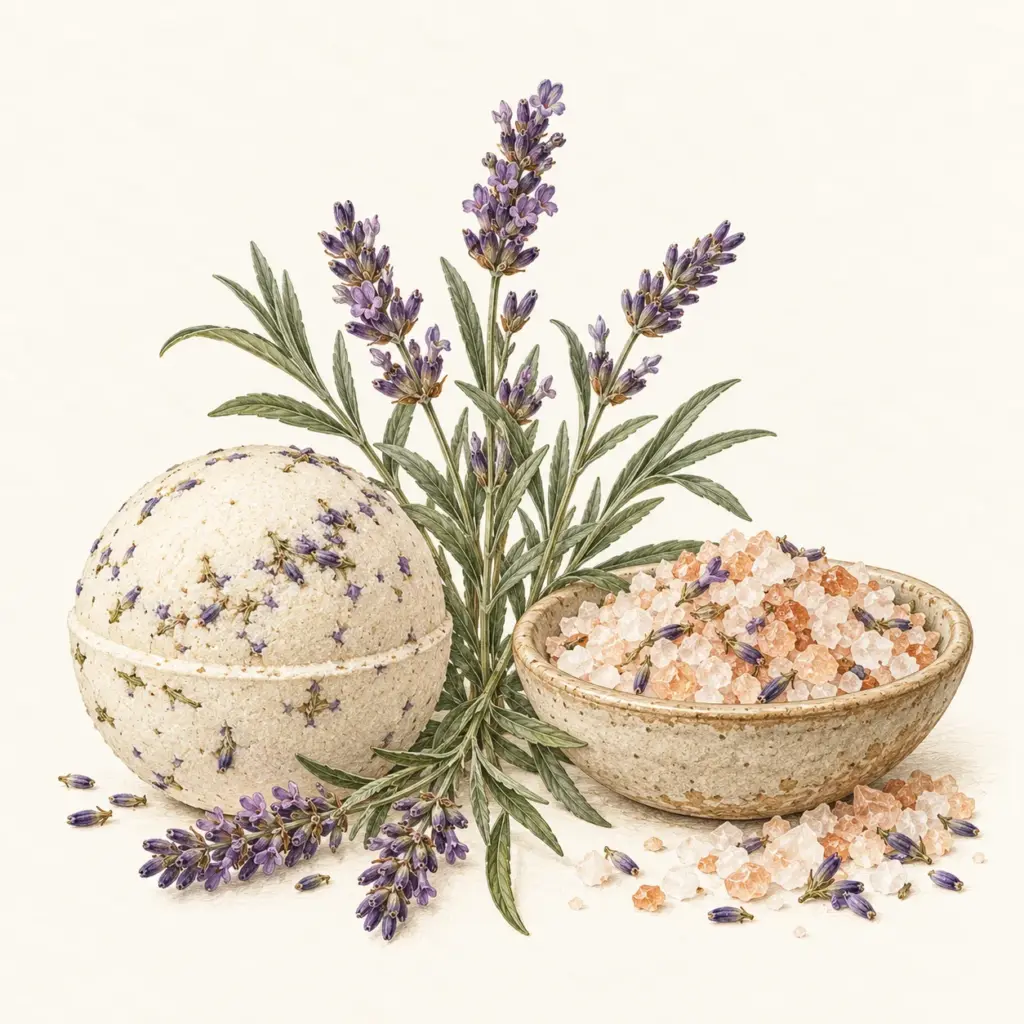
Bath bombs and bath salts are not the same thing. Bath salts are usually mineral crystals that dissolve into the water. Bath bombs are compressed products built around an acid-and-bicarbonate reaction that creates fizz.
They can contain some of the same ingredients — a bath bomb may include Epsom salt, fragrance and oils — but the format and experience are different.
If you are deciding between bath bombs vs bath salts, the useful question is not “which one is better?” in the abstract. It is what do you want the bath to do, what ingredients do you tolerate, and how much sensory effect do you want?
Bath Bombs vs Bath Salts at a Glance
| Feature | Bath bombs | Bath salts |
|---|---|---|
| Base format | Compressed solid | Loose crystals / granules |
| Defining chemistry | Acid + bicarbonate fizz | Mineral salts dissolve |
| Visual effect | Often higher: fizz, colour, movement | Usually lower |
| Fragrance | Often integral to the formula | May be fragranced or unscented |
| Oils / butters | Common in richer formulas | Possible, but not essential |
| Mineral component | May contain Epsom salt | Usually the main ingredient |
| Dosing | Often one bomb per bath | Easy to vary the amount |
What Are Bath Bombs?
A bath bomb is a compressed bath product usually made with sodium bicarbonate and citric acid.
Once water reaches those ingredients, they react and produce carbon dioxide gas. That is what creates the visible fizz.1
A finished bath bomb may also contain:
- fragrance or essential oils;
- colourants;
- Epsom salt;
- carrier oils;
- plant butters;
- glycerine;
- fillers such as cornstarch; and
- other formulation-specific ingredients such as CBD.
The defining feature is therefore effervescence, not a particular wellness ingredient.
What Are Bath Salts?
Bath salts are loose mineral salts designed to dissolve in bath water.
Common examples include:
- magnesium sulphate / Epsom salt;
- sea salt;
- Dead Sea salt blends; and
- other mineral-salt mixtures.
They may be sold plain or combined with fragrance, essential oils, botanicals or colour.
Unlike a bath bomb, they do not need an acid-base reaction to work. The crystals simply dissolve into the bath.
Which Gives More Fizz and Visual Effect?
Bath bombs, easily.
Fizz is built into the format. Colour layers, movement, fragrance release and visual spectacle are all part of why bath bombs became so popular.
Bath salts are usually quieter. They dissolve rather than erupt.
If you want a bath product mainly for visual effect, a bath bomb is the obvious choice. If you want a simple mineral soak without the theatre, salts may suit you better.
Which Gives You More Control Over the Amount?
Bath salts.
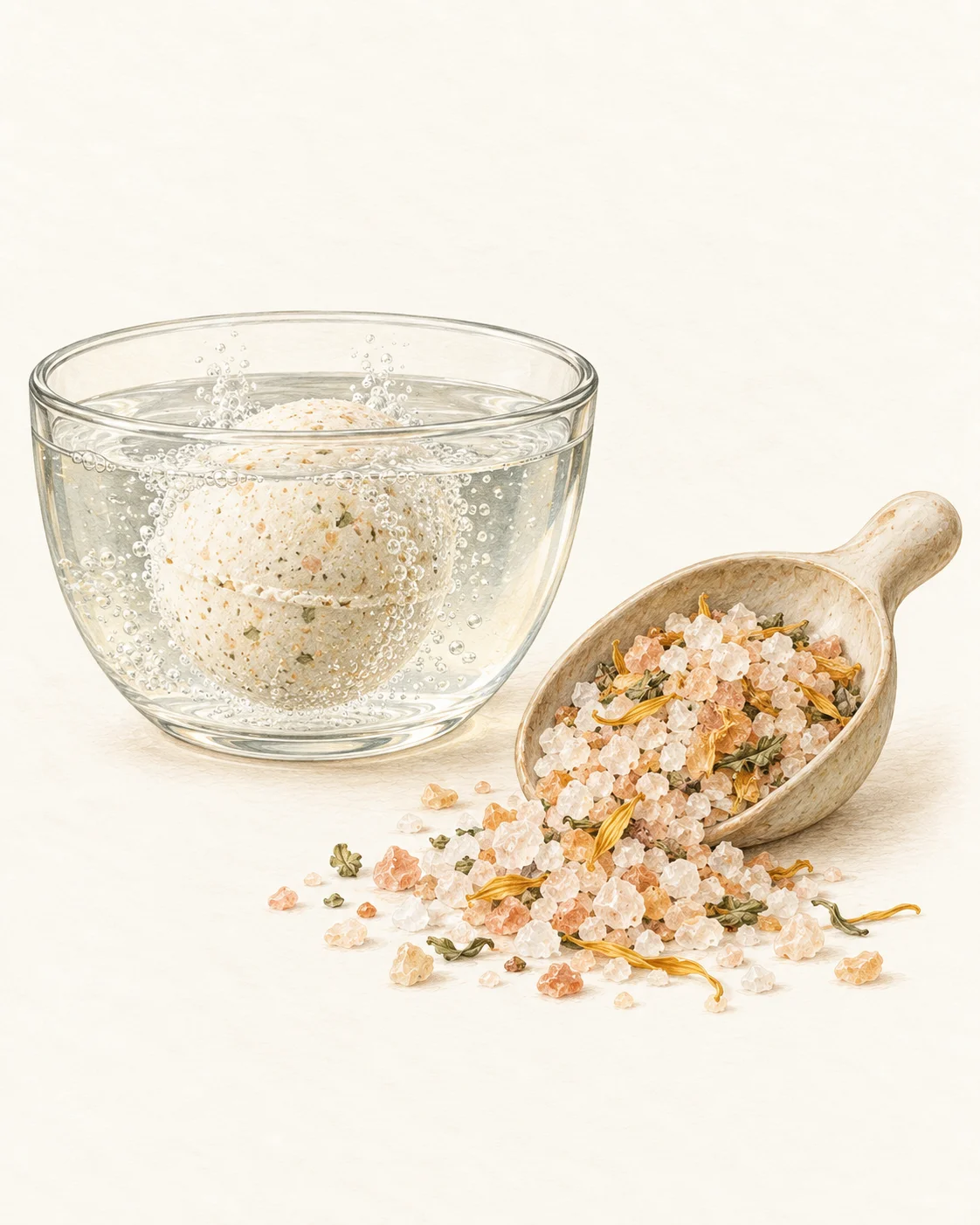
Loose salts can be measured by spoon, scoop or weight, so you can vary the amount from bath to bath.
Bath bombs are more often designed as fixed single-use products. A 160g bath bomb, for example, is intended as one formulated unit.
If you prefer precise control over how much product enters the bath, loose salts have an advantage.
Which Is Better for Fragrance?
That depends on the product, but bath bombs often place fragrance at the centre of the experience.
An aromatherapy-style bomb may use Lavender, Orange, Grapefruit, Eucalyptus or another essential-oil direction alongside the fizz.
Bath salts can also be fragranced, but unscented versions are easier to find if you want the mineral component without added aroma.
If fragrance sensitivity is an issue, a plain salt can therefore be simpler — although you still need to check the actual product label.
Which Is Better for Skin Feel?
Again, the formula matters more than the category.
A bath bomb containing Shea Butter, Cocoa Butter, Coconut Oil, Avocado Oil or similar ingredients can leave the water and skin feeling richer than a plain salt soak.
But a simple bath bomb built mainly around fizz, colour and fragrance may offer very little in the way of emollient ingredients.
Likewise, bath salts may be sold plain or with added oils.
So do not assume:
- bath bomb = moisturising;
- bath salt = drying; or
- natural = non-irritating.
The ingredient list wins again.
Which Is Better for Sore Muscles?
This is where both categories attract more claims than the evidence comfortably supports.
A warm bath can feel soothing after activity. Epsom salts are also widely marketed for muscle recovery because they contain magnesium sulphate.
But the leap from “contains magnesium” to “magnesium is absorbed through the skin in a therapeutic dose” is not well supported. A review of transdermal magnesium concluded that the promotion of meaningful magnesium absorption through intact skin was not scientifically supported.2
That applies whether the Epsom salt arrives loose in a bag or inside a bath bomb.

MYTH BUSTER
Can a Bath Bomb Contain Bath Salts?
Yes.
The categories are not mutually exclusive.
A bath bomb can contain Epsom salt alongside the acid/bicarbonate fizzing base. In that case, it is both a fizzing bath product and a mineral-salt formulation.
Our current Lavender and Orange & Grapefruit bath bombs are examples: they contain Magnesium Sulphate / Epsom salt as part of a wider 160g formulation.
This is why “bath bomb vs bath salts” is a format comparison, not always an ingredient comparison.
Can You Use Bath Salts and a Bath Bomb Together?
Usually, yes, provided the individual product directions allow it and your skin tolerates the combination.
The bath salts dissolve. The bath bomb fizzes. One does not need to cancel the other.
The more practical concern is total formulation load. If both products are heavily fragranced, coloured or oil-rich, combining them means more exposure to all of those ingredients.
For somebody with sensitive skin, simpler may be better.
Which Is Better Before Bed?
For sleep, the most interesting evidence is not bath salts versus bath bombs.
It is the temperature and timing of the bath itself.
Research on warm bathing before sleep points to passive body heating followed by post-bath heat loss as the relevant mechanism. Our separate guide to warm baths before bed covers that evidence.
You can use plain warm water, bath salts or a bath bomb depending on what you enjoy and tolerate. The additive does not need to be responsible for the sleep-related effect.
Which Is Better for Sensitive Skin?
Neither category is universally safer.
A plain, fragrance-free salt product may contain fewer potential irritants than a heavily coloured and fragranced bath bomb. But a simple bath bomb may also suit somebody perfectly well.
What matters is exposure to the actual ingredients:
- fragrance;
- essential oils;
- dyes;
- preservatives;
- botanical extracts; and
- other known personal triggers.
Our dedicated guide to bath bombs and skin owns that question in more detail.
When Bath Bombs Make More Sense
Choose a bath bomb when you want:
- fizz and visual movement;
- a fixed single-use product;
- a stronger fragrance ritual;
- oils and butters built into the formula; or
- a more giftable, self-contained bath product.
When Bath Salts Make More Sense
Choose bath salts when you want:
- a simple mineral-salt soak;
- control over how much you use;
- the option to choose an unscented formula more easily; or
- less emphasis on colour and fizz.
Where Our Bath Bombs Sit
Our bath bomb collection sits somewhere between the simple categories because each bomb combines several formulation types.
Both current products are:
- 160g;
- single-use;
- starch-free;
- made with Epsom salt;
- formulated with a broad botanical oil-and-butter base;
- vegan; and
- made with 100mg CBD isolate.
Explore the range
Explore our CBD bath bombs
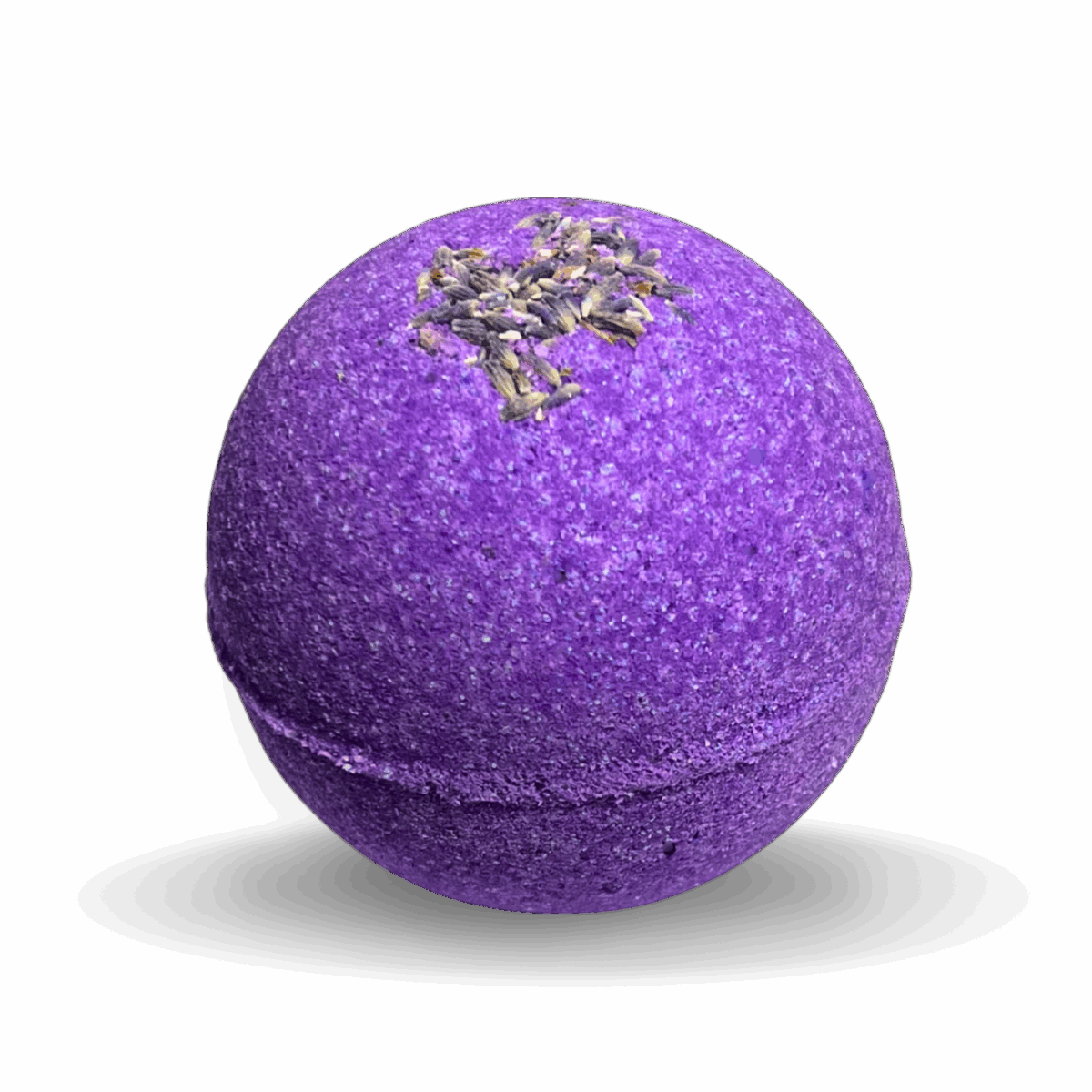
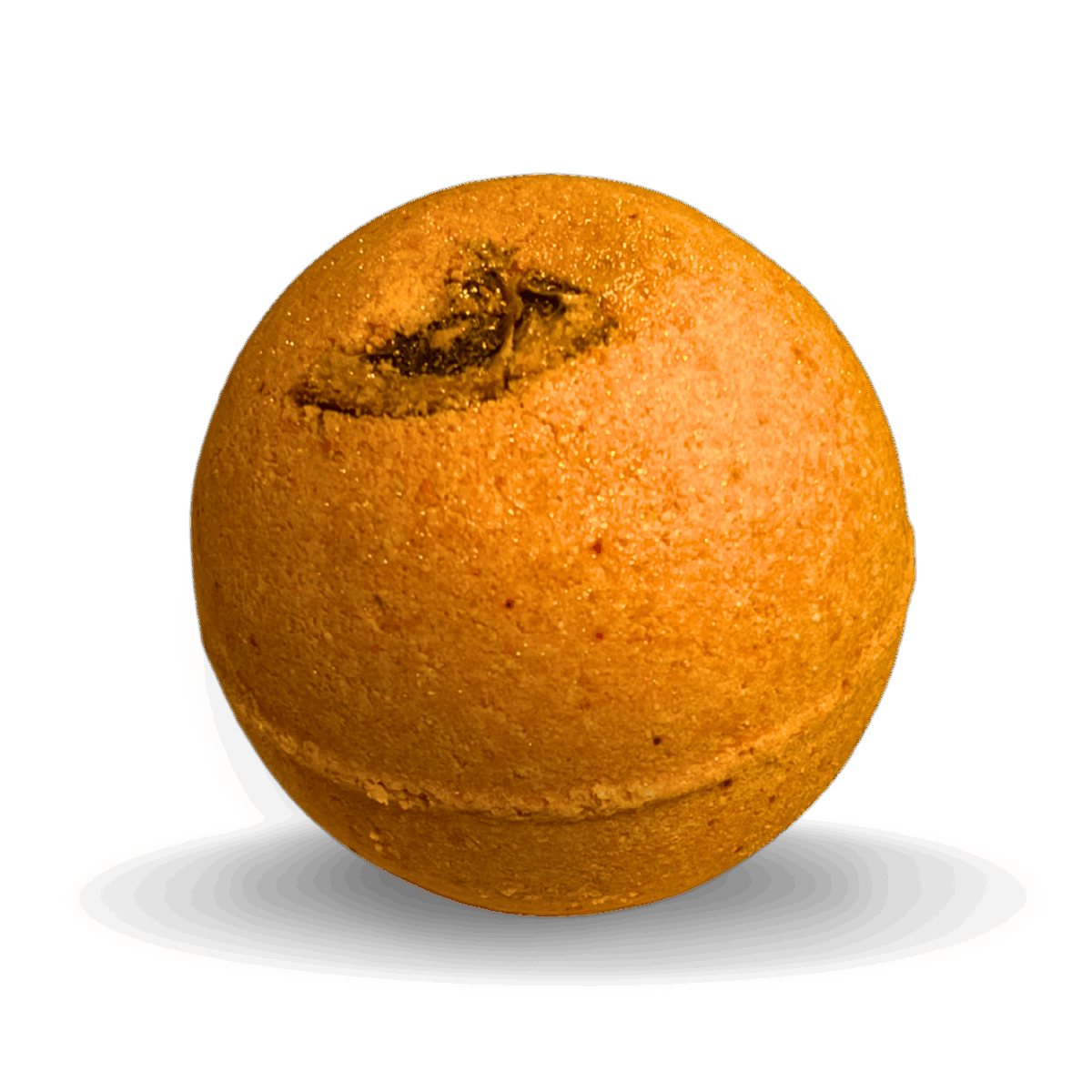
The main decision between them is fragrance: Lavender for a softer evening profile or Orange & Grapefruit for brighter citrus.
Bath Bombs vs Bath Salts: The Takeaway
Bath salts and bath bombs are different formats, not opposing wellness philosophies.
Bath salts are primarily mineral products that dissolve. Bath bombs are primarily fizzing formulations that can carry fragrance, colour, oils, butters, salts and other ingredients into the bath.
Choose salts when you want simplicity and dose control. Choose a bath bomb when you want fizz, fragrance and a more complete single-use formulation.
And if a bath bomb already contains Epsom salt, remember that the line between the two can overlap.
Frequently Asked Questions
What is the difference between bath bombs and bath salts?
Bath bombs are compressed products built around an acid-and-bicarbonate reaction that fizzes in water, while bath salts are loose or crystalline mineral salts that simply dissolve. Both may also contain fragrance, oils or other ingredients.
Are bath salts better than bath bombs?
Not universally. Bath salts make sense when you mainly want a simple mineral-salt soak. Bath bombs make sense when fizz, fragrance, colour and a more formulated single-use product are part of the experience. The complete ingredients matter more than the category name.
Do bath bombs contain bath salts?
Some do. A bath bomb can include magnesium sulphate or another mineral salt alongside citric acid and sodium bicarbonate. That means a product can be both a fizzing bath bomb and a mineral-salt bath product.
Can you use bath salts and a bath bomb together?
Generally, yes, provided the individual product directions allow it and your skin tolerates the combined ingredients. The bath salts dissolve while the bath bomb fizzes, but combining products also increases your total exposure to fragrance, colourants or other additives.
Are Epsom salts absorbed through the skin?
Evidence does not establish that ordinary bathing reliably delivers a clinically meaningful systemic magnesium dose through the skin. Epsom salt can still be used as a mineral-bath ingredient without treating it as transdermal magnesium therapy.
Which is better before bed, bath salts or a bath bomb?
For the sleep-related effect of bathing, temperature and timing have stronger direct evidence than choosing salts versus a bomb. Pick the bath additive you enjoy and tolerate, or use plain warm water, while keeping the warm-bath timing separate from product claims.
- Scientific American. Sudsy Science: Creating Homemade Bath Bombs. https://www.scientificamerican.com/article/sudsy-science-creating-homemade-bath-bombs/
- Gröber U, Werner T, Vormann J, Kisters K. Myth or Reality—Transdermal Magnesium? Nutrients. 2017;9(8):813. https://pubmed.ncbi.nlm.nih.gov/28788060/