












How do you read a vitamin D supplement label? Start with the recommended serving, then find the vitamin D amount for that serving. Check whether it is written in micrograms (µg or mcg) or international units (IU), identify D2 or D3 if the form matters to you, and read the directions and warnings. For vitamin D, 1 µg equals 40 IU, so 10 µg and 400 IU are the same quantity.1
A bottle can look straightforward until you compare two of them: one shouts “1,000 IU”, another says “25 µg”, and a third prints “200% NRV”. Those numbers do not all answer the same question. This guide shows you how to read what is actually in a capsule, gummy or measured portion of drops, without mistaking a front-of-pack claim for your personal daily requirement.
If you want the wider story of what the nutrient is and why it appears in some of our formulations, start with our Vitamin D ingredient profile. Here, we will stay with the label in your hand.
The four things to find on a vitamin D label
1. Find the recommended serving first
Look for language such as “one capsule daily”, “two gummies”, “one measured dropper” or “0.5 ml”. The amount of vitamin D may be stated per serving, not per capsule, drop or whole bottle. On a liquid, “one drop”, “one pipette” and “one millilitre” are different measures; do not treat them as interchangeable unless the manufacturer explicitly equates them.
For example, a fictional label might say 20 µg vitamin D per two gummies. That makes one gummy 10 µg only if the two gummies are identical and the declared amount is evenly distributed. The label’s recommended serving remains two gummies; the arithmetic is for understanding the panel, not an instruction to change how you take it.
2. Read the vitamin D amount and its unit together
Micrograms may appear as µg or mcg. Both mean the same unit. IU means international units. For vitamin D specifically, multiply µg by 40 to get IU, or divide IU by 40 to get µg. The conversion is specific to vitamin D; do not reuse it for a different vitamin.1
| Vitamin D on the label | Same amount in the other unit | What to notice |
|---|---|---|
| 5 µg | 200 IU | Half of 10 µg |
| 10 µg | 400 IU | The figure in general NHS autumn/winter advice for most people |
| 25 µg | 1,000 IU | Same quantity despite a very different-looking number |
| 100 µg | 4,000 IU | The adult upper limit stated by the NHS, not a target to aim for |
The NHS advises that most people should consider a daily supplement containing 10 µg (400 IU) during autumn and winter. Some groups are advised to consider it all year. This is population guidance, not a diagnosis or a reason to take the strongest product on a shelf.1
3. Identify the form, without confusing it with the amount
A label may call vitamin D3 cholecalciferol and vitamin D2 ergocalciferol. These names tell you the form of vitamin D, not how many micrograms the serving supplies. If a product lists “cholecalciferol” only in its ingredients, keep looking for the declared vitamin D amount in its nutrition or supplement information. Do not invent a dose from the presence of a name.2
4. Check directions, warnings and everything else you take
Read the recommended daily dose, age suitability, ingredient list and any warnings. A multivitamin, calcium product or other daily supplement may already contain vitamin D. Comparing one product at a time can hide the total. GOV.UK advises following the instructions on the label and speaking to a healthcare professional before taking supplements if you have a medical condition, take regular prescribed medication, or are pregnant or breastfeeding.3
Why “200% NRV” does not mean 200% of your NHS guidance
NRV means Nutrient Reference Value — a standard figure used for nutrition labelling. The UK labelling reference value for vitamin D is 5 µg. That means a serving with 10 µg may display 200% NRV. The percentage is comparing the product with a labelling reference, while the NHS’s 10 µg autumn/winter advice is separate public-health guidance.41
DID YOU KNOW?
For vitamin D, 10 µg equals 400 IU — and on a label using the 5 µg NRV it can also read 200% NRV. Three presentations, one stated amount. Always return to the actual µg or IU per serving.
Nor does a high NRV percentage automatically mean a supplement is unsafe. Safety depends on the amount, the person and the context. Equally, a high-strength figure should not be treated as an invitation to take more: the NHS says adults should not take more than 100 µg (4,000 IU) daily unless a doctor has advised a different amount, and some medical conditions require extra caution.1
Three worked examples: compare like with like
Example A — capsule: “Vitamin D3, 10 µg (400 IU) per one capsule; take one daily.” This states both the form and the vitamin D amount for the stated serving. The numbers agree.
Example B — liquid: “Vitamin D3, 25 µg (1,000 IU) per 1 ml; recommended serving 0.5 ml.” If the panel explicitly says the figure is per 1 ml, the stated 0.5 ml serving would contain 12.5 µg (500 IU), assuming the liquid is uniform. Do not read “25 µg” as the amount in one drop or one recommended serving. If the panel instead says “25 µg per 0.5 ml serving”, no division is needed. Read the exact wording.
Example C — blended product: “Vitamin D3” appears in the ingredients, but no vitamin D quantity is visible in the information you are reading. You know the nutrient is listed; you do not yet know whether a serving supplies 1 µg, 10 µg or something else. Ask for the current product label or specification before counting it towards your daily intake.
These are fictional teaching examples, not The London Dispensary product specifications or personal dosing recommendations.
What if your CBD or botanical oil also lists vitamin D?
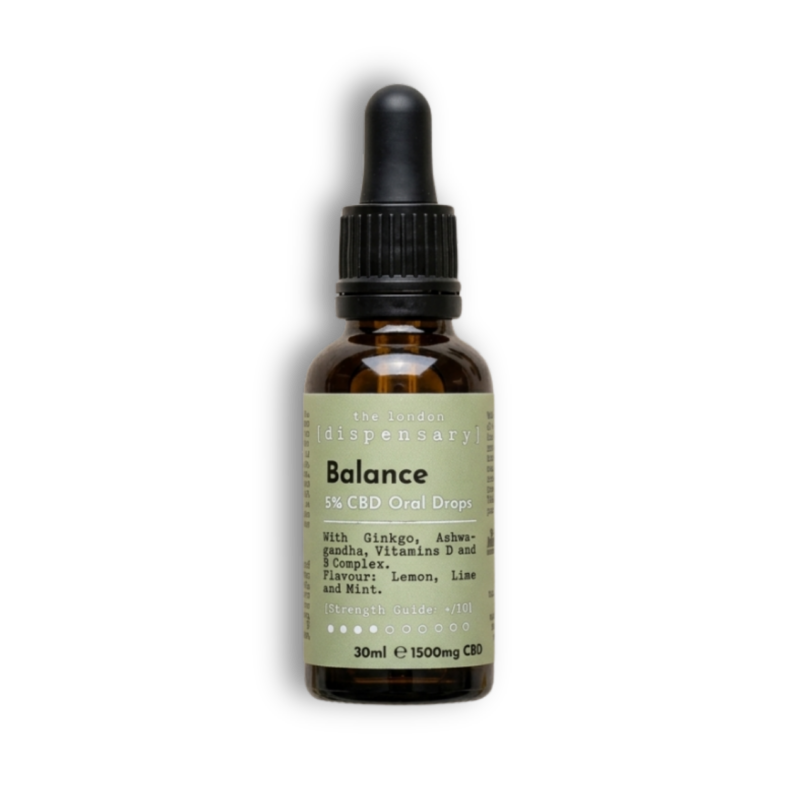
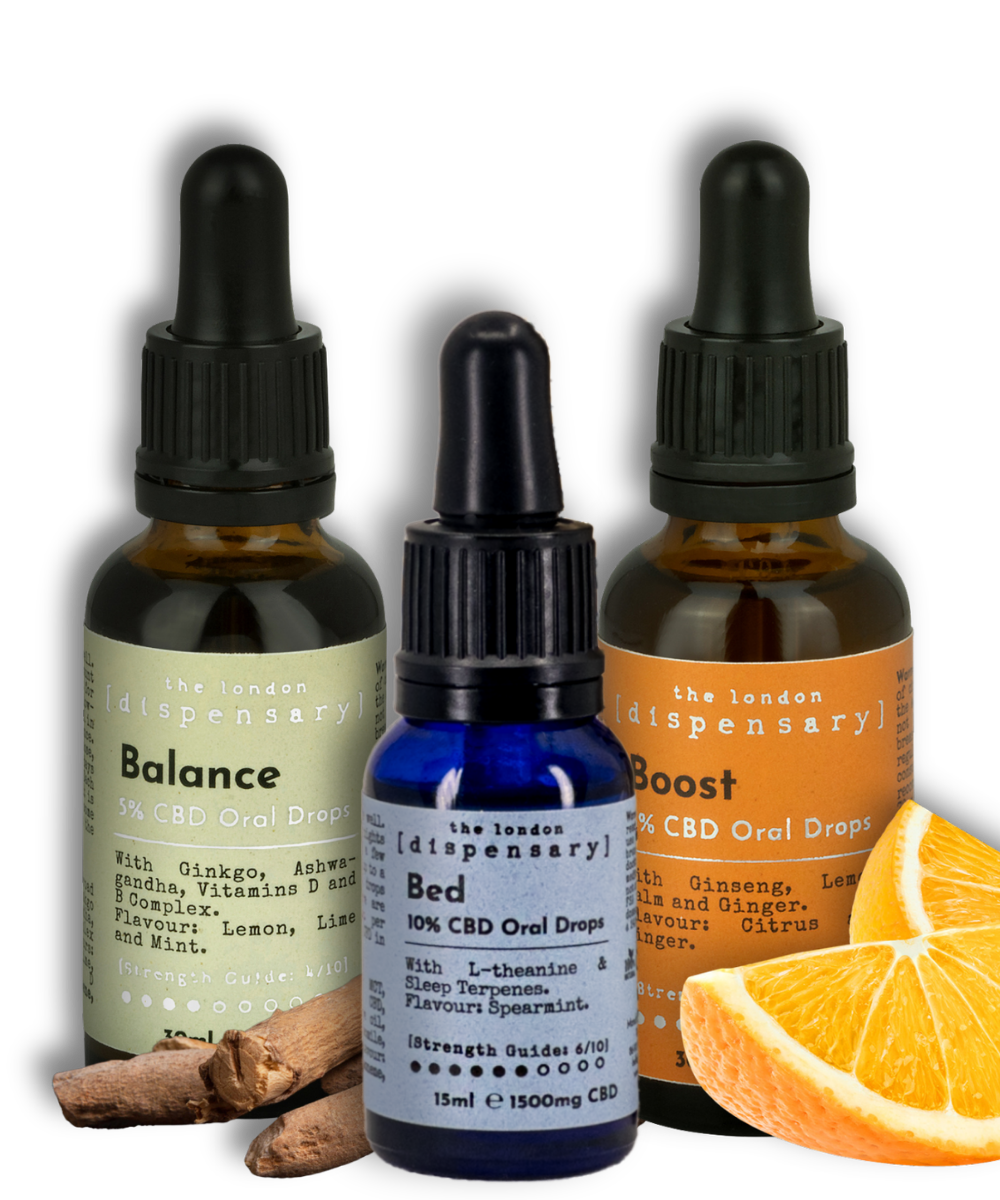
Our Balance CBD oral drops list vitamin D3 among their ingredients. That is useful formulation information, but an ingredient-list mention alone is not a quantified serving. We would not count that product as providing the NHS 10 µg vitamin D figure without checking the current nutrition panel or verified product specification. The same principle applies to any blended supplement, including products from other brands.
If you are choosing a product specifically to account for vitamin D intake, prioritise the declared amount per recommended serving over a general front-label statement. Our Vitamin D profile explains the nutrient and its role in selected formulations; the actual bottle label remains the source for the quantity in a particular product.
A quick label-reading checklist
- Serving: one capsule, two gummies, a measured number of drops or a volume in ml?
- Amount: how much vitamin D is declared for that exact serving?
- Unit: µg/mcg or IU? Convert only if you need to compare two labels.
- Form: D2/ergocalciferol or D3/cholecalciferol?
- NRV: treat it as a label reference, not your personal prescription.
- Overlap: does another supplement you take already contain vitamin D?
- Directions: check age suitability, frequency, warnings and any advice from your clinician.
TOP TIP
When comparing two products, write down “vitamin D amount / stated serving / unit” for each. If one of those three is missing, you are not yet making a like-for-like comparison.
Vitamin D supplement label FAQs
Frequently Asked Questions
Is 10 µg of vitamin D the same as 400 IU?
Yes. For vitamin D, 1 µg equals 40 IU, so 10 µg equals 400 IU. Check that both figures refer to the same stated serving.
Does 200% NRV mean twice the NHS vitamin D advice?
No. The UK labelling NRV for vitamin D is 5 µg, so 200% NRV represents 10 µg. The NHS's 10 µg autumn/winter advice is a separate public-health figure.
Is the amount on a vitamin D drops bottle per drop or per dropper?
It depends on the product. Read the unit beside the declared amount: it may be per drop, a specified number of drops, 0.5 ml, 1 ml or another recommended serving. Do not assume a full pipette is the stated serving.
What do D2 and D3 mean on a supplement label?
They identify forms of vitamin D. D2 may be called ergocalciferol and D3 cholecalciferol. The form name does not tell you the amount; look for the quantity per stated serving.
Can I count vitamin D listed in a blended oil towards my daily intake?
Only count a quantified amount for the serving you actually take. An ingredient-list mention confirms presence, not how many micrograms or IU the serving supplies. Check the current product label or ask the manufacturer.
Is more vitamin D always better?
No. The NHS says 10 µg daily is enough for most people and advises adults not to exceed 100 µg (4,000 IU) a day unless a doctor recommends otherwise. Follow individual clinical advice if it differs from general guidance.
This is an educational label-reading guide, not individual medical advice. If you have a diagnosed deficiency, a medical condition, take regular medication or need advice in pregnancy, speak to a qualified healthcare professional and follow the current product label.
- NHS. Vitamin D. https://www.nhs.uk/conditions/vitamins-and-minerals/vitamin-d/
- NIH Office of Dietary Supplements. Vitamin D: Fact Sheet for Consumers. https://ods.od.nih.gov/factsheets/VitaminD-Consumer/
- Department of Health and Social Care. Food supplements guidance. GOV.UK, 2026. https://www.gov.uk/government/publications/food-supplements-guidance-for-consumers/food-supplements-guidance
- UK legislation. Regulation (EU) No 1169/2011, Annex XIII: Reference Intakes. https://www.legislation.gov.uk/eur/2011/1169/annex/XIII