






How to use CBD cream step by step
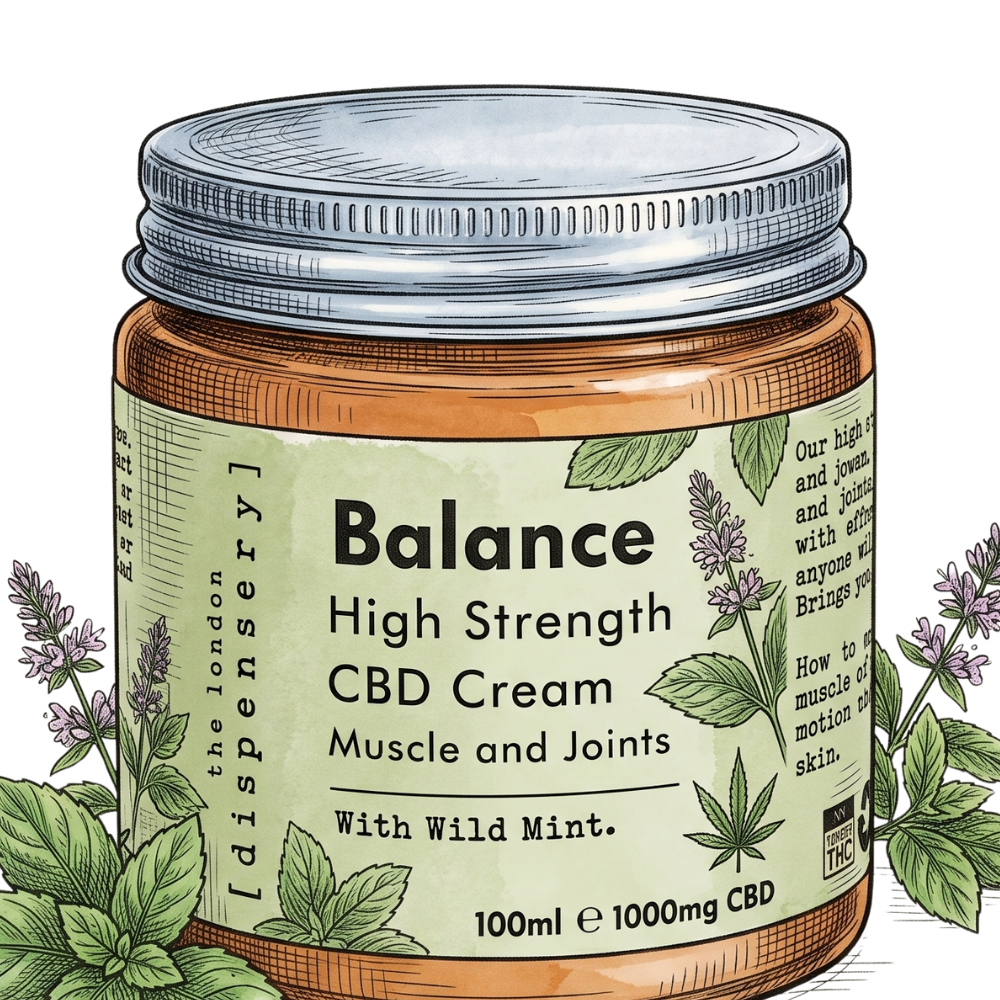
CBD cream is an external-use topical product. The practical aim is simple: apply enough to spread a thin, even layer over the intended area without treating the headline CBD milligram figure as a per-application dose. For The London Dispensary’s 1000mg CBD cream, the current product direction is to apply a small amount to clean, dry skin and massage in circular motions until absorbed. Reapply as required in line with the label.
1. Read the label before first use
CBD creams are not all formulated the same way. Check:
- the product’s directions;
- whether it is intended for adults only;
- ingredients and fragrance allergens;
- patch-test advice;
- areas the manufacturer says to avoid;
- storage instructions.
The label takes priority over generic advice online.
2. Patch test a new cream
Before applying a new topical over a larger area, use a small amount on a small patch of intact skin and follow the product’s directions. This is particularly sensible if you have sensitive skin or the formula contains essential oils, fragrance components or botanical extracts. Stop using the product if irritation develops. If a reaction is persistent, recurrent or severe, see the NHS guidance on contact dermatitis 1 and speak to a pharmacist or GP.
3. Start with clean, dry skin
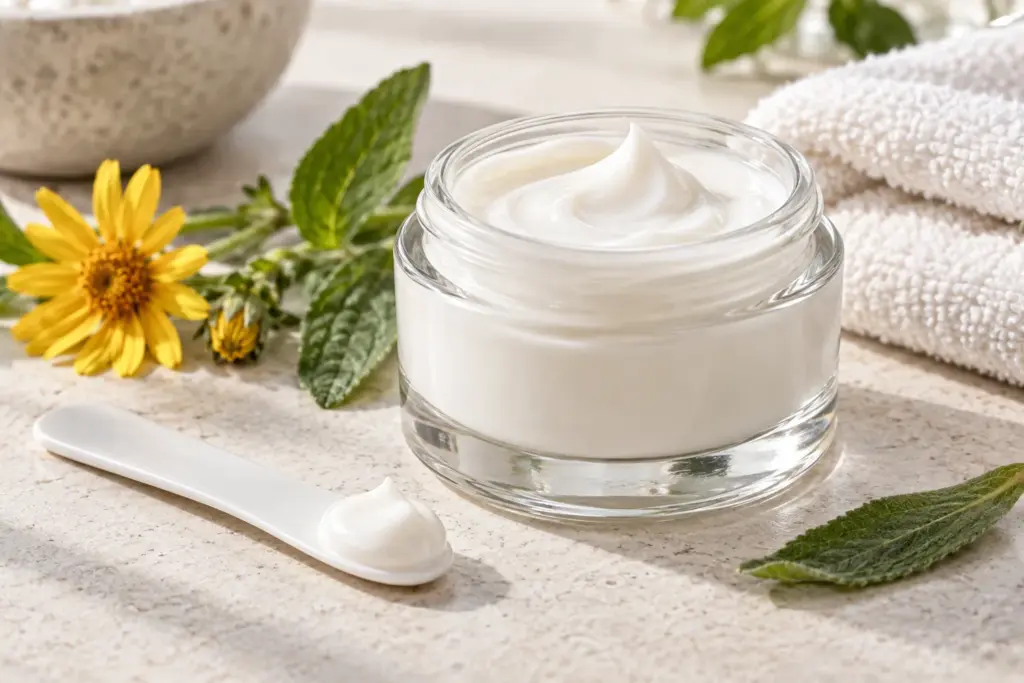
Apply the cream to intact skin that is clean and dry. This gives you a clear surface and avoids immediately mixing the cream with sweat, dirt or another topical product. You do not need to scrub the area aggressively. Normal washing and drying is enough.
4. Start with a small amount
There is no universal “correct number of milligrams” of cosmetic CBD cream to apply to a joint, shoulder or other area. The total CBD figure on the jar describes the amount in the full container, not a medically established dose per application. Start with a small amount that can be spread comfortably over the intended area. Add a little more only if necessary for coverage.
5. Massage the cream in gently
Use comfortable circular movements to spread the cream evenly until it has absorbed into the skin. There is no need to rub hard; a gentle massage is enough to work the cream across the area without irritating the skin.
6. Let it absorb before covering the area
Give the cream a little time to settle before putting tight clothing directly over the area. This helps avoid immediately transferring the product onto fabric.
7. Wash your hands afterwards when appropriate
Wash your hands after application unless the hands themselves are the intended application area. This reduces the chance of accidentally transferring cream into your eyes or onto other sensitive areas.
Why there is no universal CBD-cream “dose”
A cosmetic cream does not have an established therapeutic dose for pain, arthritis or another condition. The amount used in a clinical study belongs to that exact study formulation and should not be converted into a generic retail-cream instruction. A systematic review of topical/transdermal CBD trials found major differences in formulation and dosing across the small published evidence base. That is why this guide uses coverage and the finished-product label, rather than trying to calculate a medical CBD dose per application. Systematic review of skin-applied CBD trials 2 The Food Standards Agency’s 10mg-per-day precautionary guidance applies to ingestible CBD foods, not to the amount of an external-use cosmetic cream spread on the skin. Current CBD guidance 3
How much CBD cream should you use?
Use enough to cover the intended area in a thin, even layer, starting small. The useful comparison is not “how many milligrams should I put on?” because retail cosmetic creams do not have an established arthritis or pain-treatment dose. Instead, think about:
- the size of the area;
- the cream’s texture and spread;
- the product’s specific label directions;
- how your skin tolerates the formulation.
A pea-sized amount may cover a small area with one cream, while another formula may spread differently. Avoid turning rough cosmetic quantities into medical dosing rules.
Where can you apply CBD cream?
Follow the individual product label. The London Dispensary High-Strength CBD Cream is designed for external application and targeted massage on intact skin. Its product information gives examples such as shoulders, back, arms, legs, hands, elbows and feet. Do not apply it:
- in or around the eyes;
- on lips or other mucous membranes;
- on open wounds;
- on broken or irritated skin;
- anywhere prohibited by the product label.
If you have a skin condition or are unsure whether a topical is suitable for an area, seek appropriate healthcare advice.
How often can you apply CBD cream?
There is no universal evidence-based application frequency for every CBD cosmetic. Our current cream label says to reapply as required. That is deliberately different from prescribing a fixed medical schedule such as “twice daily for arthritis”. Follow the instructions on your own product and stop use if irritation occurs. If you find yourself repeatedly applying a topical because of persistent pain or another symptom, that is a reason to address the underlying problem with a healthcare professional rather than simply increasing topical use.
When can CBD cream fit into a routine?
People can use a body-care cream whenever the product directions allow it and it fits their routine. Common practical moments include:
- after a shower, once skin is dry;
- after exercise as part of a normal massage routine;
- after physical work or a long day;
- during an evening body-care routine;
- when you simply prefer a cream texture to a balm.
The point is simply to build the cream into a routine that suits you, rather than treating one timing choice as universally “best”.
Should you apply CBD cream before or after exercise?
If the label permits it, either can work as part of a personal routine. Use intact skin, avoid applying immediately before an activity that will simply rub or wash the product off, and choose a timing that gives the cream a chance to absorb comfortably. For a richer massage texture used around activity, compare a CBD muscle balm and read the separate How to Use CBD Balm guide.
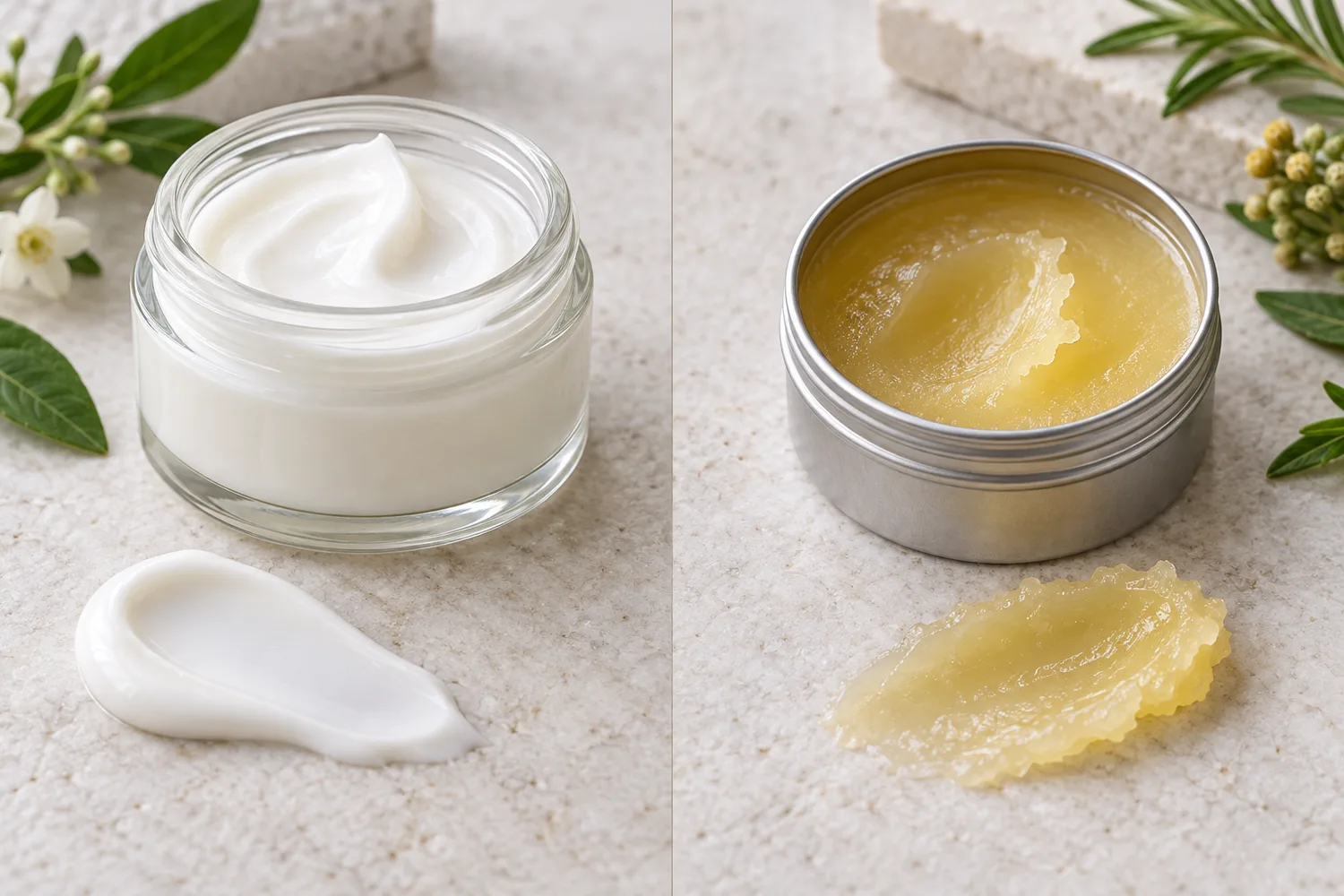
CBD cream vs CBD balm: does application differ?
Yes, mainly because of texture.
| Application point | CBD cream | CBD balm |
| Texture | Lighter and more spreadable | Richer, waxier or oilier |
| Starting amount | Small amount, then add if needed | Small amount warmed with clean fingers first |
| Coverage | Often easier across broader areas | Often suited to a smaller targeted massage area |
| Finish | Usually lighter | Usually more occlusive |
For the full format comparison, see What Are CBD Topicals? CBD Creams & Balms Explained.
Common CBD cream application mistakes
Using too much immediately
More cream is not automatically better. Start small and add only enough for comfortable coverage.
Treating total milligrams as a per-use dose
The milligram figure normally describes the CBD in the whole container. It is not a prescription for how much to apply at once.
Applying to broken or irritated skin
Follow the product warning and use only on intact skin unless a product specifically states otherwise.
Skipping the patch test
Botanical ingredients, essential oils and fragrance allergens can matter just as much as CBD when it comes to skin tolerance.
Mixing multiple topicals without checking
Layering several creams, balms or medicated products over the same area may increase irritation or affect how each product is used. Ask a pharmacist or clinician if you are using prescribed topical medicines.
Using more or rubbing harder for a “stronger” result
More product or more pressure is not automatically better. Use enough for comfortable coverage and massage gently rather than trying to force a stronger sensation.
What should you check before buying a CBD cream?
A useful CBD cream page should tell you:
- total CBD in the container;
- container size;
- CBD type, where stated;
- full ingredients;
- directions and warnings;
- cannabinoid testing or lab information;
- whether the texture is actually a cream rather than a balm or salve.
Our High-Strength CBD Cream UK page contains the complete 1000mg / 100ml specification, ingredient list, current directions and product information. You can also review CBD lab reports separately.
Does applying CBD cream differently make it stronger?
Applying more, rubbing harder or covering the area does not reliably make a CBD cream “stronger”. Use the cream as directed, and do not cover or occlude the area unless the product instructions specifically say that is appropriate.
Frequently Asked Questions
How do you apply CBD cream?
Apply a small amount to clean, dry, intact skin and massage gently until absorbed.
How much CBD cream should I use?
Start with a small amount and add more only if needed for coverage.
How often should I apply CBD cream?
Follow the product label; our cream says to reapply as required.
Can I apply CBD cream to a joint?
Use only on intact external skin in areas permitted by the label.
Can I use CBD cream on broken skin?
Our cream should not be applied to broken or irritated skin.
Should I wash my hands after applying CBD cream?
Yes, unless your hands are the intended application area.
- NHS guidance on contact dermatitis. https://www.nhs.uk/conditions/contact-dermatitis/
- Systematic review of skin-applied CBD trials. https://pubmed.ncbi.nlm.nih.gov/35605018/
- Current CBD guidance. https://www.gov.uk/government/publications/cannabidiol-cbd-guidance/cannabidiol-cbd-guidance