













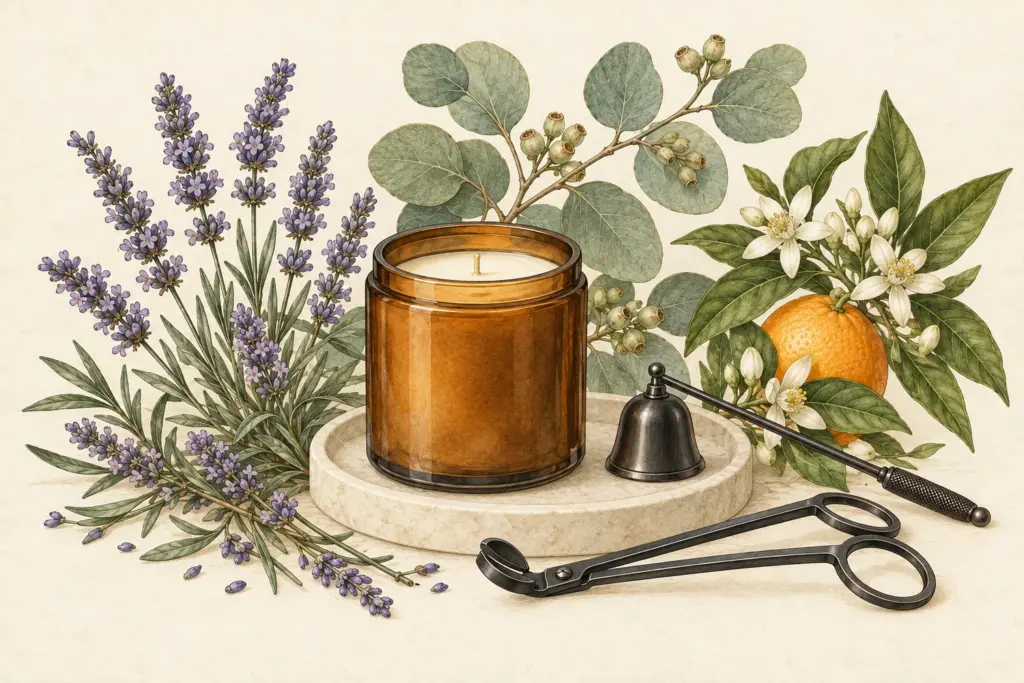
Good candle care is mostly about small habits: place the candle somewhere stable, keep the wick in good condition, give the wax enough time to melt evenly without exceeding the label’s maximum burn period, and stop using it if the flame or vessel behaves unexpectedly.
QUICK ANSWER
This guide covers the first burn, wick trimming, tunnelling, soot, uneven flames, fragrance performance and the practical things that can help you get more usable life from a candle without trying to “hack” the way it was designed to burn.
Why Candle Care Matters
A candle is a system: wax, fragrance, wick, vessel and airflow all affect one another. Poor care can make an otherwise well-formulated candle tunnel, smoke or burn unevenly. Good care cannot rescue every manufacturing problem, but it can help the candle perform closer to the way it was tested.
It also matters for safety. The London Fire Brigade advises keeping candles on stable surfaces, away from flammable materials, children and pets, and never leaving them unattended.1
Before You Light a Candle
- Check the glass or vessel for cracks, damage or anything unusual.
- Place it upright on a stable, heat-resistant surface.
- Move it away from curtains, bedding, books, shelves, plants and other flammable materials.
- Keep it away from strong draughts from windows, fans, vents or busy doorways.
- Remove wick trimmings, matches or debris from the wax surface.
- Read the individual candle’s care label before lighting it.
The First Burn: How to Start a Candle Properly
The first burn matters because repeated very short burns can leave a narrow melt pool around the wick. Over time that can create a tunnel down the middle while unused wax remains around the edge.
On the first use, allow the wax to develop an even melt pool towards the edge of the vessel without exceeding the maximum burn time stated for that candle. There is no responsible universal rule that every candle must burn for exactly two, three or four hours: vessel size, wax, wick and manufacturer instructions differ.
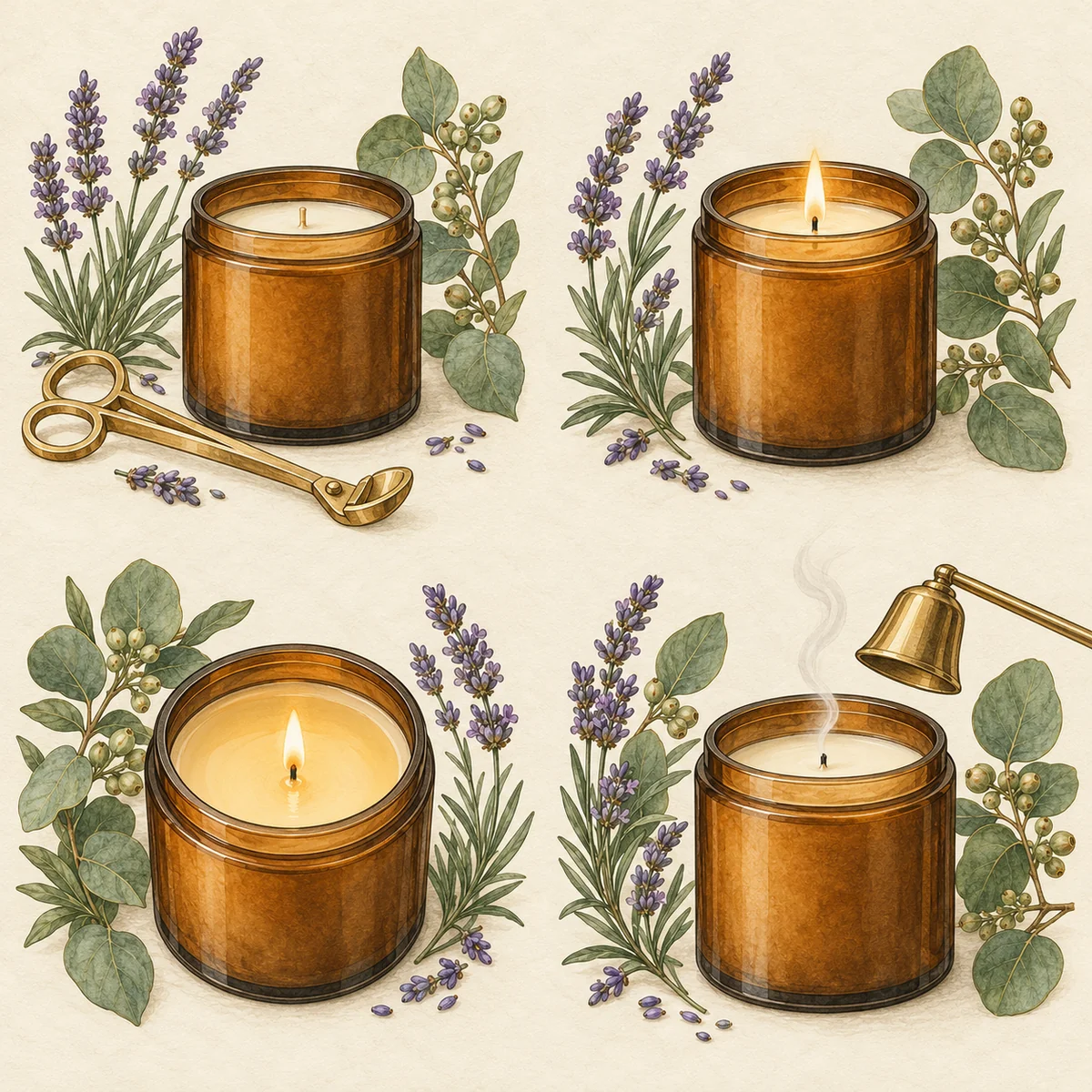
MYTH BUSTER
How Short Should You Trim a Candle Wick?
Trim the wick according to the maker’s instructions while the candle is cool. Many container candles use a short trimmed wick, but the correct length depends on the wick and formulation, so the label should take priority over a generic internet number.
Wick trimming helps control the flame. A wick that has developed a large carbon “mushroom”, an unusually high flame or visible soot should be extinguished and allowed to cool before you correct it.
After trimming, remove the loose wick piece from the wax rather than leaving it inside the melt pool.
What Is Candle Tunnelling?
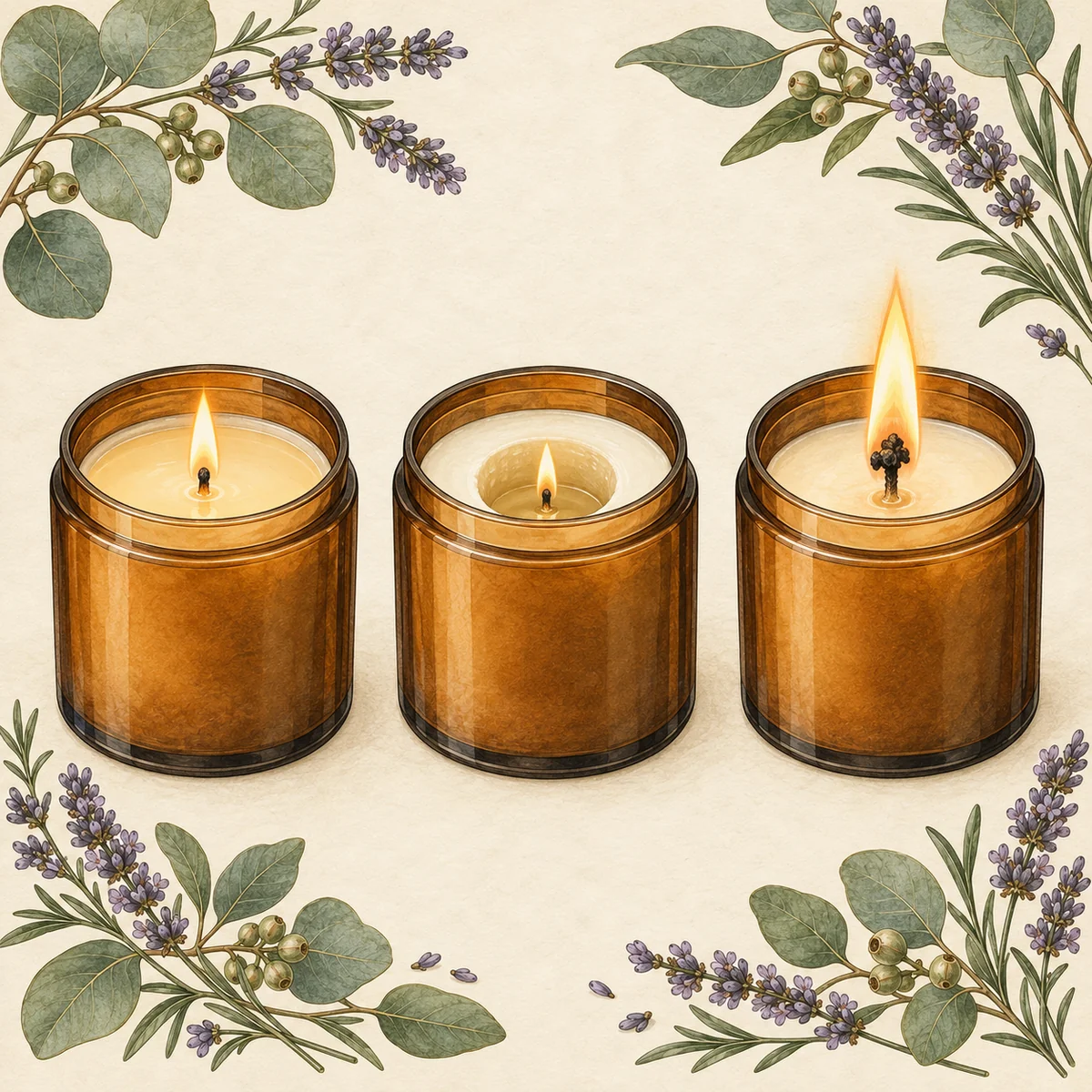
Candle tunnelling is when the wax melts mainly around the wick and burns down the centre while a substantial wall of unmelted wax remains around the vessel.
Common contributing factors include:
- repeated burns that are too short for an adequate melt pool to develop;
- a wick that is too small or has been cut excessively short;
- strong draughts affecting the flame;
- room temperature and wax characteristics;
- a wick/formulation mismatch that is not caused by the user at all.
How to Fix Candle Tunnelling Safely
If the tunnelling is minor, the simplest approach is to correct the conditions rather than improvise around the flame:
- Make sure the cooled wick is in the condition specified by the maker.
- Move the candle away from draughts.
- On the next burn, give the candle enough time to develop a wider melt pool while staying within its stated maximum burn period.
- Keep the candle under direct supervision.
If severe tunnelling continues, stop and contact the maker rather than wrapping the vessel in foil, adding external heat, placing it in an oven or modifying the candle. Those methods change the way heat moves around a product that was tested in a different configuration.
Why Is My Candle Flame Too High?
An unusually high or flickering flame can be a sign of a wick that is too long, a carbon build-up or strong airflow. Extinguish the candle if the flame looks unstable or excessive, allow it to cool, check the label and inspect the wick before using it again.
Do not keep burning simply because there is wax left in the vessel.
Why Is My Candle Producing Soot?
Some visible soot can be associated with an overlong wick, unstable flame or draught. If you see persistent black smoke or heavy soot, extinguish the candle and investigate rather than accepting it as normal.
Keep the wax free of debris and do not add essential oils, fragrance oils, dried botanicals or other material to a finished candle. Changing the formulation can change the way it burns.
How Long Should You Burn a Candle?
Follow the maximum burn period supplied for the specific candle. A universal time limit copied from another brand is not necessarily appropriate for a different vessel, wick or wax.
Longer is not automatically better. Extended burns can increase vessel temperature, deepen the melt pool and change wick behaviour. Let the candle cool and the wax reset fully between uses.
How to Make Candles Last Longer
You cannot create more wax, but you can avoid wasting usable wax through poor burning habits.
- Prevent avoidable tunnelling. Give the early burns enough time to establish a sensible melt pool.
- Keep the wick maintained. An oversized flame can consume wax faster and produce more soot.
- Avoid draughts. A flame leaning to one side can create uneven heating.
- Do not over-burn. Follow the maximum period on the label.
- Let it cool fully. Relighting a hot candle is not the same as beginning a new normal burn cycle.
- Store it well. Keep unlit candles upright and away from strong heat or direct sunlight.
Does Candle Care Affect Scent Throw?
It can. Hot throw — the scent you notice while a candle is burning — depends partly on the temperature and size of the melt pool. A tunnelling candle may expose less melted wax surface than intended, while an unstable or excessively hot burn is not a sensible way to chase stronger fragrance.
Room size, ventilation and your own fragrance sensitivity matter too. A candle can be well made and still feel softer in a large open-plan room than in a small room.
When Should You Stop Burning a Candle?
Stop using a candle if the vessel is damaged, the flame is persistently unstable, the wick has moved significantly, there is unusual smoking or the maker’s minimum remaining-wax / end-of-life instruction has been reached.
Do not burn every last trace of wax simply to “get your money’s worth”. The safety instructions for the vessel matter more than using the final millimetres.
Candle Care for The London Dispensary Range
Our CBD and aromatherapy candle range includes three 120ml fragrance directions:
- Slumber — Lavender, Clary Sage, Ylang Ylang and Nutmeg; estimated burn time up to 28 hours.
- Breathe — Lemongrass, Eucalyptus, Tea Tree and Peppermint; estimated burn time up to 28 hours.
- Grounding — Sweet Orange, Bergamot, Frankincense and Indian Ginger; approximately 24 hours estimated burn time.
Those are estimated total burn times, not instructions to burn the candle continuously. Always follow the individual product label for maximum session length and care.
Frequently Asked Questions
How do you burn a candle properly for the first time?
Place it on a stable heat-resistant surface, trim the cooled wick according to the label, keep it away from draughts and allow an even melt pool to develop without exceeding the stated maximum burn time.
How do you stop candle tunnelling?
Repeated short burns, draughts, wick condition, room temperature or the candle formulation can contribute. Correct the burn conditions first; if severe tunnelling continues, contact the maker rather than improvising extra heat around the flame.
How often should you trim a candle wick?
Check the wick before each burn and follow the maker’s trimming instructions while the candle is cool. Remove any loose carbon or wick debris from the wax.
How can I make a candle last longer?
Prevent avoidable tunnelling, maintain the wick, keep the candle away from draughts, follow the maximum burn period and allow the wax to cool fully between burns.
What are the most important candle burning tips?
Use a stable heat-resistant surface, keep the candle away from draughts and flammable materials, maintain the wick, follow the maker’s burn-time limits and never leave the flame unattended.
Should I use foil to fix candle tunnelling?
We do not recommend modifying heat around a live candle with an improvised foil collar. Try correcting wick condition, draughts and burn duration within the product instructions; contact the maker if tunnelling remains severe.
Can I add essential oil to a finished candle?
No. Adding fragrance or essential oil changes the finished formulation and can change how it burns. Use the candle as supplied.
- London Fire Brigade. Candles – Fire safety at home. Candle fire-safety guidance.